Nigeria’s latest alleged organ-trafficking case is more than a criminal investigation. It is a disturbing intersection of poverty, healthcare inequality, medical ethics, identity fraud and the economics of desperation.
The Nigeria Police Force says four suspects, including two nephrologists linked to a private hospital in Abuja, have been arrested over an alleged syndicate recruiting vulnerable young Nigerians for illegal kidney harvesting. The allegations are serious, but they remain allegations until tested in court.
Police arrest two nephrologists, two others
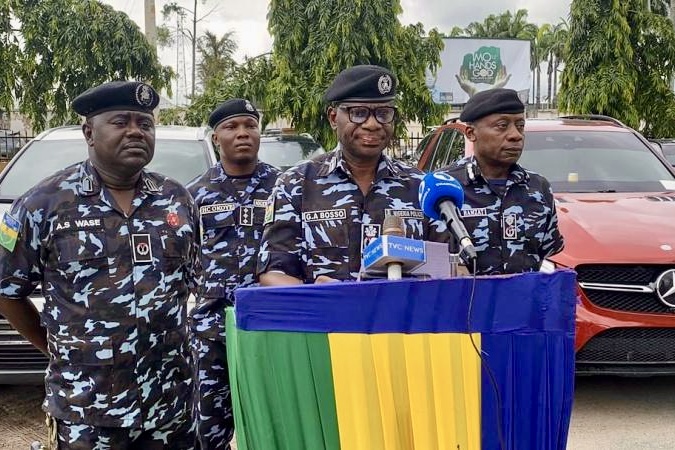
The Nigeria Police Force said its Special Tactical Squad arrested four suspects following an intelligence-led operation at Auta Balifi in Karu Local Government Area of Nasarawa State on 19 August 2026.
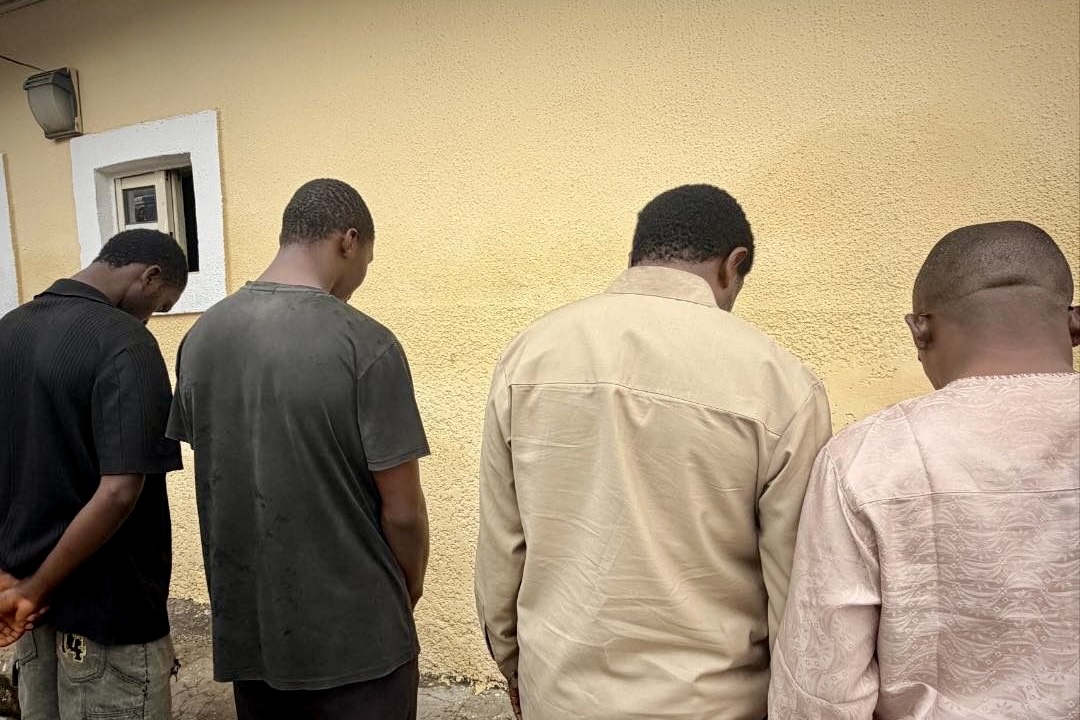
The suspects were paraded on 27 August, according to the police statement signed on 28 August by CSP Ani Iniedu, Force Public Relations Officer.
Those arrested were identified as Emmanuel Ode, 23; Dr Benjamin Oyime, 48, a nephrologist and consultant to Wellington Clinics in Life Camp, Abuja; Dr Daniel Otukpa, 53, also a nephrologist and Acting Director of Clinical Services at Wellington Clinics; and David Idoko, 25.
The police said the investigation centres on alleged criminal conspiracy, human trafficking and illegal organ harvesting.
“Acting on credible intelligence,” the police said, its operatives conducted the sting operation at about 18:00 hrs on 19 August.
Clothes allegedly purchased with proceeds of crime were recovered during the operation, police added.
But the most disturbing element of the investigation is the alleged recruitment of financially vulnerable Nigerians and the use of falsified identity documents to facilitate organ removal.
Alleged recruitment pipeline exposed
According to the police, Emmanuel Ode confessed during interrogation to recruiting victims under false pretences.
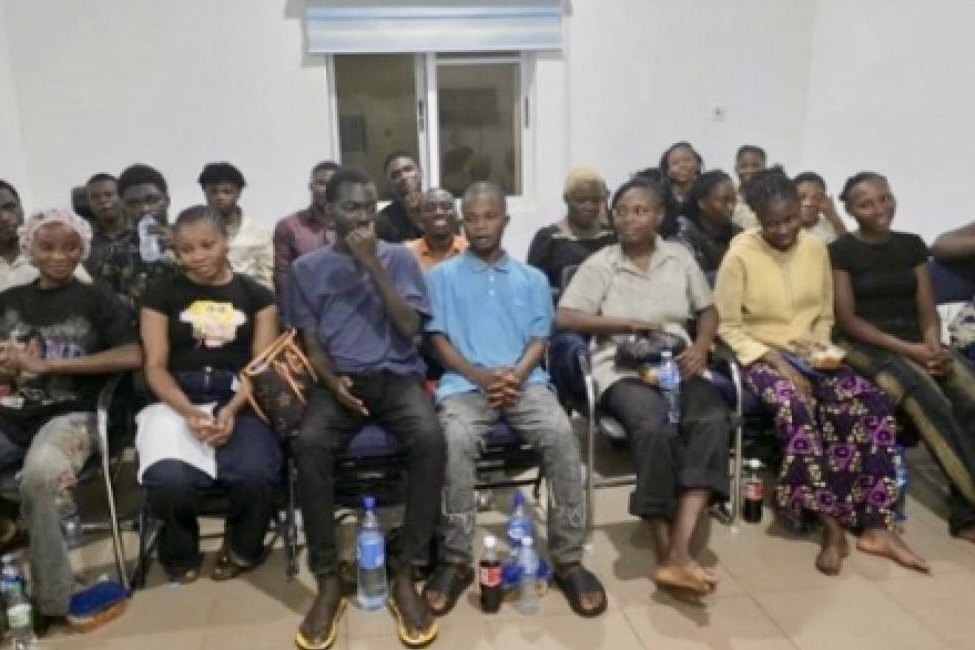
Investigators allege that on 24 April 2026, Ode lured Samuel Ezekiel, 22, to Wellington Clinics in Life Camp, Abuja, where the young man’s kidney was allegedly removed.
The police said the alleged payment for the kidney was $1,250, which it valued at approximately ₦1.7 million.
A second account cited by the police relates to an alleged incident in 2022, in which another victim was reportedly lured to a hospital and had a kidney removed after allegedly being paid ₦7 million.
These claims have not yet been established by a court.
That distinction matters. The arrest of a doctor, recruiter or hospital-linked professional is not proof of guilt, just as an alleged victim’s account is not by itself proof of criminal liability. The criminal investigation must establish what medical procedure occurred, whether the individuals involved were medically authorised, what consent was obtained, who authorised the procedures, how recipients were sourced and where the money went.
Yet if the police allegations are eventually proved, the case could expose a highly structured criminal supply chain rather than isolated misconduct.
Why the alleged ₦1.7m kidney payment matters economically
The economics of the allegation are particularly revealing.
In March 2026, The Guardian reported that kidney transplantation in Nigeria was costing roughly ₦25 million to ₦30 million, while dialysis commonly cost between ₦50,000 and ₦80,000 per session.
Against that backdrop, the alleged $1,250 payment cited by police represents only a small fraction of the reported cost of a transplant.
At an indicative official exchange rate of about ₦1,341.66 to the dollar on 28 August 2026, $1,250 would be approximately ₦1.68 million, broadly consistent with the police figure.
That does not mean the difference between donor payment and transplant cost represents criminal profit. Medical procedures have legitimate costs involving surgery, tests, hospitalisation, specialist fees, medicines and follow-up care.
But it demonstrates the economic imbalance at the centre of illegal organ markets: the person taking the greatest physical risk can receive a comparatively small payment, while the wider transplant ecosystem can involve substantially higher financial values.
This is precisely why the World Health Organisation warns against turning human organs into commercial commodities. WHO’s guiding principles state that organs should be donated freely and that purchasing or selling organs should be prohibited because payment can take unfair advantage of poor and vulnerable populations and encourage trafficking.
The poverty connection cannot be ignored
The alleged recruitment pattern described by police is also impossible to separate from Nigeria’s economic realities.
The World Bank estimates that more than 60 per cent of Nigerians were living below the national poverty line in 2025, while around 3.5 million people enter the labour force every year amid weak job creation and limited entrepreneurial opportunities.
The IMF’s June 2026 assessment put national poverty at 63 per cent and estimated that 27 million Nigerians experienced food insecurity in late 2025.
Meanwhile, although headline inflation fell to 15.43 per cent in July 2026, food inflation rose to 20.31 per cent, according to the National Bureau of Statistics.
That combination creates a dangerous environment for exploitation.
A young person without stable employment, savings, social protection or reliable access to credit can be unusually vulnerable to an offer of several million naira.
The sinister proposition is therefore not necessarily presented as a criminal transaction.
It can arrive disguised as a job.
A financial opportunity.
A medical arrangement.
A promise to solve a family emergency.
That is where trafficking and poverty intersect.
Police allegation raises a bigger question about ‘consent’
One of the most important aspects of the case is the police assertion that vulnerable young people were exploited to obtain “consent” for illegal organ removal.
Under Nigeria’s National Health Act 2014, informed consent is central to removal of tissue from a living person. Section 48 provides that tissue may not be removed except with the person’s informed consent, subject to narrowly defined exceptions. The same provision prohibits removal of tissue from a living person for merchandise, sale or commercial purposes.
The law also places conditions on transplantation itself. Section 51 requires transplantation involving tissue from a living person to another living person to take place in an authorised hospital and under appropriate written authority, with an independent tissue transplantation committee required for establishments undertaking transplantation.
Most significantly for the present investigation, Nigeria’s anti-trafficking law goes beyond the existence of a signed consent form.
Section 20 of the Trafficking in Persons (Prohibition), Enforcement and Administration Act criminalises recruiting, transporting, delivering, accommodating or taking a person for organ removal through force, deception, coercion, abuse of vulnerability or payments designed to induce consent. It provides a minimum seven-year prison term and a fine of at least ₦5 million for the relevant offence. The law also criminalises involvement in the removal, buying or selling of human organs.
The Act further provides that where the prohibited means have been used, the victim’s consent is legally irrelevant to the trafficking offence.
That is crucial.
A signature on a document cannot automatically legitimise an organ transaction if investigators prove deception, coercion, abuse of vulnerability or an illegal commercial arrangement.
The forged-document allegation may be the biggest investigative clue
Police also allege that the network forged or manipulated official documents, including victims’ names, NINs, birth certificates, age declarations, affidavits and consent letters.
That could become one of the most important evidentiary strands in the case.
Why?
Because genuine transplantation requires traceability.
A legitimate medical system should be able to establish who a donor is, how that donor was medically assessed, whether the donor gave informed consent, the donor’s relationship or permissible connection to the recipient, who approved the procedure, where the operation was undertaken and how subsequent medical care was arranged.
If identity documents were deliberately falsified, the alleged fraud would potentially go beyond the medical theatre into Nigeria’s broader identity and financial infrastructure.
Investigators should therefore examine the alleged documents alongside NIN records, hospital files, laboratory results, imaging, operating-theatre registers, payment records, bank transactions, telephone records and communications between recruiters, doctors, intermediaries and recipients.
The objective should be to reconstruct the entire transaction—not merely prosecute whoever happens to be holding the surgical scalpel.
Wellington Clinics becomes a critical part of the investigation
Wellington Clinics identifies itself as a private, free-standing specialist hospital established in 2011 at Plot 321, Gidan Fulani Street, Dape, Life Camp, Abuja. Its website says it offers a range of specialist medical and surgical services.
The clinic has also appeared in medical and health-provider listings.
The fact that two arrested suspects are alleged by police to have professional links to the facility makes institutional accountability an essential part of the investigation.
However, an allegation against individuals connected to a healthcare facility should not automatically be treated as proof that the facility itself was complicit.
That is precisely why the investigation must establish institutional records, authorisation processes, transplant committee decisions, donor screening documentation, recipient records and financial transactions.
At the time of this report, the sources reviewed did not contain a substantive public response from Wellington Clinics addressing the police allegations.
Nigeria already knew organ trafficking was a growing problem
The latest police operation did not occur in a vacuum.
In March 2025, the Federal Government launched national Standards and Guidelines for Establishing and Coordinating Organ/Tissue Transplantation Services.
The Ministry of Health said the framework was developed partly because Nigeria had experienced “troubling incidents of unethical organ harvesting and other excesses” in the transplantation space.
The ministry said the new framework was designed to strengthen donor protection, patient safety, ethical standards, minimum requirements and compliance.
It also announced plans to map and certify institutions involved in organ transplantation and establish a national organ donation and transplantation registry.
Prof Philip Abiodun, chairman of the National Tertiary Health Institutions Standards Committee, later stressed that the guidelines require voluntary and informed consent while prohibiting organ trafficking and commercial dealings.
The current investigation therefore creates an uncomfortable test for a framework introduced specifically to close regulatory gaps.
The question is no longer whether Nigeria has rules.
It is whether the rules are being enforced.
NAPTIP’s warnings make the case even more significant
The National Agency for the Prohibition of Trafficking in Persons has separately warned that trafficking methods are becoming more sophisticated.
In July 2025, then NAPTIP Director-General Binta Adamu Bello said organ trafficking was among emerging forms of exploitation alongside fraudulent employment schemes, online recruitment and other deceptive practices.
The agency has also prosecuted alleged organ-harvesting cases involving medical practitioners.
In 2024, NAPTIP arraigned a medical director and three others in Abuja over alleged kidney harvesting. The case was brought under Section 20 of the anti-trafficking law. The defendants pleaded not guilty.
That earlier case is important because it demonstrates that the current allegations are not occurring in an entirely new criminal category.
They suggest a recurring challenge at the intersection of healthcare, poverty and organised crime.
The dangerous business behind a missing kidney
Illegal organ trafficking should not be viewed simply as another criminal market.
A stolen vehicle can be recovered.
A stolen phone can be replaced.
Money can sometimes be refunded.
An organ cannot.
For a living kidney donor, surgery is followed by a lifetime of living with a reduced reserve of renal function. A legitimate donor therefore requires proper medical assessment, informed consent and continuing medical follow-up.
The World Health Organisation emphasises that living donation carries risks and that donors must be free from undue influence and sufficiently informed to understand the consequences of their decision.
When poverty becomes the bargaining power behind the transaction, informed consent itself can become compromised.
Nigeria therefore faces two simultaneous dangers: exploitation of potential donors and erosion of public confidence in legitimate transplantation.
There is also a financial cost to the Nigerian economy
The economic consequences extend far beyond the victims.
Every trafficking case consumes police investigative resources, prosecutorial capacity, court time and healthcare resources.
Victims may face long-term medical complications and reduced work capacity. Families can lose income while caring for victims. Employers may lose productive workers. The health system bears additional burdens.
Meanwhile, fear can discourage people from legitimate organ donation.
That would be particularly damaging because kidney transplantation can be a life-saving intervention, while Nigeria continues to face high costs and unequal access to kidney care. The WHO notes that transplantation is often the best, and sometimes the only, treatment for organ failure, while kidney transplantation generally offers better outcomes than dialysis.
The criminal market therefore attacks both sides of the healthcare equation: vulnerable donors are exploited while legitimate patients depend on a system whose credibility is being tested.
What investigators should now follow
The arrests should be treated as the beginning of the investigation, not its conclusion.
The police must establish the alleged recruitment chain, identify every suspected victim, determine whether there were additional medical practitioners or facilities involved, trace recipients and establish how payments moved.
The alleged forged NINs and other identity documents also warrant coordination with the identity-management authorities.
Financial investigators should examine bank accounts, foreign-currency transactions, cash withdrawals, property purchases and spending patterns.
Telecommunications evidence could establish relationships between recruiters, victims and recipients.
Medical regulators should independently examine whether all doctors involved were registered, whether the relevant procedures were properly authorised and whether professional standards were breached.
The Medical and Dental Council of Nigeria has statutory responsibility for regulating medical practice and professional conduct.
NAPTIP should also be centrally involved because the alleged conduct falls squarely within the agency’s anti-trafficking mandate.
Victims must not become an afterthought
There is another lesson for authorities.
The victims must not be treated merely as evidence against suspects.
Nigeria’s anti-trafficking framework requires protection and access to health and social services for trafficked persons.
The US State Department’s 2025 Trafficking in Persons assessment also noted that Nigeria identified and provided services to more than 2,000 trafficking victims during the reporting period, but highlighted continuing weaknesses in resources, victim-centred care and reintegration support.
For alleged kidney-trafficking victims, aftercare must go much further than shelter.
They need renal monitoring, psychological support, legal assistance, income-recovery support and protection from retaliation.
A victim who has lost a kidney in an alleged criminal transaction should not be left to confront the lifelong consequences alone.
The bigger scandal may be the market created by desperation
The most uncomfortable conclusion from this case is that organ trafficking thrives where human vulnerability intersects with high-value medical demand.
Nigeria has laws.
It now has national transplantation guidelines.
It has police units, NAPTIP and medical regulators.
What it still needs is effective coordination, reliable data, aggressive enforcement, stronger donor protection and an economic environment in which a desperate young Nigerian does not see a part of his body as his quickest route out of poverty.
The police say their investigation is continuing and that more suspects are being pursued.
The Force has reaffirmed its “unwavering commitment to dismantling human trafficking and organ harvesting networks across the country”.
That commitment will ultimately be measured not by the number of suspects paraded before cameras, but by whether investigators can dismantle the entire chain—from recruiter to medical intermediary, document forger, financier and recipient—and whether the victims emerge from the process medically protected and economically supported.
For Nigeria, the real test is now clear.
Can the country stop poverty from becoming a recruitment tool for the illegal trade in human organs?
Until that question is answered, every alleged kidney transaction is not only a crime story. It is a warning about the price Nigerians pay when healthcare inequality, economic desperation and weak institutional safeguards collide.
Follow us on our broadcast channels today!
- WhatsApp: https://whatsapp.com/channel/0029VawZ8TbDDmFT1a1Syg46
- Telegram: https://t.me/atlanticpostchannel
- Facebook: https://www.messenger.com/channel/atlanticpostng