By Boney Akaeze
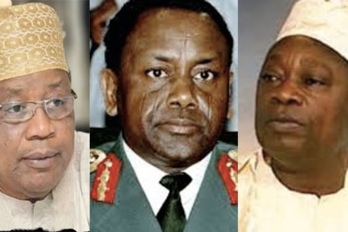
It would be recalled that on June 12, 1993—thirty-three years ago—the Federal Military Government under General Ibrahim Gbadamosi Babangida conducted a presidential election widely adjudged as the freest and most credible in Nigeria’s contemporary history. Unfortunately, the election, which was won by the late Chief M.K.O. Abiola, was annulled by the military regime. That singular action triggered a prolonged political crisis and a chain of tragic events that eventually accelerated Nigeria’s return to civil rule in 1999.
In recognition of the significance of June 12 as a watershed in the struggle against military dictatorship, the date was subsequently designated as Nigeria’s Democracy Day and is now commemorated annually.
In this year’s observance of the national day, the President, as expected, addressed Nigerians in a speech crafted in emotional and eloquent language by seasoned State House speechwriters. Characteristically, the address employed euphemistic expressions to soften the harsh realities confronting the nation, while allies and supporters of the administration promptly occupied every available media space to amplify the government’s damage-control narrative. Yet, notwithstanding the President’s soothing and carefully delivered message, disappointment, excruciating hardship, pain, and historic grievances continue to resonate across the land and in the collective consciousness of the citizenry.
Twenty-seven years after the much-condemned era of military rule and the transition to constitutional government, Nigerians remain bewildered and distressed by their country’s development paradox—a nation endowed with immense human and natural resources, yet perpetually burdened by mass poverty, high illiteracy, widespread squalor, public health crises, insecurity, and instability in their various manifestations. Governments come and go with policies and reforms wrapped in lofty rhetoric. Billions, and now trillions, of naira are appropriated annually, yet social services remain in a state of neglect, while public institutions continue to produce men and women of conspicuous wealth and extravagant lifestyles. A country blessed with abundant resources has failed to translate such endowments into industrial competitiveness, while its vast and talented population has become more of a liability than an asset. This sad reality has betrayed the lofty expectations that accompanied the departure of military rule twenty-seven years ago.
I have always challenged the simplistic narrative that blames military rule alone for Nigeria’s developmental woes, as well as the popular maxim that the worst civilian government is preferable to the best military regime. History provides evidence to the contrary.
First, the Nigerian military itself was hijacked, corrupted, and rendered subservient to hegemonic interests inimical to the common solidarity indispensable to a culturally diverse nation. The military merely reflected the character of the state that created and sustained it. Even when elements within the armed forces attempted to assert their professional ethos and patriotic consciousness, they were often constrained by the entrenched forces of the Nigerian state and conditioned to a hegemonic order that suppresses inspiration, stifles creativity and innovation, and crushes dissent and resistance.
Second, Nigeria’s political elite have demonstrated that civil rule is not necessarily synonymous with democratic rule. In many respects, they have surpassed the military in the very tendencies—opacity, unaccountability, and authoritarianism—that once attracted public condemnation of military regimes. If military rule is condemned simply because it does not emerge through political parties, periodic elections, and constitutional guarantees, one only needs to examine contemporary political practice across the country.
Typically, a President or Governor, in concert with political godfathers and a handful of cronies, captures the party machinery, handpicks party officials at every level, and builds networks of superficial loyalty through appointments, patronage, and sordid bargains disguised as contracts and tokenistic empowerment schemes. Candidate nomination exercises become mere rituals in which pre-selected aspirants are ratified by loyalists. The same political overlords control everything—from logistics to the appointment of electoral officers—and subsequently deploy their networks for diverse forms of manipulation and compromise, including ensuring that sthe legislature-the symbolic bastion of republican democracy is packed and reduced to hallow and ineffectual institutions at all levels. Yet the architects of these charades are celebrated as master strategists and political wizards.
Under such circumstances, Nigeria should not merely be celebrating twenty-seven years of uninterrupted civil rule. Rather, it ought to be reflecting on the tragedy of betrayed democratic aspirations, and the gradual but persistent withering of the moral and spiritual fabric of society. Citizens should be concerned about the unbridled impunity and corrosive influence of the political class. They should reflect on the long-term consequences of elections that have degenerated into periodic rituals for recycling the same ruling elite—elections clothed in legal legitimacy but increasingly deficient in credibility and substance.
For those who continue to cheer and rationalize the prevailingshenanigans and anomalies of governance, perhaps for pecuniary reasons, they must not lose sight of the fact that only governments founded on transparency, accountability, justice, and self-restraintcan progressively build democratic nations and secure peace and prosperity. Just as businesses built on honesty and trust sustain confidence and enduring growth, so too do lives grounded in integrity form the basis of character and lasting relationships. Corruption, deceit, and injustice may confer temporary advantages, but they inevitably create deficiencies that frustrate higher aspirations. The moral quality of our actions today determines not only what survives, but also what greater possibilities become attainable tomorrow.
On a final note, a few words of caution may suffice for comrades who remain in the trenches advocating for a genuinely democratic Nigeria. We must learn from the painful irony that many pro-democracy activists and champions of socio-political rights during the anti-military struggle have themselves become the unscrupulous, avaricious, and authoritarian despots of today.
This experience echoes the teaching of the reformer John Calvin, who observed that the reprobate may sometimes experience religious sentiments and emotions remarkably similar to those of the elect, yet such experiences do not amount to the regenerating work of the Holy Spirit that distinguishes true believers. The resemblance may be striking, but the difference lies in the source, depth, and permanence of the experience.
Likewise, it is possible to be inspired by democratic ideals, to speak passionately about freedom and justice, and yet lack the moral convictions and enduring character necessary to sustain them. The true test of democratic commitment lies not merely in resisting oppression, but in refusing to become oppressors when power changes hands.
Boney Akaeze writes from Asaba, Delta State.
Follow us on our broadcast channels today!
- WhatsApp: https://whatsapp.com/channel/0029VawZ8TbDDmFT1a1Syg46
- Telegram: https://t.me/atlanticpostchannel
- Facebook: https://www.messenger.com/channel/atlanticpostng