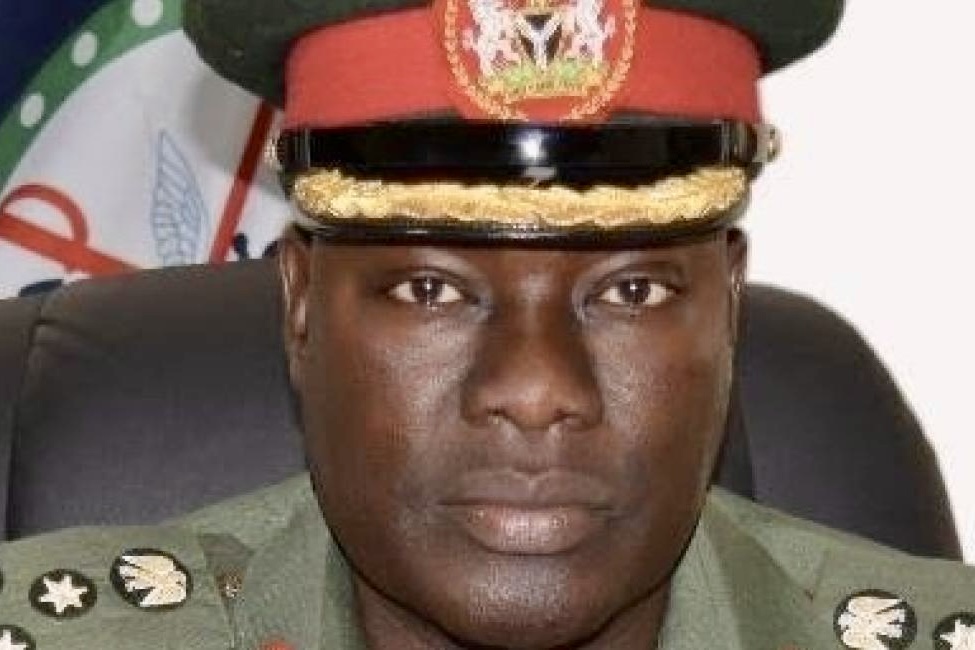
In a rare and defiant televised interview on TVC this past Sunday, Maryam Abacha, widow of late General Sani Abacha, unleashed a scathing rebuttal of long-standing allegations that her husband embezzled billions of dollars during his reign as military Head of State from 1993 to 1998.
Challenging the narrative that has dogged the Abacha name for nearly three decades, Mrs Abacha demanded proof, asking: “Who is the witness of the monies that were being stashed? Did you see the signature or the evidence of any monies stashed abroad?”
She went further, alleging that funds her late husband had purportedly secured “for Nigeria” mysteriously disappeared shortly after his demise.
“And the monies that my husband kept for Nigeria, in a few months, the monies vanished. People are not talking about that,” she asserted, lamenting the media’s fixation on unsubstantiated looting claims rather than this unresolved vanishing act.
According to data from the EFCC and successive administrations, over US$3.624 billion of Abacha-linked funds have been repatriated from foreign jurisdictions between 1998 and 2020, yet Mrs Abacha insists none of it bears her husband’s personal signature or incontrovertible provenance.
The former First Lady’s outburst also served as a sharp critique of Nigerian society’s perceived tribal and religious schisms.
“Why are you blaming somebody? Is that tribalism or a religious problem or what is the problem with Nigerians?” she asked, challenging viewers to reflect on regional bias and sectarian hostility that she claims underpin persistent vilification of her husband.
“Because somebody is a northerner or a southerner, somebody is a Muslim or a Christian… It’s not fair,” she warned.
Her appeal for national cohesion was underscored by a poignant reminder:
“Babangida doesn’t make Nigeria alone. Abacha does not make Nigeria alone. Abiola and everybody… Even the single man on the street is very important. We are all human beings, for goodness sake.”
To bolster her defence, Mrs Abacha pointed to measurable economic gains under General Abacha’s administration.
She noted that foreign exchange reserves ballooned from a mere US$494 million in 1993 to US$9.6 billion by mid-1997, while Nigeria’s external debt was slashed from US$36 billion to US$27 billion over the same period.
An IMF report further corroborates that gross official reserves surged from approximately US$1.4 billion in 1994 to over US$7.5 billion by end-1997, marking a watershed in the nation’s balance-of-payments situation.
Mrs Abacha mused, “So, where did he steal the money from? So, where would he have stolen the money from? And because Nigerians are fools, they listen to everything.”
Yet, her critique was not limited to public opinion. Mrs Abacha admonished journalists for perpetuating what she calls a “shameful” obsession with her husband’s legacy.
“People are not that bad. Twenty-seven years ago, and you are still talking about Abacha. He must be very powerful and loved by Nigerians.
We thank God for that,” she chided, urging media outlets to adopt a more “constructive role” in nation-building rather than damning historical figures without incontrovertible evidence.
Her interview has predictably reignited controversy. Social media platforms erupted with mixed reactions: some political pundits accused Mrs Abacha of historical revisionism, while others praised her courage in confronting entrenched narratives.
Civil society organisations have called for deeper forensic audits of recovered assets to address her challenge for “witnesses” and documentary proof.
Meanwhile, legal experts opine that without the names of specific accounts, transactions or signatories, the anti-corruption agencies face an uphill battle in securing convictions that will withstand judicial scrutiny.
As Nigeria grapples with political polarisation and economic headwinds in 2025, Maryam Abacha’s intervention may yet prove a catalyst for renewed public discourse on accountability, reconciliation and national unity.
Whether her allegations of a vanished national fund will prompt fresh investigations or simply fuel conspiracy theories remains to be seen.
For now, the widow’s formidable 40-year tenure in public sight continues—ensuring that the Abacha name, thirty-three years after General Abacha’s death on 23 June 1998, remains a contentious chapter in Nigeria’s modern history.
Atlantic Post writer Osaigbovo Okungbowa contributed to this report.