The reported detention of a Plateau community leader has been celebrated in Washington as evidence of deeper US-Nigeria security cooperation. But the central questions remain Nigerian: who authorised the arrest, what evidence supports the allegations, and what happens next?
The reported arrest of Mahmoud Adam in Plateau State has quickly become more than a Nigerian security story.
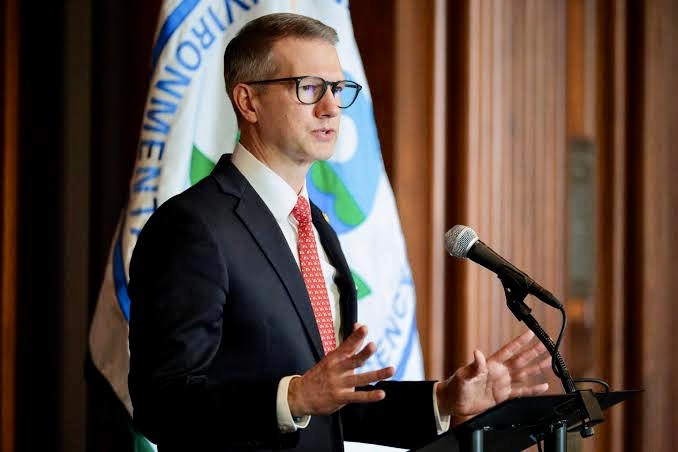
Within hours of the report gaining wider attention, US Congressman Riley Moore presented the development as evidence that Washington and Abuja’s expanding security relationship was beginning to produce results.
Yet the most important part of the story remains unresolved.
Nigeria has not publicly released a detailed account of the arrest, the allegations against Adam, the evidence linking him to specific attacks or the legal status of the case in the information reviewed by Atlantic Post as of October 3, 2026.
That gap matters.
Moore, a Republican member of the US House of Representatives, described Adam in an October 3 post on X as a “radical Islamic Fulani terrorist leader” whom he accused of responsibility for the killings of Christians in Nigeria. He said the arrest was “great news for Christians in Nigeria” and argued that it showed the US-Nigeria security relationship was bearing fruit.
The congressman went further.
He said “the Nigerian government deserves credit for making this arrest” and argued that the efforts of the US Congress and Donald Trump’s administration to defend Christians were making a positive difference.
His final appeal was direct: “We must keep pushing to defend our brothers and sisters in Christ!”
Those statements place the arrest inside a much larger diplomatic story.
But they do not, by themselves, establish why Adam was arrested or prove that American pressure caused the operation.
The Arrest That Surfaced Weeks Later
According to a Daily Caller investigation published on October 2, Adam was arrested in the early hours of September 12 at his compound in Plateau State.
The publication described him as a prominent Fulani community leader and reported allegations that he secretly headed what it called the Fulani Ethnic Militia in Plateau and surrounding Middle Belt states.
The report relied partly on a former US intelligence officer and on Nigerian journalist Masara Kim, who has reported alleged links between Adam and deadly attacks in Plateau.
The timing is striking.
The reported arrest occurred on September 12. That same period saw new violence in Plateau.
On September 12, the Plateau State Government acknowledged fresh attacks in Mangu Local Government Area. The following day, gunmen attacked a commercial bus at Dungus Junction in Jos South. At least six people were reported killed by TheCable, while Premium Times later reported nine deaths in the attack.
Within another week, further attacks were reported across Barkin Ladi, Riyom and neighbouring communities, including the killing of a pastor and other residents. Nine deaths were reported in the September 19–20 attacks by Premium Times and Vanguard.
That chronology does not establish a connection between the attacks and Adam.
It does raise a basic investigative question.
If the man now being described in Washington as a major militia leader was already in custody from September 12, what happened to the network allegedly operating around him?
That is the question Nigeria’s security agencies are now in the best position to answer.
The Evidence Trail Is Still Incomplete
The Daily Caller report contains serious allegations about Adam’s alleged connections to political and military figures.
It reported that a whistleblower claimed a sitting senator, Shehu Buba, intervened after Adam’s earlier arrest in 2024.
It also reported that photographs appeared to show Adam with Buba and separately with a senior Nigerian military officer in 2023. The publication said one photograph showed Adam receiving five motorcycles in an encounter described as part of efforts to restore peace in Plateau.
Those are potentially important leads.
They are not, by themselves, proof of criminal conduct.
Buba has separately denied allegations linking him to banditry, terrorism financing and kidnapping. In September, he voluntarily made himself available to the DSS, Defence Intelligence Agency and Nigeria Police Force for investigation, saying the allegations should be tested through evidence rather than social media claims.
That distinction is crucial.
Photographs can establish that two people met. They do not automatically establish the purpose of the meeting, knowledge of criminal activity or complicity in violence.
Likewise, an arrest can show that investigators have acted. It does not establish guilt.
For that, Nigeria needs a publicly traceable evidentiary chain.
Who identified Adam?
What intelligence led investigators to him?
Which security agency made the arrest?
What offences is he suspected of committing?
Were weapons, communications equipment or other evidence recovered?
Were statements obtained from other suspects?
Which attacks are investigators actually linking to him?
And has a court been asked to determine the legality and basis of his detention?
Those answers would matter more than the political celebration surrounding the arrest.
What the US Can Verify — and What It Cannot
Moore’s claim about US-Nigeria cooperation is rooted in a real and expanding security relationship.
Nigeria and the United States launched Defence Institutional Technical Working Groups in May under the 2026 Defence Cooperation Roadmap. The process has focused on defence cooperation, intelligence, military capacity and counterterrorism.
The United States has also acknowledged practical military cooperation with Nigeria.
US Africa Command said it conducted coordinated strikes against ISIS targets in northeastern Nigeria in May 2026 in coordination with the Nigerian government. AFRICOM subsequently documented joint training and intelligence-related cooperation involving Nigerian forces at Operating Location Bauchi.
In July, President Donald Trump also referred to what he called the “historic US-Nigeria 2026 Defence Cooperation Roadmap” and said US Special Operations Forces had been deployed to equip Nigerian troops with skills, tools and intelligence. The Nigerian State House published the letter.
So there is clear evidence of expanding cooperation.
There is less evidence for the stronger claim that American pressure directly produced Adam’s arrest.
The Daily Caller reported that the US State Department declined to say whether the arrest was a direct result of American pressure. A department spokesperson did say that “there remains a shocking level of violence against Christians in the Middle Belt committed by Fulani ethnic militias” and that Washington would continue working with Nigeria to protect Christians.
That is a significant distinction.
Washington has acknowledged the security crisis.
It has not publicly established that Washington ordered, triggered or directly caused this particular arrest.
A Conflict Bigger Than One Suspect
The religious dimension also requires careful handling.
US institutions have increasingly focused on attacks affecting Christian communities in Nigeria. USCIRF has documented serious violence by Boko Haram, ISWAP, bandit groups and some Fulani militants and has argued that religious communities remain inadequately protected.
At the same time, Nigerian officials have repeatedly rejected explanations that reduce the country’s insecurity to a single religious conflict.
Reuters reported in November 2025 that the Nigerian government rejected the US “Country of Particular Concern” designation, arguing that the violence was rooted in terrorism and wider insecurity and that both Christians and Muslims were victims.
The reality on the ground is more complicated than any single label.
Nigeria faces jihadist insurgency, organised banditry, communal conflict, farmer-herder violence, kidnapping and other forms of armed criminality. In Plateau, attacks and reprisals have repeatedly involved competing community narratives and disputed attribution. Recent incidents have affected both farming communities and Fulani herders.
That makes the Adam case especially sensitive.
If investigators establish that he played a central role in organised attacks, the case could provide a rare opportunity to understand command structures, financing, recruitment and political protection around violence in the Middle Belt.
If they do not, the public needs to know that too.
The Bigger Test Starts After the Arrest
For years, one of the central weaknesses in Nigeria’s response to mass violence has been the gap between arrest announcements and the eventual public demonstration of evidence, prosecution and conviction.
The Adam case now offers an unusually visible test.
A credible prosecution would require more than photographs, anonymous testimony and political statements.
It would require investigators to connect evidence to specific offences.
That means identifying victims and incidents, establishing chains of communication, authenticating digital material, tracing weapons and finances where relevant, and presenting admissible evidence before a court.
It also means protecting witnesses.
A senior advocate for religious freedom interviewed by the Daily Caller, Sean Nelson, said local Christian communities had repeatedly provided early warnings and requested security assistance. He said the recent increase in security presence would need to become a sustained change rather than “just a one-off.”
That observation points to the real measure of success.
The arrest of one man cannot by itself demonstrate that a security system has changed.
What matters is whether intelligence improves.
Whether attacks fall.
Whether communities receive protection before, rather than after, massacres.
Whether alleged financiers and organisers are investigated alongside gunmen.
And whether politically connected suspects are treated according to the same evidentiary standards as everyone else.
What Nigeria Has Yet to Tell the Public
As of October 3, the public record reviewed by Atlantic Post still leaves several important gaps.
There is no detailed public Nigerian security-service statement setting out Adam’s alleged offences and the evidence supporting them.
There is no publicly reported charge sheet establishing the exact crimes for which he is being prosecuted.
And there is no independently established finding that he was responsible for the “countless” killings attributed to him by Moore.
That does not mean the allegations are false.
It means they remain allegations until competent Nigerian authorities establish the evidence and, where appropriate, a court determines criminal responsibility.
The reported arrest may prove significant.
But the real story will not be the praise from Washington.
It will be what Abuja does next.
Can Nigeria turn a reported intelligence-led arrest into an evidence-led prosecution, expose the wider network behind the violence and show Nigerians exactly how the case was built?
That is where the credibility of this arrest will ultimately be tested.
Follow us on our broadcast channels today!
- WhatsApp: https://whatsapp.com/channel/0029VawZ8TbDDmFT1a1Syg46
- Telegram: https://t.me/atlanticpostchannel
- Facebook: https://www.messenger.com/channel/atlanticpostng