Troops of the Joint Task Force (North East), Operation HADIN KAI, say they have repelled a late-night ISWAP assault on the 120 Task Force Battalion in Gonori, in what appears to be another hard-fought test of Nigeria’s counter-insurgency line in the North-East.
According to the military, the attack began late on Saturday, May 9, 2026, and ran into the early hours of Sunday, May 10, before being broken by a coordinated ground and air response.
In the military’s account, the insurgents advanced from the Mandunari axis around midnight but were detected early by an ambush team already positioned in the area.
The troops, the statement said, launched a “well-coordinated spoiling attack” that pushed the attackers into a “deadly killing zone”, preventing them from reaching the camp. The reports reviewed say the base was not breached and no military equipment was lost.
What stands out most is the speed with which the battle escalated from a ground contact to a wider air-land operation. Military authorities said air assets attached to the Air Component of Operation HADIN KAI, together with Nigerian Army Aviation, were scrambled to support troops on the ground.
The follow-on strikes, according to the statement, turned the retreat into a rout, with the army describing the result as the “total defeat” of the attackers.
The army’s most consequential claim is the scale of the damage allegedly inflicted on the insurgents. After the battle, troops reportedly carried out exploitation missions around the scene and found “extensive blood trails, body parts and battle damage”, along with terrorist corpses within the immediate vicinity.
The military says these findings are consistent with “scores” of terrorist casualties, although the casualty figures cited in the statement remain military estimates and were not independently verified in the reports reviewed.
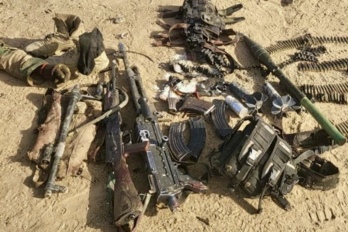
Security forces also say they recovered a cache of weapons and ammunition abandoned during the retreat.
The items listed included one General Purpose Machine Gun, two PKT machine guns, five AK-47 rifles, and several belts of assorted ammunition, together with other personal effects allegedly left behind by the fighters.
On the military’s telling, those recoveries reinforce the argument that the attack was not only repelled but decisively blunted before the insurgents could establish themselves at the base.
The human cost on the military side was not absent. The statement acknowledged that some soldiers were injured during the encounter, but said they were stable and receiving medical attention.
That detail matters because it suggests the engagement was intense enough to cause casualties among the defending troops even though the base itself, according to the army, remained intact.
The wider significance of the Gonori episode lies beyond the battlefield itself. TheCable reported that the North-East has continued to witness recurrent attacks on military positions since the start of 2026, with at least 13 attacks and seven foiled, underscoring the persistent pressure on security formations operating against insurgent groups.
Seen in that context, Gonori reads less like an isolated clash and more like part of a continuing contest in which ISWAP appears determined to probe bases, test response times and disrupt military confidence.
That is why the wording of the military statement is telling. Phrases such as “crushing blow”, “well-fortified and battle-ready troops” and “operational dominance” are not merely celebratory language; they are part of a broader information battle in which the armed forces seek to project deterrence, restore confidence and signal that the insurgents were forced to retreat under pressure.
The army also said exploitation operations were still ongoing to track fleeing terrorists and consolidate gains, suggesting the engagement may yet produce more operational outcomes.
For communities across the North-East, however, the deeper question remains whether these successful repulses are being translated into durable control of contested corridors.
Each foiled assault is important, but the repeated pattern of raids, ambushes and counter-strikes shows that ISWAP and related fighters still retain enough mobility to menace isolated bases and exposed settlements.
Gonori therefore reinforces a familiar truth about the insurgency: tactical victories matter, but the campaign will only be judged by whether the military can turn battlefield successes into sustained security for civilians living under constant threat.
Follow us on our broadcast channels today!
- WhatsApp: https://whatsapp.com/channel/0029VawZ8TbDDmFT1a1Syg46
- Telegram: https://t.me/atlanticpostchannel
- Facebook: https://www.messenger.com/channel/atlanticpostng