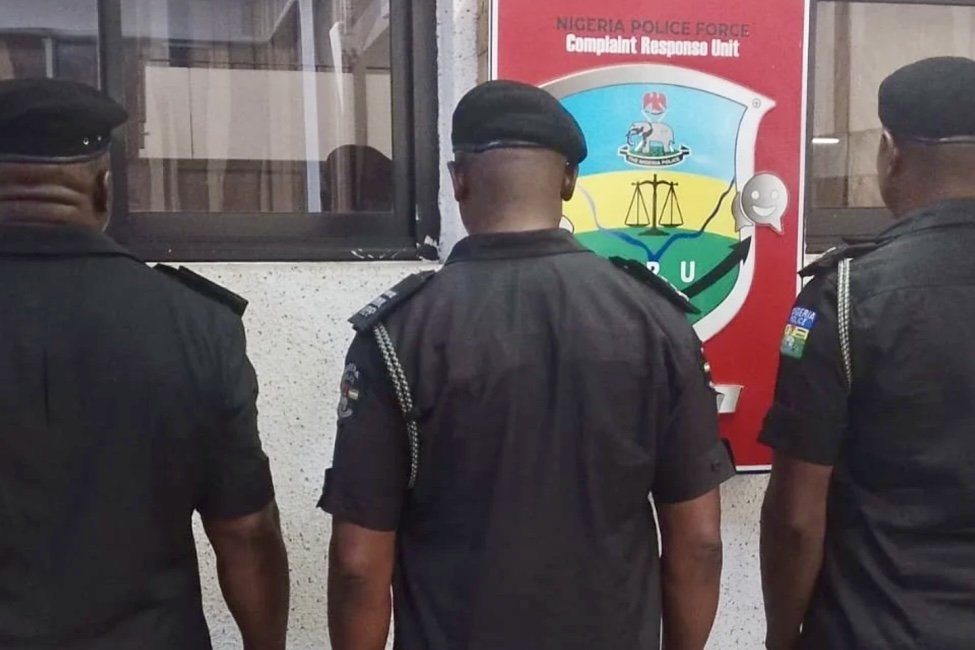
The plea for serving officers to support retired colleagues revives memories of the 2002 police strike. But with the Police Exit Bill still awaiting presidential action, the deeper question is whether Nigeria can turn welfare promises into enforceable retirement security.
Nigeria’s police pension crisis is exposing a troubling contradiction within the country’s security system: officers spend their careers protecting the public, yet many retired personnel say their pensions and post-service welfare are failing to provide them with a dignified life.
A Facebook commentary by Samuel Adeniji Akpata has brought an uncomfortable question to the centre of the debate. Why should retired officers fight almost alone for welfare reforms that could eventually determine the fate of those still wearing the uniform?
“UNITY GIVES A VOICE TO THE VOICELESS!” Akpata declared, urging serving and retired members of the Nigeria Police Force to support peaceful, lawful and constructive advocacy for improved pensions, healthcare and the timely payment of retirement entitlements.
His most pointed warning is simple: “TODAY’S SERVING OFFICER IS TOMORROW’S RETIRED OFFICER!”
The message resonates amid renewed agitation for the withdrawal of the Nigeria Police Force from the Contributory Pension Scheme (CPS) and the establishment of a dedicated police pension arrangement.
But solidarity alone cannot resolve a dispute involving pension rules, public finances, legislative decisions and executive responsibility. The real test is whether the government and police leadership can translate years of complaints and repeated assurances into a transparent, sustainable system that protects officers throughout their careers and after retirement.
The 2002 Police Strike Still Carries a Warning
Akpata’s appeal invokes one of the most consequential episodes in the history of police welfare in Nigeria.
On 1 February 2002, police officers in 14 states staged a one-day strike over unpaid wages. The dispute exposed the depth of dissatisfaction within the force, including concerns about poor service conditions and the payment of outstanding salaries.
The confrontation had serious consequences for the police leadership. On 6 March 2002, President Olusegun Obasanjo removed Inspector-General of Police Musiliu Smith and replaced him with Tafa Balogun. The six deputy inspectors-general serving immediately below Smith were also removed amid a wider crisis of confidence and renewed threats of industrial action.
The government warned that striking officers could face prosecution for mutiny. Subsequent reports indicated that 64 officers in Akwa Ibom State had been dismissed for participating in the action.
The episode demonstrated the potential power of collective discontent. It also revealed the risks that serving officers could face when welfare grievances collide with the command structure and operational demands of policing.
The lesson is not that today’s officers should repeat the 2002 strike. Nor does the historical record establish that every welfare demand must be pursued through industrial action.
It is that unresolved grievances can become an institutional crisis when ordinary channels for addressing them prove inadequate.
For serving officers considering Akpata’s appeal, the relevant question is how solidarity can be expressed through lawful channels without compromising police duties or exposing personnel to avoidable disciplinary consequences.
A Pension Dispute That Has Refused to Go Away
The current agitation centres on the Contributory Pension Scheme, which retired police officers say has left many of them struggling with inadequate retirement income, rising living costs and healthcare expenses.
The Police Retired Officers Forum of Nigeria (PROF) has led calls for the complete withdrawal of the Nigeria Police Force from the scheme and the creation of a dedicated Police Pension Board.
The proposed reform has legislative backing. The National Assembly passed the Police Exit Bill in December 2025, and the legislation was transmitted to President Bola Tinubu for assent in March 2026.
The bill seeks to remove police personnel from the existing contributory arrangement and establish a different framework for managing their retirement benefits.
Retired officers have repeatedly argued that their circumstances require special consideration because of the demands, risks and service conditions associated with policing. They have also pointed to pension arrangements available to some other security and defence institutions.
Their complaints have generated repeated protests, including demonstrations in Abuja and state capitals.
In June, the forum appealed to Tinubu to assent to the bill, warning that continued delays would trigger further protests. By September, retired officers were again demonstrating, including in Abeokuta, Ogun State.
The campaign remains unresolved.
The forum recently announced that its nationwide protest, conducted under the slogan “No Retreat, No Surrender”, would resume on Monday, 12 October 2026. The demonstration had been suspended following the Nigerian Air Force aircraft crash in Ondo State on 5 October, which killed 25 people.
The decision to pause the protest reflected the retirees’ stated respect for the national mourning period. It did not mean their pension demands had been withdrawn.
Government Promises Must Now Produce Measurable Results
There has been movement on the government side, although the central dispute remains open.
On 5 October, the Federal Ministry of Police Affairs met representatives of the Police Retired Officers Forum in Abuja and reaffirmed the government’s commitment to addressing the welfare concerns of serving and retired police personnel.
The ministry said Permanent Secretary Anuma Ogbonnaya Nlia had assured the retirees that their concerns had received, and would continue to receive, the attention of the appropriate authorities.
Nlia also disclosed that the ministry had previously communicated its position to the Presidency and would send a further reminder highlighting the urgency of the matter.
On the proposed move away from the contributory system, the ministry said a transition to a defined-benefit arrangement would require “careful policy, legal and executive consideration”.
That statement is important. It acknowledges the demand without suggesting that the legal and administrative steps needed to implement it have been completed.
The ministry also identified areas being reviewed by a ministerial and stakeholders’ committee. These include salaries, regular and non-regular allowances, housing and uniform allowances, outstanding pension arrears, death benefits, group life insurance and group personal accident liabilities.
This broader review suggests that police welfare extends beyond the pension scheme itself.
The immediate accountability question is what happens next. When will the review produce recommendations? What financial commitments will the government make? Which outstanding entitlements have been verified, and when will approved payments reach beneficiaries?
Without clear timelines and publicly reported progress, another round of assurances risks reinforcing the frustration that has sustained the protests.
The Missing Numbers Behind the Pension Argument
One of the most important gaps in the public debate is the absence of a comprehensive, publicly presented evidence base that allows Nigerians to assess the scale of the problem and compare possible solutions.
Retirees have described hardship arising from inadequate pension payments, healthcare costs and the rising cost of living. Their testimony deserves serious attention, particularly where individuals say that their retirement income cannot meet basic needs.
But an effective reform requires more than competing claims about which pension arrangement is fairer.
The government and relevant pension authorities should make available a clear assessment of the number of affected retirees, average pension payments across rank and service categories, outstanding liabilities, verified arrears and the practical consequences of the proposed transition.
A transparent assessment should also explain how the contributory scheme has performed for police personnel and identify the specific weaknesses that a replacement system is expected to correct.
Moving to a defined-benefit arrangement would require careful consideration of the funding model, existing pension rights, accrued liabilities and the long-term obligations of government.
The reform must not simply transfer today’s difficulties into a future financial burden without adequate provision for those who will eventually retire.
Nor should the need for financial and administrative scrutiny become an excuse for indefinite delay.
The government has a responsibility to explain both the problem and the proposed solution, using evidence that retirees, serving officers and taxpayers can examine.
Why Serving Officers Have a Stake in the Outcome
Akpata’s argument about solidarity rests on a point that is difficult to dismiss: retirement is not an abstract possibility for serving officers. It is a future stage of their working lives.
A pension arrangement that former officers consider inadequate can affect the confidence of serving personnel who are making decisions about their own financial futures.
It can also influence how officers assess the institution’s commitment to them after years of service.
But the public record reviewed for this report does not establish that serving officers, as a collective body, have refused to support their retired colleagues. Their views and the practical limits of their participation should not be assumed from their relative absence in public demonstrations.
There is also a distinction between solidarity and an industrial confrontation.
Serving personnel can pursue permitted formal channels to raise welfare concerns, including documented representations through appropriate command structures, engagement with police leadership and lawful submissions to relevant authorities. They can demand transparent information about retirement benefits without abandoning their professional responsibilities.
Such engagement would be more constructive than treating support for retirees as a choice between silence and a potentially damaging work stoppage.
The responsibility does not rest with serving officers alone. Police leadership, the Ministry of Police Affairs, pension authorities, the National Assembly and the Presidency all have distinct roles in resolving the dispute.
Retired officers cannot be expected to carry the entire burden of reform through repeated demonstrations.
The Presidency Faces a Test of Follow-Through
The Police Exit Bill has become the focal point of the campaign, but presidential assent would be a beginning rather than proof that the underlying welfare problems have been solved.
A credible response must explain how the proposed pension system would operate, how existing beneficiaries would be treated and how future obligations would be funded. It must also establish clear procedures for resolving individual complaints and paying verified outstanding entitlements.
The pension dispute cannot be separated entirely from the welfare of serving officers. Salary structures, allowances, insurance, death benefits and retirement planning are connected parts of the same employment relationship.
Nor can government use the complexity of pension reform to avoid making its next steps public.
The ministry’s 5 October engagement offered a further assurance that the matter was receiving attention. The outstanding test is whether that attention leads to decisions, deadlines and results that affected officers can verify.
Akpata is right to challenge the division between serving and retired personnel. But solidarity must become more than a slogan, and government assurances must become more than a recurring feature of protest coverage.
The officers who once stood in defence of Nigeria should not have to spend their retirement fighting indefinitely for the dignity their service was supposed to secure.
Follow us on our broadcast channels today!
- WhatsApp: https://whatsapp.com/channel/0029VawZ8TbDDmFT1a1Syg46
- Telegram: https://t.me/atlanticpostchannel
- Facebook: https://www.messenger.com/channel/atlanticpostng