ABUJA, Nigeria — In a landmark session that has captured the nation’s attention, the Nigerian House of Representatives yesterday passed four highly contentious tax reform bills for their second reading. Spearheaded by President Bola Tinubu’s administration, these bills are set to overhaul one of the world’s oldest tax systems. This Atlantic Post comprehensive report delves into the drama, the debate, and the possible seismic shifts in Nigeria’s fiscal landscape.
A Bold Move Amid Fierce Opposition
The four bills in question are the Nigeria Revenue Service (Establishment) Bill, the Nigeria Tax Bill, the Nigeria Tax Administration Bill, and the Joint Revenue Board (Establishment) Bill.
Initially read for the first time on 8 October 2024, these legislative proposals have since ignited fierce debates within the National Assembly. Their passage for a second reading marks a pivotal step in what many are calling a daring bid to modernise Nigeria’s archaic tax system.
Yet, the process has not been without controversy. Northern lawmakers have vehemently opposed aspects of the bills—most notably the proposed sharing formula for Value Added Tax (VAT).
This dispute underscores the deep regional and political fault lines that have long characterised Nigeria’s tax and revenue administration.
Critics argue that the VAT distribution mechanism, which currently sees allocations based on company headquarters rather than consumption data, could further exacerbate existing regional inequities.
The National Economic Council’s Warning Ignored
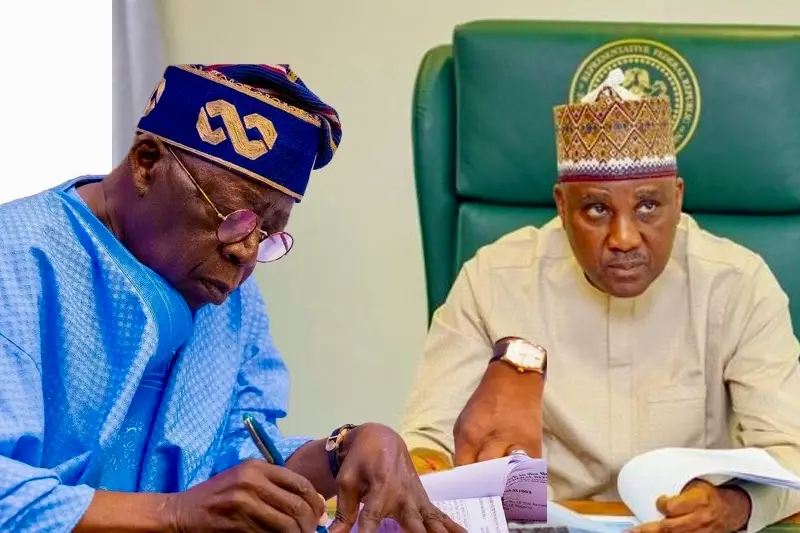
Adding to the tension was the intervention of the National Economic Council (NEC), a body comprising governors and chaired by Vice President Kashim Shettima. The NEC had previously urged President Tinubu to withdraw the controversial bills for further consultations.
They feared that a rushed legislative process might lead to unintended consequences, further straining Nigeria’s delicate fiscal balance.
However, in a defiant stance that has become synonymous with his administration, President Tinubu rejected calls for withdrawal. He insisted that all concerns should be addressed within the hallowed halls of the National Assembly.
This bold decision not only set the stage for a passionate debate but also underscored the administration’s commitment to overhauling the nation’s tax system regardless of the opposition.
Voices from the House: Support and Skepticism
Leading the debate on the general principles of the bills was House Majority Leader Julius Ihonvbere. With a reputation for incisive analysis, Representative Ihonvbere commended the president for his courage in instituting the reforms.
He expressed optimism that the bills would fundamentally transform Nigeria’s tax landscape by eliminating multiple layers of taxation, streamlining revenue collection, and diversifying the economy.
According to Representative Ihonvbere, the dissenting views within the House have only served to strengthen the proposed legislation—a testament to the democratic process at work.
In contrast, House Minority Leader Kingsley Chinda voiced his reservations. While he supported the underlying spirit of the bills, he was critical of certain “letters” or specific provisions within the proposed laws.
Representative Chinda stressed that while the principles were sound, the details needed refining. He particularly called for a reduction in the VAT rate, arguing that lowering tax burdens was not only feasible but necessary.
His stance reflects a broader concern among lawmakers that while the bill’s aspirations are commendable, its practical implementation must be carefully calibrated to avoid unintended economic disruptions.
Adding another layer of complexity, Representative Miriam Onuoha spoke passionately in favour of the bills. Onuoha, a staunch advocate for progressive taxation, argued that a balanced tax system should benefit the less fortunate while placing a fairer burden on the wealthy.
She cited Section 164(4a & b) of the proposed legislation, which offers exemptions and reliefs for companies that employ individuals on salaries of N100,000 or less—a move she believes will spur job creation and stimulate economic growth.
Furthermore, Representative Onuoha urged for the removal of the sunset clause attached to TETFund, citing its proven track record in reducing the infrastructure gap in tertiary institutions. Her call for the digitisation of audited accounts is seen as a necessary step to curb the proliferation of fraudulent financial practices.
Not all were convinced, however. Representative Hassan Fulata raised a critical procedural objection. He pointed out that, with the exception of the Nigeria Tax Administration Bill, the remaining three bills lacked an interpretation clause.
In his view, the absence of such a clause renders the bills “blind” and vulnerable to potential abuse. Representative Fulata’s insistence on the inclusion of interpretation clauses highlights a crucial aspect of legislative drafting that, if overlooked, could lead to ambiguities in implementation and legal disputes down the line.
A Regional Perspective: The Northern Voices
The controversy surrounding these bills is not merely a matter of legislative procedure; it is also deeply intertwined with regional politics. Several northern lawmakers have mounted a vociferous opposition, particularly with regard to the VAT sharing formula. In their view, the current system unfairly favours certain regions over others, perpetuating longstanding inequalities.
The Northern Governors’ Forum, along with other traditional power centres such as elders across the country, had previously rejected the bills. This opposition was echoed by Representative Ahmed Jaha, the member representing the Chibok, Damboa and Gwoza Federal Constituency of Borno State.
Representative Jaha’s critique was scathing. He argued that the bills were transmitted to the National Assembly despite widespread rejection by key stakeholders, including the NEC, elders, and the Northern Governors’ Forum. According to Representative Jaha, the lack of a consensus at the highest levels of governance was the root cause of the ensuing controversy.
Nevertheless, he acknowledged that certain provisions within the bills were commendable. Representative Jaha supported the idea of redistributing VAT based on consumption derivation—a method that could ensure fairness by allocating funds to regions where economic activity actually takes place.
He also noted that there was a broad consensus among lawmakers to retain critical institutions such as NITDA, NASENI, and TETFund, recognising their vital roles in Nigeria’s national development.
The Broader Implications for Nigeria’s Economy
This legislative battle comes at a time when Nigeria’s economy is at a crossroads. The country has long struggled with an outdated and inefficient tax system that has, in many ways, hindered its development.
By proposing a comprehensive overhaul of the tax framework, the Tinubu administration aims to tackle issues of multiple taxation, enhance revenue mobilisation, and ultimately diversify the economy away from its heavy reliance on oil revenues.
Optimists believe that the successful implementation of these reforms could usher in a new era of economic stability and growth.
A modernised tax system, they argue, will not only boost government revenues but also create a more level playing field for businesses across the country.
In theory, this would pave the way for increased foreign investment and sustainable economic development.
However, sceptics caution that the road ahead is fraught with challenges. The heated debates and stark regional divisions suggest that any reform of this magnitude will face significant hurdles in both the legislative and implementation phases.
Moreover, the absence of critical interpretation clauses in several of the bills could lead to legal ambiguities, potentially undermining the reforms’ intended benefits.
A Sensational Turn in Nigerian Legislative History
The passage of these bills for second reading marks a sensational turn in Nigeria’s legislative history. It is a moment that underscores the inherent tension between visionary reform and entrenched political interests.
President Tinubu’s unwavering stance in the face of opposition has polarised opinions across the nation, with supporters hailing his boldness and detractors warning of the potential pitfalls of a rushed reform process.
This dramatic episode is not merely a bureaucratic tussle; it is a reflection of the deep-rooted challenges that have long plagued Nigeria’s public finance system. The debates that have unfolded in the House of Representatives offer a rare glimpse into the complexities of governing a nation as diverse and dynamic as Nigeria.
They also serve as a reminder that meaningful reform requires not only visionary leadership but also a willingness to engage with and resolve the myriad concerns of all stakeholders.
Looking Ahead: The Future of Tax Reform in Nigeria
As the House of Representatives moves towards the next stages of debate and amendment, all eyes will be on the National Assembly and the executive branch to see how these contentious issues are resolved.
The success of these reforms will ultimately depend on a delicate balancing act—one that reconciles the need for a modernised, efficient tax system with the equally important imperative of ensuring fairness and regional equity.
For now, the passage of these bills for second reading represents both a triumph and a challenge. It is a triumph in the sense that it has set in motion a series of reforms that could transform Nigeria’s fiscal landscape. Yet it is also a challenge, as the road to effective implementation remains long and fraught with uncertainty.
In the coming months, as further debates unfold and amendments are proposed, stakeholders across the political spectrum will need to come together in a spirit of cooperation and compromise. Only then can Nigeria hope to achieve a tax system that is not only efficient and modern but also fair and equitable for all its citizens.
With the national spotlight firmly fixed on the halls of the National Assembly, this sensational saga of fiscal reform is poised to become a defining chapter in Nigeria’s political and economic history.
As we continue to monitor the developments with keen interest, one thing is clear: the journey towards a reformed tax system is as challenging as it is essential, and the stakes could not be higher for the future of Nigeria’s economy.
Atlantic Post – Bringing you the most comprehensive, in-depth analysis of Nigeria’s political and economic transformations.
- Additional report by: Osaigbovo Okungbowa, Atlantic Post Senior Political Correspondent