An in-depth analysis of Nigeria’s controversial digitisation of grazing routes, exposing the clash between pastoralists and farmers, and its far-reaching security implications.
ABUJA, Nigeria – In an audacious bid to harness technology in transforming livestock management, the Federal Government (FG) has embarked on a digitisation crusade that promises to revolutionise grazing reserves and routes across Nigeria.
However, as much as this move is being hailed by some quarters as a progressive leap into the digital age, it has simultaneously set alight a fuse of controversy and acrimony among key stakeholders—most notably between the revered pastoralist body, Miyetti Allah Cattle Breeders Association, and the culturally influential Pan-Yoruba group, Afenifere.
With the conflict arising from sporadic invasion of farming communities by militiamen—believed to be affiliated to herder—simmering for decades, this initiative not only marks a turning point in Nigeria’s livestock management but also underscores the volatile intersection of tradition, technology, and territorial rights.
A Bold Leap into Digitisation
At the helm of this ambitious programme is Minister of Livestock Development, Muktar Maiha, who recently proclaimed that “already, we have digitised the cattle routes in this country.”
Leveraging cutting-edge technology, the FG has undertaken the mapping of 417 grazing reserves—both gazetted and non-gazetted—spanning over five million hectares of land.
These reserves are slated to be equipped with essential infrastructure, including feed and fodder resources, water supply, veterinary clinics, and even schools for the families of herders.
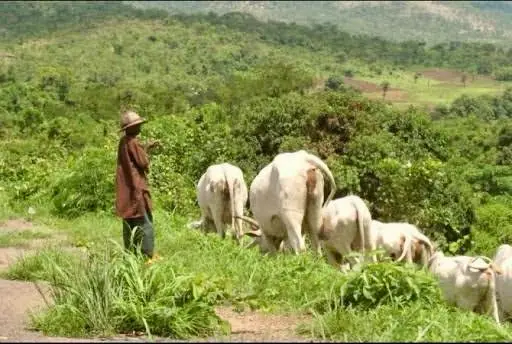
According to Maiha, this initiative is designed to curb cattle rustling, enhance livestock management, and ultimately foster a secure and sustainable environment for Nigeria’s pastoral sector.
Yet, as the FG’s blueprint unfolds, it is clear that the initiative is as divisive as it is groundbreaking.
While certain agricultural and livestock stakeholders embrace the promise of digital oversight, others argue that the mapping of grazing routes may inadvertently exacerbate longstanding tensions between nomadic herders and settled farmers.
Stakeholders at a Crossroads
The reaction from Nigeria’s diverse stakeholder groups has been anything but monolithic.
On one side of the debate stands the Miyetti Allah Cattle Breeders Association, whose National Secretary, Aliyu Gotomo, acknowledged the development as a “good development” for improving livestock management.
However, Gotomo did not shy away from highlighting significant challenges, including the encroachment on grazing lands and the critical need for updated livestock census data.
He stressed that without modern, reliable data and robust infrastructure—such as adequate watering points and veterinary services—the digital mapping exercise might struggle to achieve its transformative potential.
In stark contrast, the Pan-Yoruba socio-political group Afenifere has taken a vehement stance against open grazing—a practice they deem archaic and deleterious to host communities.
National Publicity Secretary Jare Ajayi is emphatic:
“We have moved past open grazing. Any attempt to reintroduce it in any form is unacceptable.”
For Afenifere, the digitisation initiative not only risks legitimising a practice that has fuelled communal clashes for years but also challenges existing state laws that have been implemented to protect farming communities in regions such as Benue and Kwara.
The Crux of the Farmer-Herder Conflict
The roots of Nigeria’s farmer-herder conflict run deep, with clashes over land use and resource allocation leading to the occupation of many indigenous communities for decades by invading militiamen who merchandise in mass murder and terror.
The FG’s attempt to digitally delineate grazing routes is being viewed by some as a long-overdue intervention that could potentially pacify these disputes by clearly demarcating the territories for pastoralists.
Proponents argue that with clearly marked routes, herders would be less likely to encroach upon farmlands, thereby reducing the incidence of violent conflicts.
The National President of the All Farmers Association of Nigeria (AFAN), Kabir Kebram, is one such advocate.
Kebram contends that “clear demarcation of routes for herders is the way to go” and believes that it is instrumental in mitigating the frequent clashes that have marred Nigeria’s agricultural landscape.
Yet, dissent is equally loud. In Benue State, for example, farmers are rejecting the mapping of grazing routes, arguing that the approach is anachronistic and counterproductive.
Aondongu Shaaku, a key voice among Benue’s farming community, lamented that “the old grazing routes have been taken over by development” and asserted that herders should instead adopt modern grazing centres—ranches designed to harmonise with the mechanised farming methods that are reshaping the region.
Regional Divides and Political Underpinnings
The impact of the FG’s digitisation scheme is not uniform across Nigeria’s diverse geopolitical landscape.
In Bauchi State, Governor Bala Mohammed has expressed readiness to embrace the digital mapping initiative as part of a broader strategy to revitalise livestock development and secure pastoral routes.
Similarly, in Nasarawa State, the local chapter of AFAN has pledged its support, emphasising that the initiative could serve as a crucial tool in addressing the long-standing strife between farmers and herders—a conflict that has tragically claimed lives and threatened food security.
Meanwhile, in Kwara State, state officials have voiced support for the creation of stock routes, viewing them as a viable solution to prevent livestock from trespassing onto farmlands and disrupting vehicular traffic on public roads.
Dr Ahmed Umar, the state’s Director of Livestock Development, argued that “mapping out routes will solve a lot of crises between farmers and herdsmen,” reflecting the optimism of some state authorities that technology can indeed bridge the gap between pastoral and agrarian interests.
Yet not all state responses have been supportive. In Ogun State, while some stakeholders are optimistic that the digital mapping will help monitor herders’ movements and isolate recalcitrant individuals, others remain sceptical, questioning whether the FG’s initiative can adequately address the underlying issues of land encroachment and historical grievances.
A National Security Conundrum
Beyond the immediate agricultural implications, the digitisation of grazing routes carries profound national security ramifications.
The spectre of cattle rustling—a persistent bane of Nigeria’s pastoral economy—looms large.
By harnessing digital tools for surveillance and route management, the FG hopes to not only curb cattle rustling but also forestall the escalation of violent farmer-herder clashes, which have frequently destabilised entire regions.
In a nation where internal security challenges are manifold, any initiative that promises to restore order and foster dialogue between conflicting parties is bound to attract intense scrutiny.
However, critics caution that the move, if not implemented with sensitivity and inclusiveness, could further polarise communities.
The entrenched positions of both pastoralists and farming communities suggest that a top-down digital intervention, without comprehensive stakeholder engagement, might risk deepening mistrust and fuelling further discord.
As one seasoned security analyst opined, “Digitisation can be a powerful tool, but it must be underpinned by robust dialogue and a nuanced understanding of local dynamics.”
The Road Ahead: Bridging the Divide
As Nigeria stands at the crossroads of tradition and technological modernisation, the FG’s digitisation initiative represents both a bold opportunity and a potential flashpoint.
The challenge lies in striking a delicate balance between leveraging digital innovation to modernise livestock management and respecting the historical, cultural, and legal frameworks that have long governed the farmer-herder relationship.
For policymakers, the task is clear: foster an environment where technology can be harnessed to mediate conflict, enhance infrastructure, and secure Nigeria’s vast grazing lands—all while engaging directly with the affected communities.
This calls for a multi-stakeholder dialogue that brings together government officials, pastoralists, farmers, and local leaders to craft a sustainable, inclusive path forward.
Concluding Observations
The FG’s digitisation of grazing routes is more than a technological upgrade; it is a daring experiment in nation-building, conflict resolution, and economic transformation.
While the initiative promises enhanced security and modernised livestock management, it also lays bare the enduring tensions that have long plagued Nigeria’s rural heartlands.
As debates rage between the proponents of digital oversight and those who champion the rights of farming communities, one thing remains certain: the journey towards a peaceful coexistence between farmers and herders is fraught with challenges, but also brimming with the potential for innovative solutions.
For now, the nation watches with bated breath as technology and tradition collide, and as the FG’s digital gambit reshapes the contours of Nigeria’s agricultural and security landscapes.
The stakes are high, the opinions are deeply divided, and the future of Nigeria’s grazing reserves hangs in the balance.
Additional reports by Suleiman Adamu, Taiwo Adebowale and Peter Jene, Senior Correspondents, Atlantic Post