The Deputy Inspector-General says his estranged Egyptian wife’s allegations grew out of a bitter marital dispute involving ₦2 million and five vehicles. But the police investigation leaves a bigger question unanswered: what legal process was used to restrict her accounts?
The dispute has moved beyond a marriage
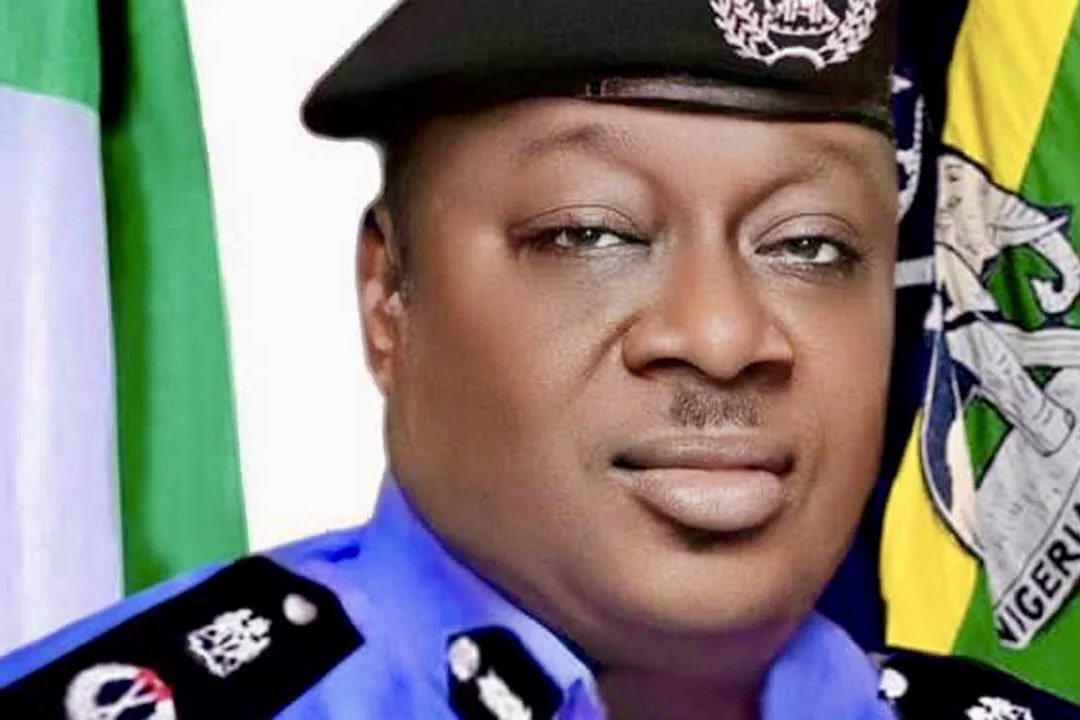
Deputy Inspector-General of Police Ibrahim Baba Zango has rejected allegations by his estranged Egyptian wife, Karma Saleh, that he threatened and harassed her, interfered with her finances and used his position in the Nigeria Police Force against her.
But his response has not ended the controversy.
Instead, it has widened the central issue from a collapsing marriage to a question about the boundaries of police power.
Zango says the allegations arose from an unresolved marital dispute. He also says Saleh owes him explanations over ₦2 million he sent for goods he expected to receive and that she left with five vehicles belonging to him, including a Toyota Hilux.
Saleh’s petition presents a sharply different account. She alleged that her bank accounts were restricted, her financial transactions monitored and a criminal case pursued against her at the Force Criminal Investigation Department Annex in Kaduna.
The police investigation did not make a definitive finding that Zango unlawfully blocked her accounts or abused his office. Instead, investigators concluded that the dispute appeared largely rooted in unresolved marital problems while recommending an independent review of the Kaduna case and the circumstances surrounding the account restrictions.
That recommendation matters.
It means the most sensitive part of the dispute remains unresolved.
Zango: “She is still my wife”
Speaking to SaharaReporters, Zango challenged the description of Saleh as simply an estranged wife and maintained that the marriage remains legally valid.
“We are legally married. We have three children; one died, so two remain.”
He said the couple had not been divorced, even though Saleh had commenced divorce proceedings.
“She said she filed for divorce. She filed for divorce. Are we divorced?”
The distinction is legally important.
A divorce petition is not the same thing as a completed divorce. The existence of proceedings in court does not by itself establish that a marriage has been dissolved.
Saleh, according to the police investigation report, told investigators that she married Zango under the Marriage Act on January 8, 2020 and had filed for divorce at the Lagos State High Court.
The marital status therefore remains a matter for the court, not competing public declarations.
Zango also described the dispute as essentially private.
“If you are not happy. It’s me and my wife. It’s none of your business.”
That position collides with the very issue that prompted the police investigation.
Once allegations concern the use of police personnel, police investigations, threats of arrest or restrictions placed on a person’s banking access, the dispute potentially acquires a public-interest dimension beyond the marriage itself.
The ₦2 million dispute
Zango’s most detailed defence centres on an alleged ₦2 million transaction.
He said Saleh travelled to India to accompany a friend, whom he identified as Chioma, for cancer treatment. According to Zango, he supported the trip and later sent ₦2 million after being told money was required to clear goods at an airport.
“So, I sent N2 million to Chioma. And she gave me an account, an account belonging to somebody.”
Zango said the transaction was intended to facilitate the purchase or clearance of a laptop and tablets.
He said the expected items never reached him.
“So, when I sent the money to the account, I did not see my laptop. I did not see the tablets.”
According to his account, he then pursued the person whose bank account received the money.
“I did not block my wife’s account initially. When I blocked that man’s account, he refused to come.”
Zango said the man was later arrested and told investigators that he had handed the money to his wife.
“When I arrested the man, he said he gave the money to a woman from Egypt. I discovered that this is my wife.”
Zango said further investigation led him to an account in which he found money connected with the matter.
“So, when I investigated the account, I saw that there was money in the account. So, I blocked the account.”
He said Saleh later asked him to unblock it but that he refused.
“She refused. I blocked the account.”
These are serious counter-allegations. But they remain allegations unless independently established.
The police investigation, as reported, did not make a definitive finding that Saleh conspired to defraud Zango or that the account restriction was lawfully imposed.
Five cars enter the dispute
The financial disagreement is accompanied by a second property dispute.
Zango alleged that Saleh left with five vehicles belonging to him.
“And she ran away with my five cars. Five. Five, including the Hilux.”
The investigation report reportedly recorded the same counter-allegation.
It stated that Zango denied the allegations against him and instead accused Saleh and one of her friends of conspiring to defraud him of ₦2 million intended for the purchase of a laptop and tablet.
It also recorded his allegation that Saleh had possession of five vehicles.
There is a critical distinction here.
A police report recording an allegation is not the same as a finding that the allegation has been proved.
That distinction is particularly important in an investigation involving a serving senior police officer, where the ability of police institutions to investigate one of their own becomes part of the story.
The account-freezing question
This is the point at which the dispute becomes larger than the marriage.
Under Section 31 of the Nigeria Police Act 2020, where an alleged offence is reported, the police are required to investigate the allegation in accordance with due process and report their findings to the appropriate Attorney-General for legal advice.
Financial restrictions are governed by additional legal frameworks depending on the nature of the investigation and the agency exercising the power.
For example, Section 15 of the Money Laundering (Prevention and Prohibition) Act 2022 provides for bank-account surveillance by a competent authority pursuant to an order of the Federal High Court, under the circumstances specified by the Act.
That does not automatically establish that every bank restriction imposed during a police investigation requires the same procedure. Different legal powers and investigative instruments may apply.
But it makes one question unavoidable in the Zango-Saleh dispute:
What precisely was the legal authority used to restrict Saleh’s account?
The publicly reported police investigation does not provide a definitive answer.
It does not clearly establish whether the restriction resulted from a court order, a formal investigative instruction, a request by another law-enforcement agency, a bank compliance process or another lawful mechanism.
That is precisely why the investigators’ recommendation for an independent review is significant.
The police report’s cautious finding
The investigation did not wholly vindicate either side.
Instead, it located the dispute primarily within the breakdown of the marriage.
Its conclusion was blunt:
“Flowing from above, it will appear that the issues between the petitioner and DIG Ibrahim Baba Zango stemmed entirely from unresolved marital dispute.”
Yet investigators did not simply close the matter there.
They recommended that the case being handled at the FCID Annex in Kaduna be transferred for independent review.
“Therefore, it is humbly recommended that the Inspector-General of Police approve the transfer of the case under investigation at the Force CID Annex, Kaduna for a review.”
That apparent tension is the most revealing part of the report.
Investigators saw a marital dispute at the heart of the conflict, yet still considered the circumstances surrounding the criminal case and account restrictions worthy of a fresh examination.
In investigative terms, that means the marital explanation did not answer every institutional question.
Why the status of Zango matters
Zango is not an ordinary private citizen embroiled in a matrimonial disagreement.
The Nigeria Police Force currently lists him as the DIG in charge of its Department of Research and Planning.
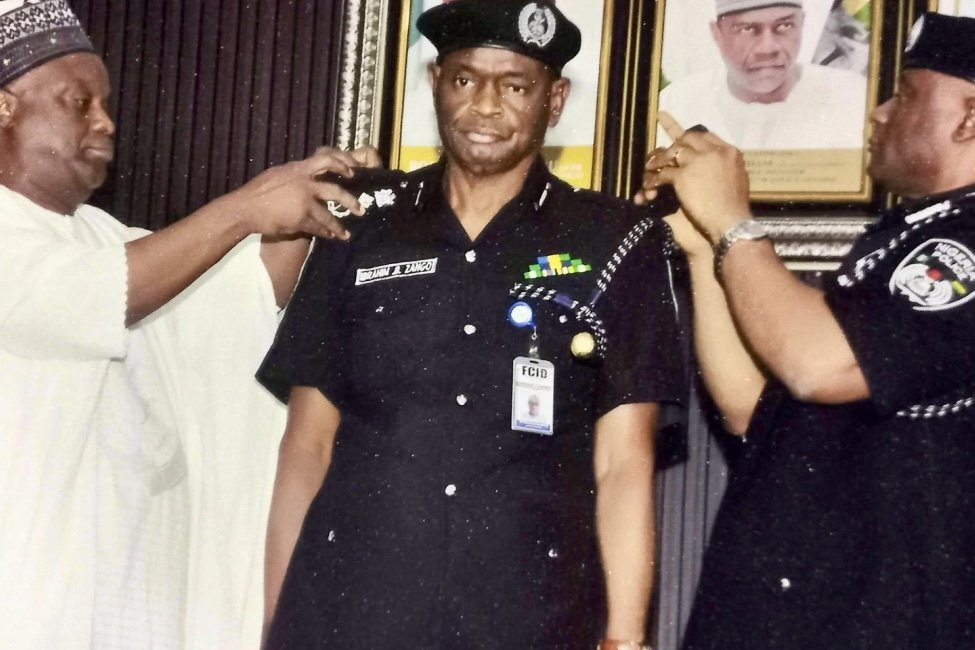
He was promoted from Assistant Inspector-General to Deputy Inspector-General in March 2026, in a promotion exercise conducted by the Police Service Commission.
That seniority does not determine the truth of the allegations.
It does explain why questions about the boundary between personal disputes and official authority attract wider public scrutiny.
The Police Act gives officers investigative powers. It also requires due process.
The difficult question in a case such as this is therefore not whether a senior police officer may report a suspected offence involving his personal property.
He may.
The question is whether every subsequent police action can be independently distinguished from the officer’s personal interests.
That is precisely the separation that must be demonstrated by evidence.
What remains unanswered
Several points remain open.
Was there a formal criminal complaint concerning the alleged ₦2 million transaction?
What offence was Saleh being investigated for?
What evidence connected her to that alleged offence?
Which police unit initiated or directed the investigation?
Who authorised the restriction placed on her account?
What legal instrument was presented to the bank?
Was any court order obtained?
What was the precise status of the Kaduna FCID case?
Was the alleged ₦2 million transaction independently traced from the original sender through the recipient account to the alleged final beneficiary?
And what documentary evidence establishes ownership of the five vehicles Zango says Saleh took?
These questions do not require either side to be presumed guilty.
They require records.
A dispute now testing institutional safeguards
The most important development in the case may therefore not be Zango’s denial.
It may be the investigators’ decision that the circumstances surrounding the account restrictions and Kaduna criminal case deserve another look.
That recommendation provides an opportunity to separate three issues which have become entangled.
The first is the marriage and the pending divorce.
The second is the private dispute over money, goods and vehicles.
The third is the exercise of police powers.
The first two may eventually be determined through matrimonial, civil or criminal proceedings.
The third has a broader institutional consequence.
When a senior police officer is personally involved in a dispute that becomes the subject of police investigation, public confidence depends heavily on the evidence that separates personal interest from official action.
The latest response from DIG Zango has supplied his side of that record.
The police investigation has supplied an initial institutional assessment.
The independent review now recommended by investigators is where the unanswered questions may have to be tested against documents, financial records, police authorisations and court records.
Until that happens, the most significant fact in the case is not whether one side has won the argument.
It is that the investigation itself has stopped short of answering the central question of how the machinery of police power entered a private marital and financial dispute.
Follow us on our broadcast channels today!
- WhatsApp: https://whatsapp.com/channel/0029VawZ8TbDDmFT1a1Syg46
- Telegram: https://t.me/atlanticpostchannel
- Facebook: https://www.messenger.com/channel/atlanticpostng