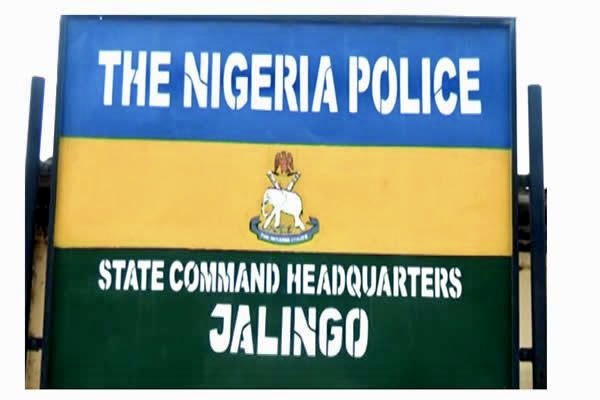
The Taraba State Police Command says Abdulmumin Imam was approached over petitions after allegedly ignoring invitations for questioning, but its statement does not address the video purportedly showing an identified police inspector spraying ₦200 notes.
The Taraba State Police Command has rejected allegations that officers abducted, assaulted or subjected Abuja-based activist Abdulmumin Imam to inhuman treatment, insisting that his movement from Abuja to Taraba was part of an investigation arising from petitions against him.
In a statement signed by the Acting Police Public Relations Officer, ASP Victor Mshelizah, for the Commissioner of Police, the Command said Imam had been invited on several occasions to answer questions relating to complaints received by investigators.
According to the police, Imam allegedly failed to honour earlier invitations.
The Command said officers therefore approached him to enable investigators obtain his account of the issues raised in the petitions.
“The action taken was strictly in furtherance of an ongoing investigation,” the statement said.
The police strongly rejected the characterisation of the operation as an abduction.
“At no time was Abdulmumin Imam assaulted or subjected to any form of inhuman treatment, nor was he forcefully taken against his will as being insinuated in some reports,” the Command said.
Police account differs sharply from earlier allegations
The statement places the Command’s version directly against allegations previously made by Imam’s family and reports concerning his detention and transfer from Abuja.
In April, Imam’s brother told PUNCH that the activist was allegedly assaulted during his arrest and subsequently taken from an Abuja police facility by armed men in an unregistered vehicle. The family also alleged that his whereabouts were initially unknown. The police denied those allegations and maintained that the case arose from petitions against Imam.
The Command’s position is therefore not new.
PUNCH reported substantially the same explanation from the Taraba police in April, including the Command’s assertion that Imam had previously been invited for questioning and its denial that he had been assaulted or forcibly taken.
That history is important because the current controversy now has a second layer.
The unanswered question in the latest controversy
The Command’s statement deals specifically with the allegations surrounding Imam’s arrest and transfer.
It does not, in the statement provided to Atlantic Post, address the separate allegation involving a police inspector identified in reports as Falla Falla or Fala.
A video cited in the earlier report purportedly shows the officer spraying ₦200 notes at a social gathering.
That allegation raises separate questions about the officer’s identity, the authenticity and date of the recording, his status within the Taraba State Police Command and whether the conduct depicted amounts to an offence or disciplinary breach.
Those questions remain separate from the dispute over Imam’s arrest.
They should not be merged into a single finding.
The police’s denial of assault or abduction does not, by itself, establish whether the officer appearing in the video is the same officer alleged to have been involved in transporting Imam.
Likewise, the video allegation cannot by itself establish that Imam was unlawfully detained or mistreated.
What the police are saying
The Command says its actions were based on “several petitions and complaints received from concerned individuals”.
It says the objective was to allow Imam to clarify matters raised in those petitions.
The police also maintain that the investigation would not automatically result in prosecution.
The Command said that “if he is not found wanting after the necessary clarifications, he will be allowed to go accordingly”.
It further insisted that its conduct remained within the constitutional responsibilities of the Nigeria Police Force.
“The Taraba State Police Command reiterates that the Nigeria Police Force operates strictly within the provisions of the law and remains committed to respecting the fundamental rights of all citizens while carrying out its statutory responsibilities,” the statement said.
The Command also accused sections of the media and social-media users of circulating claims capable of misleading the public.
It urged journalists and members of the public to verify information with the Command before publication or circulation.
But the central documentary questions remain
The police explanation answers one question: why does the Command say Imam was taken to Taraba?
Its answer is that he was being investigated over petitions after allegedly failing to honour earlier invitations.
It does not, from the statement supplied, provide the underlying petitions or explain their precise allegations.
Nor does it identify the dates of the alleged invitations, explain how they were delivered, state whether Imam responded through a lawyer, or provide details of the legal authority used to compel him to travel from Abuja to Taraba.
Those details would help establish the chronology independently.
Earlier reporting showed that Imam’s family disputed the police account and said the activist had acknowledged a previous invitation through his lawyer and sought additional time to comply.
That disagreement makes the documentary trail particularly important.
A complete account would ideally establish when the invitations were issued, how they were served, what response was received, when officers travelled to Abuja, where Imam was first taken, who authorised his movement to Taraba and under what legal authority.
What happened after the journey?
The April dispute also produced an unusual moment of caution from the then Taraba Commissioner of Police, Morkwap Dongshal.
After being told that Imam had been brought from Abuja, Dongshal said he wanted to examine the relevant documents before making a judgment.
“I want to see the documents myself,” he said, according to PUNCH.
He also said that if Imam had no case to answer, he would be released and assured that he would receive a fair hearing.
The episode subsequently resulted in Imam’s release from detention in Taraba, according to contemporary reporting.
The dispute therefore remains one in which competing narratives exist rather than one in which the allegations of assault or unlawful abduction have been judicially established.
Why the distinction matters
There are two different accountability questions here.
The first concerns the legality and manner of Imam’s arrest and transfer.
The second concerns the conduct of the police inspector seen in the alleged naira-spraying video.
They may eventually intersect if the same officer is shown to have been involved in both events.
But that connection has to be demonstrated.
The identity of the officer must be established.
The video should be authenticated.
The circumstances surrounding the event should be established.
And the relevant police records should show whether the officer was attached to the State CID and whether he participated in Imam’s arrest or transportation.
Until those facts are established, the strongest responsible position is to keep the two allegations distinct.
A new police leadership faces an old credibility problem
The issue comes as CP Edwin Ogbeghagha has recently assumed office as the 34th Commissioner of Police in Taraba State.
The new Commissioner has said his administration will pursue proactive, intelligence-led and community-oriented policing while strengthening public cooperation with the Command.
That commitment will inevitably be tested by cases in which allegations involve police officers themselves.
For the Taraba Command, transparency does not necessarily require accepting the allegations made against its personnel.
It requires showing how those allegations are investigated.
In Imam’s case, that means making the relevant procedural facts clear.
In the separate naira controversy, it means establishing whether the officer shown in the video is a serving member of the Command and, if so, whether the conduct warrants investigation.
The most useful next step is therefore not another exchange of accusations.
It is evidence.
The petitions.
The invitations.
The arrest records.
The travel and detention records.
The video.
The identity of the officers involved.
And, where necessary, the findings of an independent or properly constituted disciplinary process.
Those records would allow the public to distinguish between what happened, what was alleged and what remains unproven.
For now, the Taraba Police Command has categorically denied that Abdulmumin Imam was abducted, assaulted or subjected to inhuman treatment.
But the separate questions surrounding the alleged conduct of the police inspector identified in the naira video remain unanswered by the statement.
And that is where the next stage of scrutiny lies.
Follow us on our broadcast channels today!
- WhatsApp: https://whatsapp.com/channel/0029VawZ8TbDDmFT1a1Syg46
- Telegram: https://t.me/atlanticpostchannel
- Facebook: https://www.messenger.com/channel/atlanticpostng