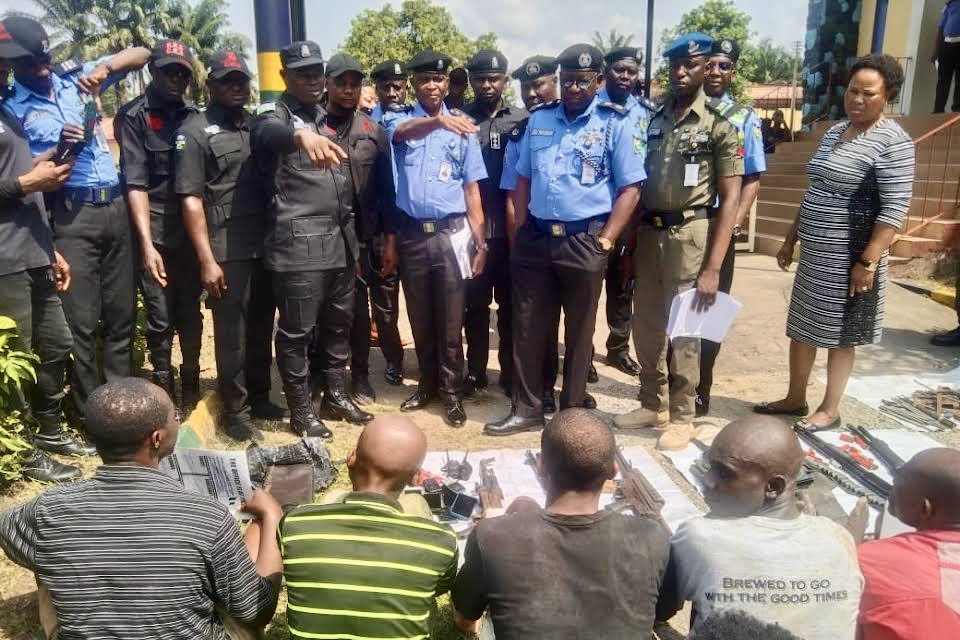
Cross River Police deny shielding suspected cultists, but their own account leaves unresolved questions about the firearm, masked occupants and an unauthorised interview of the suspect.
The most important development in the Calabar shooting controversy may not be the arrest itself.
It is what happens next.
The Cross River State Police Command says it has a suspect in custody, is investigating the incident and will prosecute if the evidence establishes a prima facie case.
At the same time, the Command has acknowledged that two masked people seen inside the vehicle have not been identified, that officers conducted an unauthorised video interview with the suspect, and that the interview was later leaked.
That means the central public question has shifted.
It is no longer simply who fired the gun.
It is whether investigators can now establish a complete and independently credible chain showing who was in the vehicle, who supplied the weapon, who authorised or facilitated the journey, whether any police officers were present and whether any personnel interfered with the integrity of the investigation.
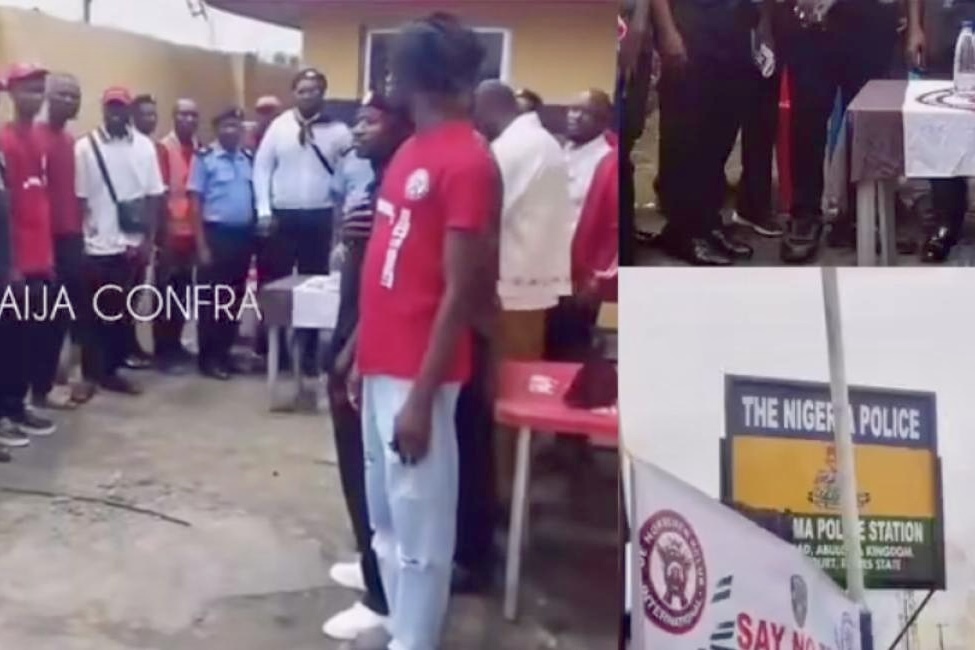
The Command’s Sunday statement came after the social media handle “Portrait Peterson” alleged that police were shielding suspected cultists linked to the viral footage.
Police rejected that allegation.
But the Command’s own response has widened the investigation rather than closed it.
What the police have established so far
The shooting video surfaced after an incident believed by police to have occurred in the early hours of September 17, 2026.
According to the Command’s earlier account, the footage showed suspected cult members inside a moving vehicle firing shots within the Calabar metropolis.
The Commissioner of Police, CP Ajo Geoffrey Ordue, directed investigators to identify and apprehend those involved.
The Deputy Commissioner of Police, Operations, working with operatives of the Violence Crime Response Unit, began an intelligence-led operation at about 11:30pm on September 17.
Investigators traced the vehicle seen in the footage and arrested its driver.
Information obtained during that operation reportedly led detectives to a hotel in Calabar, where a second suspect, identified by police as 24-year-old Emmanuel Ejim Ejim, was arrested.
Police said preliminary investigation identified Ejim as a student of the University of Cross River State, UNICROSS.
The Command further alleged that during questioning he identified himself as a leader of the Vikings Confraternity and admitted being the person seen firing the shots.
The police also said he told investigators that he had taken part in a sign-out activity and that the pistol allegedly used in the shooting had been handed to him by another suspected member of the group.
Those are serious allegations.
They are not yet a court finding.
Under Section 36 of Nigeria’s Constitution, a person charged with a criminal offence is presumed innocent until proved guilty.
That distinction matters because the case is still at the investigative stage.
Police deny the arrest was a diversion
The new controversy began with allegations that the police were merely creating the appearance of action while protecting the identities of other people allegedly involved.
The Command strongly rejected that account.
It said:
“The suspect remains in police custody and is undergoing investigation. If the evidence establishes a prima facie case, the suspect will be prosecuted in accordance with the law.”
The Command also insisted that the arrest was not “a formality or an attempt to divert attention from the allegations”.
That is an important qualification.
An arrest is not the same thing as the completion of an investigation. Nor does detention itself establish guilt.
Nigeria’s National Policy on Prosecution requires prosecutorial decisions to be based on evidence and says a prosecution should not proceed where prima facie evidence is lacking. The policy also requires consideration of the suspect’s legal rights and the public interest.
In practical terms, the police now have to turn an arrest into an evidentially sound case.
That means the viral video alone cannot answer every question.
The two masked figures may be the biggest unanswered question
The most striking detail in the Command’s latest statement is its admission that investigators are still trying to establish the identities of two masked people seen inside the vehicle.
The allegation circulating online is that they may be police officers.
The Command has not confirmed that.
Instead, it said:
“The Command is independently investigating whether they are police officers and, if so, their identities, roles and the circumstances surrounding their presence.”
That is a significant line in the investigation.
If they are not police officers, investigators will still need to establish who they are and what they were doing in the vehicle.
If they are police officers, the questions become considerably more specific.
Were they on official duty?
Were they passengers?
Were they aware that a firearm was being discharged?
Did they intervene?
Did they know the identities of the other occupants?
Were they connected to the vehicle before the shooting?
And how did two masked people come to appear in the footage at all?
For now, the Command says the suspect in custody has not identified them.
Until those questions are resolved, the investigation remains incomplete.
Then there is the gun
The police say Ejim allegedly told investigators that another suspected member of the group handed him the pistol.
That creates a second line of inquiry.
Who supplied the firearm?
Where did it come from?
Was it legally held?
Has it been recovered?
If recovered, has it been subjected to forensic examination?
Can investigators establish whether it was the same weapon seen in the video?
Was the firearm used in any previous offence?
These questions are more important than simply establishing the identity of the person holding the weapon.
A shooting investigation that identifies the apparent gunman but fails to establish the provenance and chain of custody of the firearm risks leaving a major gap in the evidence.
The police themselves acknowledged that “the circumstances surrounding the possession of the firearm and the movement of the vehicle remain subjects of investigation”.
That admission effectively defines the next phase of the case.
The leaked police interview creates another credibility problem
Perhaps the most unusual development is the Command’s acknowledgement that police officers conducted an unauthorised video interview with the suspect and that the recording was later leaked.
The Command said:
“The officers involved in the unauthorised video interview of the alleged suspect, which was later leaked, have been identified and disciplined in accordance with established police procedures.”
The Command also said:
“The Command will not shield personnel who act improperly or compromise investigations against suspected offenders.”
That disciplinary step may be important internally.
But for public confidence, another question remains.
What exactly happened during that interview?
Was the interview recorded as part of a formal investigative process?
Who authorised it?
Who had custody of the recording?
How did it leave police control?
Was the suspect interviewed before being formally cautioned or advised of his legal rights?
Did the unauthorised recording alter, contaminate or complicate the evidential process?
The Command has not publicly provided those details in the statement reviewed by Atlantic Post.
That does not establish wrongdoing by the officers beyond the Command’s own finding that the interview was unauthorised.
But it does mean investigators have to manage two investigations at once: the alleged shooting and the circumstances in which material involving a suspect came out of police custody.
The UNICROSS connection adds another layer
The shooting investigation has unfolded against the backdrop of final-year students’ sign-out activities at UNICROSS.
The university had reiterated on September 18 that sign-out activities were banned within or around its campuses and warned students and groups against organising or participating in activities capable of disrupting peace and security.
Local reporting indicated that students nevertheless participated in large celebrations in Calabar around the same period.
That does not prove that the shooting was officially connected to the university or that every participant in the celebrations was involved in criminal activity.
It does show why investigators need to establish the exact time, location and movement of the vehicle.
The police have placed the viral incident in the early hours of September 17.
The university’s wider sign-out controversy continued into September 18.
The timeline therefore matters.
A precise reconstruction of where the vehicle travelled, who joined or left it and what happened before and after the footage was recorded could potentially answer questions that social media speculation cannot.
Five questions now hanging over the case
1. Who supplied the pistol?
Police say another suspected member allegedly handed it to the man seen shooting.
That person has not publicly been identified.
2. Who were the masked occupants?
Police say two masked people were visible in the vehicle and are investigating whether they were officers.
Their identities and roles remain unresolved.
3. What happened to the firearm?
There is no publicly established account yet of a recovered weapon, forensic examination or ballistic linkage.
4. What exactly happened during the unauthorised police interview?
The officers involved have reportedly been disciplined, but the Command has not publicly detailed the circumstances.
5. Will the investigation reach beyond the person holding the gun?
The Command says it is pursuing other people connected with the incident.
That is essential if investigators believe the shooting involved more than one person.
The real test is transparency, not the arrest
The Command has now said:
“All allegations will be properly investigated, and anyone found culpable will face the law, regardless of status or affiliation.”
That is the standard by which the case will ultimately be judged in the public record.
The immediate pressure is not simply to announce more arrests.
It is to establish the evidence.
Who was there?
Who owned the gun?
Who supplied it?
Who drove the vehicle?
Who else was inside?
Were any police personnel present?
What happened to the firearm?
What evidence has been recovered?
And what exactly did investigators do after the unauthorised interview occurred?
At the time of publication, the available reporting reviewed by Atlantic Post does not establish that the Cross River Police Command deliberately shielded cultists. The Command has expressly denied the allegation, while simultaneously acknowledging that the identities of the masked occupants and the circumstances of the leaked interview remain under investigation.
That leaves a simple but difficult standard for investigators.
Produce the evidence.
The suspect remains in custody, but custody is only the beginning.
The credibility of the final outcome will depend on whether the police can connect the video, the vehicle, the firearm, the occupants and the alleged organisers into one clear evidential chain that can survive scrutiny in court.
Until then, the Calabar shooting remains more than a viral video and more than an arrest.
It is a test of whether a high-profile public safety investigation can move from social-media outrage to a transparent, evidence-led criminal case.
Follow us on our broadcast channels today!
- WhatsApp: https://whatsapp.com/channel/0029VawZ8TbDDmFT1a1Syg46
- Telegram: https://t.me/atlanticpostchannel
- Facebook: https://www.messenger.com/channel/atlanticpostng