Locked Out at Delta’s Big Investment Summit
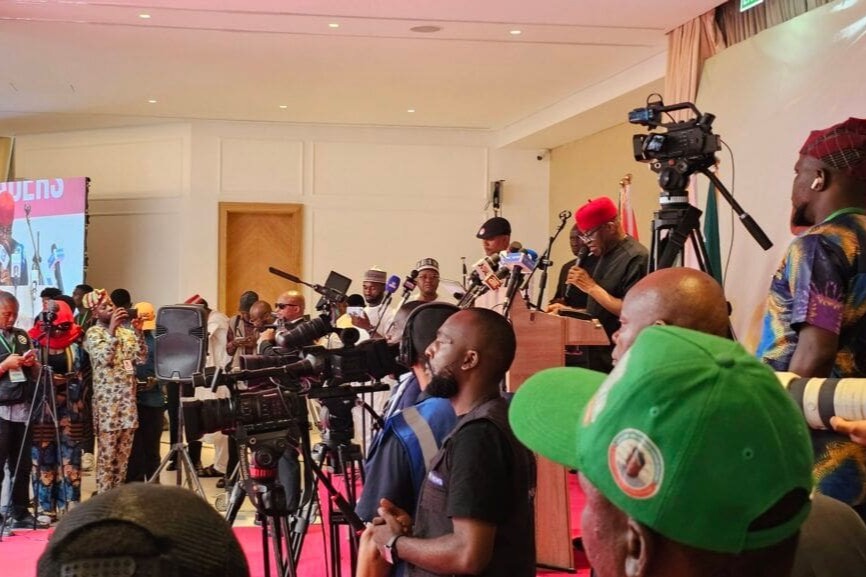
ASABA, Nigeria — Delta State’s much-publicised Economic and Investment Summit opened in Asaba on Monday, 3 August 2026, at The Dome Event Centre, but the event’s carefully choreographed investment message was immediately dented by reports of accreditation chaos that left several duly registered participants stranded outside the venue.
The summit is officially scheduled to run from 3 to 5 August 2026 and is billed under the theme, “Harnessing Our Strengths, Unlocking Our Potentials”. The official summit platform says Delta is using the gathering to project opportunities in energy, agriculture, the blue economy, digital innovation and the Delta Special Economic Zone.
The summit had already been framed as a heavyweight business and political spectacle before the first panel session began. Vice President Kashim Shettima, WTO Director-General Ngozi Okonjo-Iweala and Kenyan scholar Prof. Patrick Lumumba were all reported in Asaba ahead of the event, while Delta officials said the summit had attracted interest from 25 prospective investors from Brazil and several others from China.
But on the ground, the experience told a different story. Participants said the accreditation exercise collapsed at the exact point where the state wanted to demonstrate competence and investor readiness.
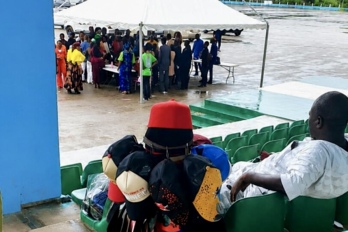
According to the accounts supplied, attendees who had completed online registration and received confirmation emails were met at the Cenotaph accreditation centre with approved profiles on the system, but no tags to admit them into the Dome Event Centre.
Others said their applications remained stuck at “pending approval” even after registering more than a week earlier, while dignitaries and special guests appeared to have tags readily available.
One affected participant, Engineer Wale, said he travelled from Lagos with members of his team after receiving approval emails, only to be turned back when the system showed his registration as approved but no tag was available.
He said the trip left him with hotel bills, transport costs and a sense of deep disappointment over what he described as a poor arrangement for a global event.
Another frustrated participant, Emeka, said the organisers failed to provide television screens or any alternative viewing point for those locked outside, calling the exercise a “total failure” and lamenting that even journalists were caught in the same net.
That embarrassment stands in stark contrast to the picture Delta has been trying to sell to investors. The summit’s own official platform says the state had a 2024 GDP of ₦16.97 trillion, a 163-kilometre coastline, four sea ports and strong openings in sectors including oil and gas, agriculture, logistics, tourism, mining and digital innovation.
It also frames Delta as one of Nigeria’s top five economies by GDP size, with a steadily rising output profile.
In his address, Vice President Shettima urged investors to see Delta as a “first-order investment destination”, arguing that the state’s long coastline, gas reserves, ports, power assets, agricultural wealth and educated population make it a natural magnet for capital.
He also said the Federal Government’s reforms had strengthened the wider economic environment and described the summit as a race to turn opportunity into jobs and prosperity.
Governor Sheriff Oborevwori, meanwhile, used the summit to present Delta as ready for serious private-sector capital, unveiling a US$100 million Viability Gap Fund to de-risk strategic investments and insisting that the summit was intended to convert investment promises into bankable projects.
On the policy pitch, the governor has positioned the event as part of a broader bid to accelerate industrialisation, deepen economic diversification and attract long-term capital into the state.
Okonjo-Iweala’s keynote brief also reinforced that strategic ambition. According to the supplied summit remarks, she urged Delta to leverage the African Continental Free Trade Area, global supply-chain shifts and Nigeria’s ongoing reforms to emerge as “Nigeria’s next industrial growth hub”, pointing to the state’s natural gas reserves, seaports, fertile land, skilled workforce, agro-processing potential, blue economy, digital infrastructure and artificial intelligence as the next frontier for growth.
Yet the central lesson of Monday’s disorder is brutally simple: credibility in investment diplomacy is often won or lost before the first speech is delivered.
A summit designed to showcase Delta as organised, investor-friendly and globally competitive cannot afford to fumble basic entry logistics, especially when the very people the event is trying to impress are left outside looking in. For a state seeking to convert promise into capital, the gate should have been the easiest problem to solve.
Follow us on our broadcast channels today!
- WhatsApp: https://whatsapp.com/channel/0029VawZ8TbDDmFT1a1Syg46
- Telegram: https://t.me/atlanticpostchannel
- Facebook: https://www.messenger.com/channel/atlanticpostng