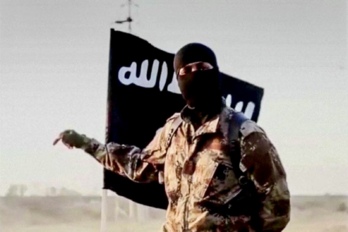
The Nigerian military has raised a fresh alarm over the security situation in the North-East, warning that remnants of Boko Haram and the Islamic State West Africa Province may try to exploit the forthcoming Eid-el-Kabir celebrations with attacks on civilian targets.
In a security advisory issued through Operation HADIN KAI, the theatre command said credible intelligence points to possible attempts to use suicide bombers and improvised explosive devices against crowded public places during the festive period.
The warning comes as residents prepare for Eid prayers on Wednesday, May 28, 2026, with the military insisting that the threats have already been anticipated.
What makes the advisory especially significant is the tone of certainty in the military’s language. The command did not frame the alert as a vague possibility, but as a concrete risk backed by intelligence.
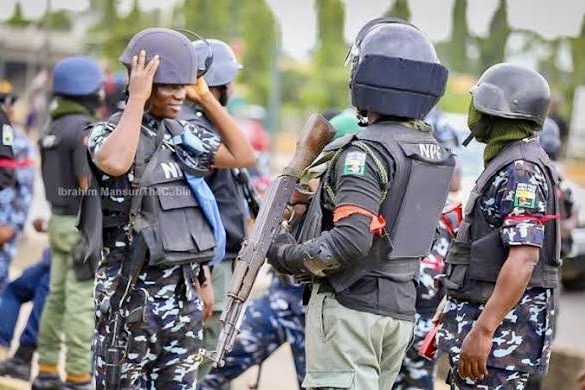
It said troops had been forward-deployed to vulnerable areas across the theatre, with surveillance and reconnaissance assets activated, patrols intensified, and security forces working alongside sister agencies, the Civilian Joint Task Force and community vigilance groups.
In the military’s own words, the threats were “thoroughly anticipated”, while residents were told to keep celebrations close to home where possible and avoid unnecessary exposure to danger.
The advisory also reads like a public safety manual for a region that knows too well how insurgents operate.
Worshippers were urged to hold Eid prayers near their homes, avoid large open gatherings, stay alert in markets, motor parks, banks and prayer grounds, and immediately report suspicious persons, unattended objects or unusual movement to security agencies.
The military also warned against the spread of rumours, saying the public should rely only on verified official channels. That instruction reflects a familiar reality in the North-East, where panic can spread almost as fast as an attack itself when fear meets social media speculation.
The latest alert is not coming in a vacuum. In March 2026, Reuters reported that Islamist militants killed at least 14 Nigerian soldiers in Borno State during two attacks on army bases, before another coordinated wave of raids across the North-East left at least 12 soldiers and three civilians dead.
Those incidents showed that insurgent groups remain capable of striking multiple locations in short succession, despite sustained military operations.
Reuters also reported that the attacks underscored the militants’ ability to hit several fronts at once, a pattern that has kept the region under severe pressure.
The military’s warning also lands just days after a major joint Nigeria-United States operation in the North-East against Islamic State-linked fighters.
Reuters reported that additional airstrikes in Borno State killed more than 20 ISWAP militants, following a joint mission that killed Abu-Bilal al-Minuki, described as a senior Islamic State figure.
The Associated Press later reported that the wider campaign had killed 175 Islamic State fighters and eliminated two senior militant leaders.
While these operations show momentum against insurgent networks, they also underline how active and adaptive the groups remain, especially in the Lake Chad corridor.
That is why the Sallah advisory matters beyond the immediate holiday period. It signals that the theatre command expects insurgents to seek symbolic targets at moments of public concentration, when crowds are easier to intimidate and the psychological impact of any attack is magnified.
This is an assessment based on the pattern of recent attacks and the military’s decision to issue a public alert before the festivities. In practical terms, the army is trying to deny terrorists both surprise and spectacle.
For communities in Borno, Yobe and Adamawa, the warning is another reminder that the war against Boko Haram and ISWAP has not ended, even when battlefield gains are announced.
The insurgency has been running for nearly two decades, with Reuters noting in March that the conflict has killed thousands and displaced about 2 million people.
The latest advisory therefore serves a dual purpose: it is an operational warning to security agencies and a public appeal for restraint, vigilance and disciplined movement during a religious season that should be marked by peace, not fear.
Follow us on our broadcast channels today!
- WhatsApp: https://whatsapp.com/channel/0029VawZ8TbDDmFT1a1Syg46
- Telegram: https://t.me/atlanticpostchannel
- Facebook: https://www.messenger.com/channel/atlanticpostng