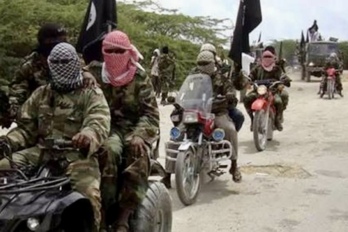
Suspected Boko Haram/ISWAP fighters on Saturday evening launched another vicious strike on Kautikari village in Chibok Local Government Area of Borno State, setting Kautikari Primary School and Government Day Secondary School ablaze and forcing terrified residents to flee into nearby bushes for safety. Vanguard reported that the attack began at about 7 p.m., with the schools still burning as panic spread across the community.
A local security personnel from Kautikari, who is now based in Maiduguri, confirmed the raid and offered a rare on-the-ground testimony of the assault. He said, “Yes, I can confirm to you that our village (Kautikari) in the Chibok Local Government Area is under Boko Haram attack.” He also indicated that the situation remained fluid, with casualty figures and the full scale of destruction still being assessed when the report was filed. Vanguard further said efforts to get an official police response had not succeeded at press time.
This latest violence is not an isolated strike. Kautikari has been repeatedly exposed to Boko Haram attacks in recent months, and the wider Chibok axis has remained under pressure from insurgent activity despite years of military operations in the North-East. THISDAY reported in May that Chibok communities were facing renewed displacement and that residents in Kautikari and neighbouring settlements were living in constant fear. Vanguard also reported an earlier Kautikari attack in March. The pattern suggests a community trapped in a cycle of return violence, displacement and fragile resettlement.
The choice of target also matters. Schools have long been one of Boko Haram’s most brutal symbols of defiance against the state, and the attack on Kautikari Primary School and Government Day Secondary School fits a well-documented pattern of assaults on education infrastructure in Borno. In a separate Borno attack in May, AP reported that police said some students had “fled for safety during the pandemonium” after militants attacked a school in Askira-Uba. UNICEF and UN-linked reporting have repeatedly warned that insurgent attacks in north-eastern Nigeria have destroyed or closed schools and kept large numbers of children out of class.
That educational dimension gives the Kautikari fire a wider national significance. It is not just a village under attack. It is another warning that the insurgency still understands the symbolic and practical damage of striking schools, especially in communities already struggling with insecurity, fear and interrupted learning. The result is more than burnt buildings. It is the deepening of distrust, the further weakening of public services and the quiet collapse of normal life in rural Borno. This is an editorial inference drawn from the repeated school attacks and displacement reported in the area.
The broader security picture remains disturbing. Just days earlier, AP reported that militants killed five soldiers in Mandaragirau in Borno State, while the Nigerian army said it had also rescued 360 abducted people from a Boko Haram hideout in the Mandara Mountains. Those two developments, taken together, show a theatre in which the military can still claim tactical gains, but insurgents continue to stage deadly raids with alarming speed and reach. The war is clearly not over, even if official narratives sometimes suggest otherwise.
For Chibok, the symbolism is especially cruel. The area remains inseparable from the 2014 mass abduction of schoolgirls, a trauma that still shapes national memory and international concern. AP noted in a later report that the Chibok kidnapping was part of the mass abduction that shocked the world, and that the region remains plagued by a long insurgency. Every fresh attack in Chibok therefore reopens an old wound, reminding Nigerians that education in parts of the North-East is still treated as a battlefield rather than a public good.
At the time of filing, there was still no official statement from security agencies on the Kautikari raid, and no verified casualty count had been released. That silence matters. Communities under attack need rapid confirmation, visible reinforcement and honest communication, not vague assurances after the smoke has cleared. Until the authorities provide a clear account of what happened, how many were affected and what protection is being deployed, Kautikari will remain another painful reminder that Boko Haram and ISWAP still have the capacity to terrify, destroy and displace in the heart of Borno.
Follow us on our broadcast channels today!
- WhatsApp: https://whatsapp.com/channel/0029VawZ8TbDDmFT1a1Syg46
- Telegram: https://t.me/atlanticpostchannel
- Facebook: https://www.messenger.com/channel/atlanticpostng