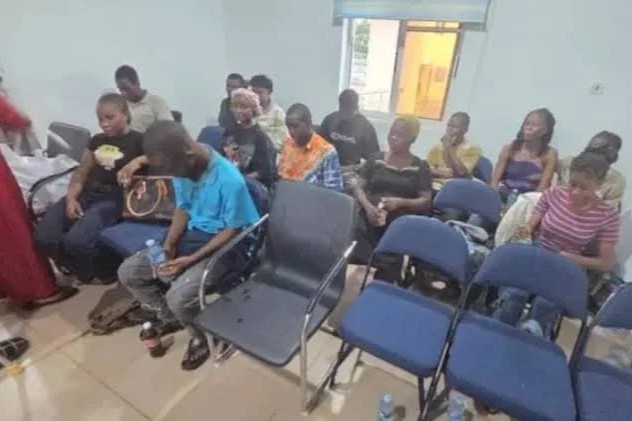
On 24 November 2025 troops of the Nigerian Army’s 12 Brigade operating in the Agbede Response Area of Kabba/Bunu Local Government intercepted a Toyota Camry (DKA 158AU) conveying what the military describes as a “major consignment” of Cannabis sativa.
The driver, named in the army statement as Mr Johnson Ayo, was detained after troops discovered 10 sacks containing 108.8 kilograms of cannabis hidden in the vehicle.
The army said a branded police hat and belt found on the dashboard intensified suspicion. They handed the suspect and exhibits to the National Drug Law Enforcement Agency (NDLEA), Kogi State Command, for further investigation.
This seizure, modest in absolute weight compared with some recent hauls, nevertheless fits an alarming pattern. NDLEA and security reporting indicate that 2025 has seen a sharp rise in large-scale seizures across Nigeria. These include multiple operations. They yielded several hundred kilograms to tonnes of cannabis and other narcotics. The agency and the army are intensifying collaboration.
Recent reporting documents multi-hundred-kilogram seizures in Enugu and other states. Aggregated NDLEA figures for 2025 indicate seizures measured in tonnes. This reflects both rising interdiction capacity and persistent trafficking flows.
Why this matters. Security analysts and international reporting increasingly link organised drug movement to the financing of violent crime in Nigeria. The United Nations Office on Drugs and Crime (UNODC) highlights the expansion of global drug supply chains. There is a diversification of criminal profit streams.
Locally, academic and public-health studies note cannabis remains the most widely used illicit substance. It acts as a currency of sorts in regional criminal economies. The monetary value and ease of transport make cannabis a recurring revenue source for gangs. In some areas, it is exploited by armed bandits.
In short, trafficking is not an isolated vice; it is an enabling economy for insecurity.
Operational context. The 12 Brigade is headquartered in Lokoja. It is active across Kabba/Bunu and neighbouring corridors. In 2025, the brigade has been credited with a string of security operations. These operations include forward base inspections and patrols aimed at denying criminal elements freedom of movement.
Agbede sits at a tactical crossroads linking roads from Ekiti and other south-west states into Kogi’s hinterland. This position makes the route attractive for couriers moving consignments toward Obajana and beyond.
The routine stop-and-search that exposed 1088kg is a textbook example of layered security. It demonstrates civil-military synergy. However, it also points to supply routes that merit mapping. These routes require disruption at the source.
Comparative perspective and legal backdrop. Seizures measured in hundreds of kilos are regularly reported across the federation. The federal legislature has debated stiffer penalties for traffickers in recent years.
In 2024 the Senate proposed tougher measures. These include harsher maximum sentences for large-scale trafficking. This is a signal of growing state intolerance for networks that finance organised violence.
Enforcement remains uneven, however, and convictions often lag seizures.
What to watch next. The NDLEA’s follow-up investigation will determine origin points. It will also identify the chain of distribution. Additionally, it will uncover any wider network linked to the November 24 interception.
For security planners, the priority is twofold. They aim to degrade the trafficking routes that feed criminal finances. Additionally, they work to accelerate prosecution to create a deterrent effect.
For citizens, the episode underscores a persistent truth. Narcotics trafficking in Nigeria today is a health problem. It is also a tangible national-security risk.
Follow us on our broadcast channels today!
- WhatsApp: https://whatsapp.com/channel/0029VawZ8TbDDmFT1a1Syg46
- Telegram: https://t.me/atlanticpostchannel
- Facebook: https://www.messenger.com/channel/atlanticpostng