The reported arrival of multiple MQ-9 Reaper drones in Nigeria is significant. About 200 United States military personnel accompanied the drones. This marks one of the most significant foreign security deployments in the country in recent years.
According to Reuters, the mission is confined to training, surveillance, and intelligence support. Both Nigerian and American officials insist that the troops are not on frontline combat duty. They assert that the drones are not being used for strikes.
Even so, the scale and timing of the deployment suggest a shift in perspective. Washington and Abuja now see Nigeria’s insurgency as a problem. It demands a sharper and more sustained security partnership.
At the centre of the arrangement is a new intelligence fusion cell and a Nigerian military request for help.
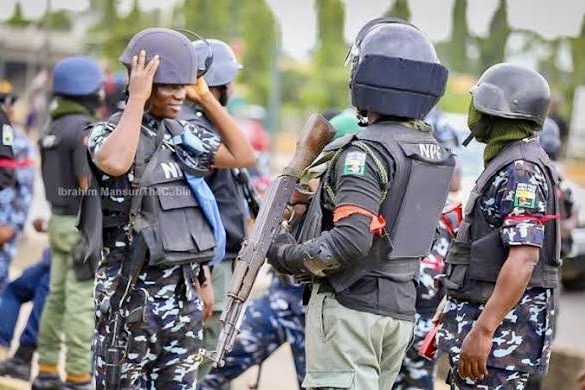
Reuters reported that a U.S. defence official described the effort as a response to a “shared security threat”. Major General Samaila Uba, Nigeria’s director of defence information, said U.S. assets were operating from Bauchi airfield in the north-east.
Uba added that the partnership was producing “actionable intelligence” for field commanders. He emphasized that American personnel remained in a “strictly non-combat role”.
The deployment lands at a moment when Nigeria’s jihadist war is again showing signs of escalation.
Reuters reported that suicide bombings in Maiduguri, the most heavily defended city in the north-east, killed at least 23 people and wounded more than 100, while a separate assault on a military base in Mallam Fatori was repelled with air support, leaving the army claiming at least 80 insurgents dead.
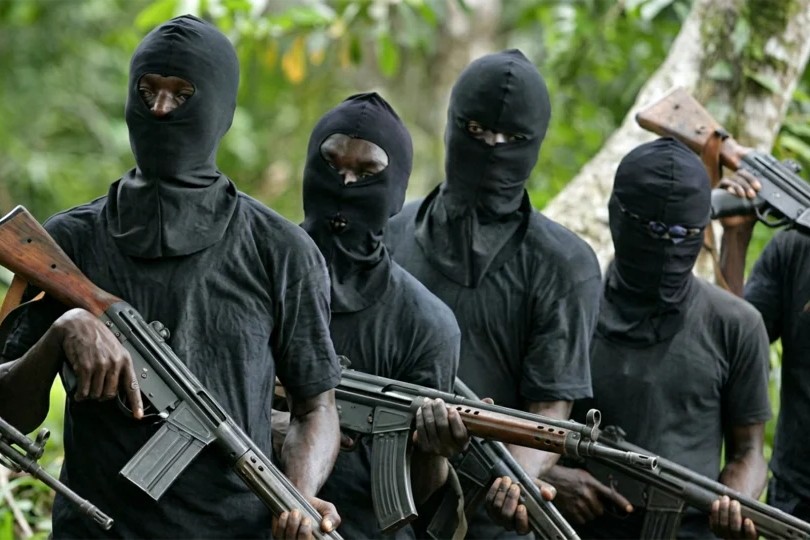
The militants involved were connected to Boko Haram. They were also linked to Islamic State West Africa Province, better known as ISWAP. Both groups have intensified pressure on military targets in Borno State.
That backdrop matters because the U.S. presence is not arriving in a vacuum. On 10 March, the U.S. embassy in Nigeria warned American citizens of a possible “terrorist threat” against U.S. facilities and affiliated schools. Then, on 17 March, Reuters quoted analysts. They warned that the Maiduguri bombings showed the militants’ resilience and intelligence reach. The bombings did not indicate their collapse.
In other words, the foreign deployment is entering a theatre. Here, the enemy remains active, adaptive, and willing to stage symbolic attacks in the heart of the north-east.
The MQ-9 platform itself underlines how serious the arrangement is. Reuters noted that the drones can loiter at high altitude for more than 27 hours. They are capable of both surveillance and airstrikes.
Officials say this Nigerian mission is intelligence-focused only. However, the aircraft’s dual-use character makes the line between monitoring and targeting politically sensitive.
That is especially so in a country where domestic debate has repeatedly shaped U.S. involvement. This debate revolves around sovereignty, religion, and the optics of foreign military power on Nigerian soil.
This latest deployment also fits a broader pattern of U.S. re-engagement after earlier operations.
Reuters reported that the United States carried out airstrikes in northwest Nigeria on Christmas Day 2025 at Nigeria’s request, and that U.S. intelligence-gathering flights over Nigeria had already been running from Ghana since at least late November.
Reuters also reported in February that Washington planned to send about 200 troops to train Nigeria’s military against Islamist militants.
Those reports collectively indicate a gradual shift. They show a move from remote intelligence support to a more visible footprint in the fight against insurgents.
The strategic logic is plain enough. Nigeria has battled Boko Haram and its splinter factions since 2009. The insurgency has survived repeated military offensives, leadership losses, and territorial reversals.
Reuters reported that militants still control or influence substantial rural zones. State forces remain concentrated in towns. This balance allows jihadists to wait out operations and reappear elsewhere.
The U.S. drones and trainers will not solve that structural problem on their own. However, they may improve Nigeria’s ability to detect movement. They can disrupt planning. Additionally, they can shorten the delay between intelligence and response. That is an inference, but it follows directly from the way the mission is defined.
There is, however, an uncomfortable question at the heart of the deployment. If the mission is genuinely advisory, then success should be measured by better intelligence, faster responses and fewer civilian casualties.
If it drifts beyond that, Nigeria risks entering another cycle. In this cycle, external support raises expectations. However, it does not change the battlefield’s basic arithmetic.
Reuters’ reporting suggests both governments are aware of that risk. This awareness explains why they have repeatedly stressed that the Americans are not in combat. The timeline will be jointly determined.
For now, the clearest reading is that Nigeria is becoming the new centre of gravity for U.S. counterterror surveillance in West Africa after the collapse of the Niger partnership in 2024.
Reuters reported that the U.S. drone base in neighbouring Niger was once a major regional monitoring hub. It was closed after the junta requested the Americans leave.
Nigeria is not just another cooperation partner. It is a frontline intelligence anchor. This is crucial in a region where jihadist networks, banditry and cross-border instability are increasingly overlapping.
If the reports are accurate, then this is more than a temporary reinforcement. It is a warning that Nigeria’s war in the north is entering a more internationalised phase. This phase is driven by drones. It relies on intelligence fusion and limited foreign advisers rather than large combat formations.
The militants are not being told to stop. They are being watched more closely. Whether that is enough will depend on whether the Nigerian state can turn foreign intelligence into decisive local action. They need to act before the insurgents adapt again.
Follow us on our broadcast channels today!
- WhatsApp: https://whatsapp.com/channel/0029VawZ8TbDDmFT1a1Syg46
- Telegram: https://t.me/atlanticpostchannel
- Facebook: https://www.messenger.com/channel/atlanticpostng