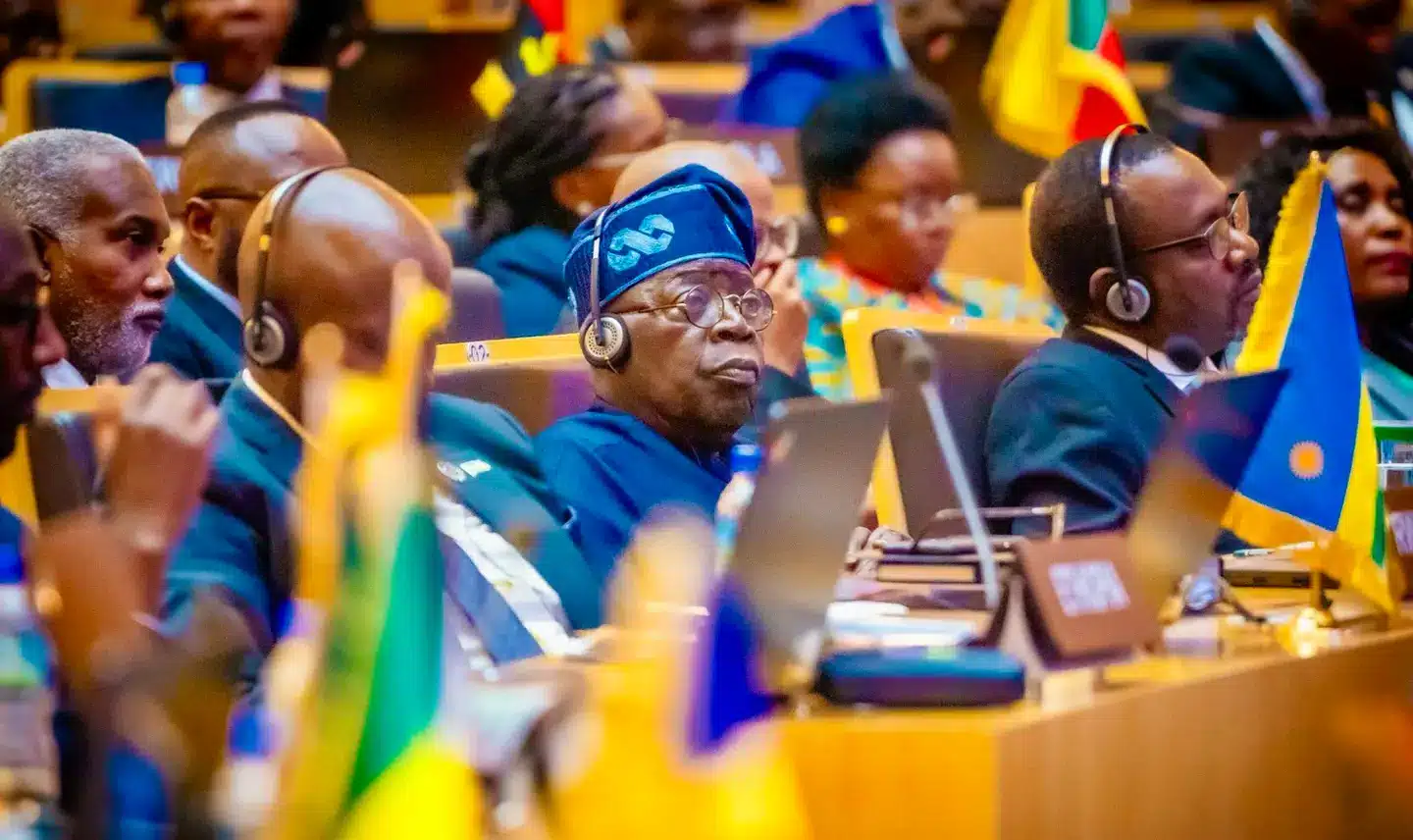
ABUJA, Nigeria — In a dramatic State House press release on February 16, 2025, Nigeria’s government made a resounding statement regarding the proposed reconfiguration of the African Union’s (AU) internal structures.
President Bola Tinubu, through his Minister of Foreign Affairs Ambassador Yusuf Tuggar, has categorically rejected the notion of splitting the existing Department of Political Affairs, Peace and Security (PAPS).
This report delves into the layers behind this decision, examining its implications for the AU, the cost implications, and Nigeria’s strategic vision for a more vibrant and cohesive continental body.
A New Chapter in AU Reforms
The ongoing reform process at the African Union is stirring considerable debate among member states. At the heart of the discourse is the desire to modernise the organisation to better meet the challenges of a rapidly changing global political and economic environment.
Nigeria’s endorsement of the reform proposals—particularly the suggestion to create a Heads of State and Government oversight committee under President Ruto’s leadership—signals its commitment to a dynamic, future-focused AU.
President Tinubu’s approval of initiatives advanced by his Rwandan and Kenyan counterparts, Presidents Paul Kagame and William Ruto, underscores a willingness to embrace transformative ideas that can reinvigorate the continent’s political and economic landscape.
However, Nigeria’s clear disapproval of creating a new department from the existing PAPS framework is rooted in both fiscal prudence and concerns over institutional stability.
The Crux of Nigeria’s Opposition
At the core of the Nigerian government’s stance is the belief that restructuring the PAPS department would lead to a superfluous expansion of administrative layers, thereby incurring unnecessary expenditure.
As detailed in the State House statement, President Tinubu emphasised:
“We do not support the proposal to reconfigure the Department of Political Affairs, Peace and Security as the reconfiguration of the PAPS Department in the way currently suggested will only lead us to incur more expenditure needlessly.”
Nigeria already benefits from a Standing Operational Directorate (SOD) under the Directorate of PAPS. This existing framework, as argued by President Tinubu, adequately addresses the continent’s peace support operations without necessitating a separate, independent Peace Support Operations Directorate.
Splitting the department, in his view, risks fracturing an already coherent structure, potentially destabilising the delicate balance within AU’s political affairs and peace and security processes.
Fiscal Prudence and Institutional Stability
In an era where every penny counts, particularly against a backdrop of global economic uncertainties, Nigeria’s reluctance to support the creation of an additional department resonates with broader calls for fiscal responsibility in public administration.
The government’s decision is a testament to Nigeria’s commitment to ensuring that reform is not merely a cosmetic exercise but one that yields tangible, cost-effective results.
From a broader perspective, the decision also reflects concerns about duplication of efforts and the potential for bureaucratic bloat.
The existing Department of Political Affairs, Peace and Security has been instrumental in maintaining the AU’s role as a mediator in conflict zones and a promoter of peace initiatives across the continent.
By retaining its structure, Nigeria argues that the AU can continue to operate efficiently without the risks associated with organisational fragmentation.
A Phased Approach to Reforms
Another cornerstone of Nigeria’s policy, as articulated by President Tinubu, is the preference for a phased approach to reform. Rather than attempting to overhaul the entire system at once—a move that could lead to prolonged consultations and uncertainty—the Nigerian government advocates for focusing on areas where consensus has already been reached.
“It is in this connection that Nigeria wishes to reiterate that instead of seeking to reach consensus on all fronts of our reform at one sweep, we should concentrate on areas where we have already reached consensus,” President Tinubu stated.
This pragmatic strategy ensures that reforms are implemented gradually, allowing member states to adapt to changes incrementally.
Such a measured approach minimises risks and helps safeguard the stability of the AU, ensuring that any transitions are smooth and that the organisation continues to fulfil its mandate effectively.
The Strategic Implications for the African Union
Nigeria’s stance on the proposed departmental split is not merely an internal administrative issue—it has significant ramifications for the future trajectory of the AU.
The African Union has long been seen as the linchpin of pan-African unity, tasked with fostering cooperation, peace, and development across the continent. Any move that could potentially destabilise its institutional framework is bound to be met with intense scrutiny.
By rejecting the proposal to create a new department, Nigeria is effectively championing the idea that reforms should enhance, rather than disrupt, the existing system.
The emphasis on transparency and inclusiveness in the reform process is a call for all member states to work collaboratively towards a more resilient and responsive AU.
In doing so, Nigeria sets an example of how prudent management and strategic foresight can pave the way for sustainable development within continental organisations.
Leadership and Continental Solidarity
The leadership dynamics within the AU are shifting, with President William Ruto emerging as a pivotal figure. Nigeria’s support for a Heads of State and Government oversight Committee, proposed to operate under Ruto’s leadership, reflects a broader realignment in African political alliances.
This move is designed to consolidate leadership at the highest level, ensuring that reform efforts are coordinated and that there is a direct line of accountability to the continent’s top leaders.
In addition to supporting the reform process, Nigeria’s endorsement of this proposal shows that it believes the current leadership can guide the AU through difficult times.
It is a calculated endorsement that places Nigeria in line with AU progressives who are ready to advance a modernised agenda for Africa’s future.
Critical Analysis and Expert Opinions
Critics of the reform proposals have warned that overhauling the AU’s administrative structures in one fell swoop could lead to unintended consequences.
The fear is that a fragmented approach might weaken the organisation’s capacity to respond to crises, thereby compromising the continent’s security framework.
Nigeria’s measured response, therefore, represents a balanced stance between the need for reform and the imperatives of stability and cost-efficiency.
Nigeria’s resistance to dividing the PAPS department, according to political observers, is representative of a larger tendency among African governments who prefer gradual reform to drastic reorganisation.
Any significant changes to long-standing institutions are viewed with understandable scepticism on a continent where political stability is frequently difficult to achieve.
Nigeria’s stance, as stated by President Tinubu, emphasises the need to capitalise on current advantages while steering clear of the dangers associated with bureaucratic growth.
Furthermore, Nigeria’s insistence on a transparent and inclusive reform process is reflective of its democratic values and its commitment to good governance.
The call for phased reforms is seen by many experts as a prudent strategy that allows for continuous assessment and adjustment, thereby reducing the likelihood of policy failures and ensuring that the reforms remain aligned with the needs of all member states.
The Road Ahead: Prospects and Challenges
Looking forward, the debate over AU reform is likely to intensify as member states continue to weigh the benefits and risks associated with various proposals.
Nigeria’s clear message—to focus on cost-effective, consensus-based reforms—resonates with many who are wary of sudden and potentially disruptive changes.
As the reform process unfolds, the need for robust dialogue and constructive engagement among member states will be paramount.
Nigeria and its supporters envision a future for the AU in which change is a continual process of progress rather than a one-time occurrence.
As the geopolitical and economic landscapes change, institutions are required to adapt, and this vision is in line with broader global tendencies towards adaptive governance.
As a reminder that development frequently necessitates striking a balance between innovation and continuity, Nigeria’s leadership in this area makes sure that any new initiatives strengthen rather than weaken the current structure.
Conclusion
Nigerian President Tinubu has taken a firm stand on one of the most divisive topics in the current AU reform process in a statement that has sent shockwaves through Abuja’s power structures and beyond.
Nigeria is promoting a cost-effective reform strategy that respects the African Union’s institutional integrity by opposing the division of the Department of Political Affairs, Peace, and Security.
Nigeria’s dedication to a reasonable and practical course of action is demonstrated by the choice to implement reform gradually, concentrating on areas of agreement and maintaining transparency.
Nigeria’s calm leadership provides a ray of stability and reason in a sea of change as the AU negotiates the challenges of contemporary administration
Nigeria is positioned to play a significant role in determining the direction of African diplomacy and security in the future, as long as its reform process is inclusive and non-disruptive.
This decisive moment in the AU’s evolution is a testament to Nigeria’s enduring influence on the continent’s political landscape.
As leaders across Africa consider the implications of these reforms, Nigeria’s perspective may well prove to be the linchpin in forging a unified, forward-looking approach to continental governance—a vision that marries progress with the stability necessary for lasting peace and prosperity.
Bayo Onanuga, Special Adviser to the President (Information & Strategy), articulated these views as part of Nigeria’s broader strategy to reform and revitalise the AU system, reaffirming the country’s unwavering commitment to the ideals of unity, efficiency, and transparency.
Atlantic Post will continue to follow this story closely, providing in-depth analysis and expert commentary on the unfolding reforms within the African Union and their impact on the geopolitical dynamics of the continent.