Security forces have rescued abducted pupils and teachers in Oyo State after what the Nigerian Army described as a carefully planned, intelligence-led operation involving military, intelligence and local security assets across the south-west and beyond.
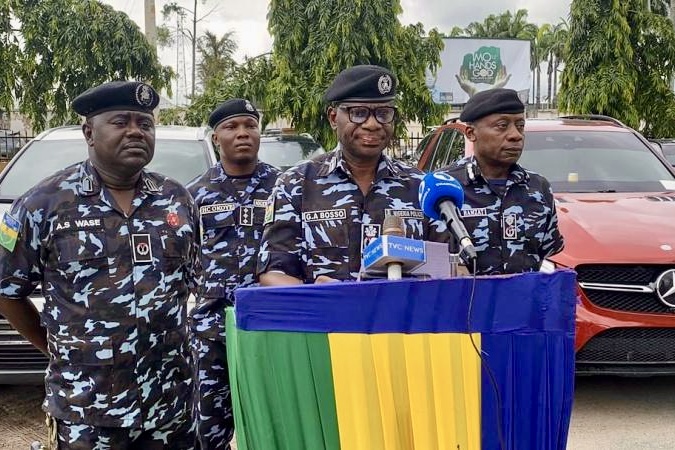
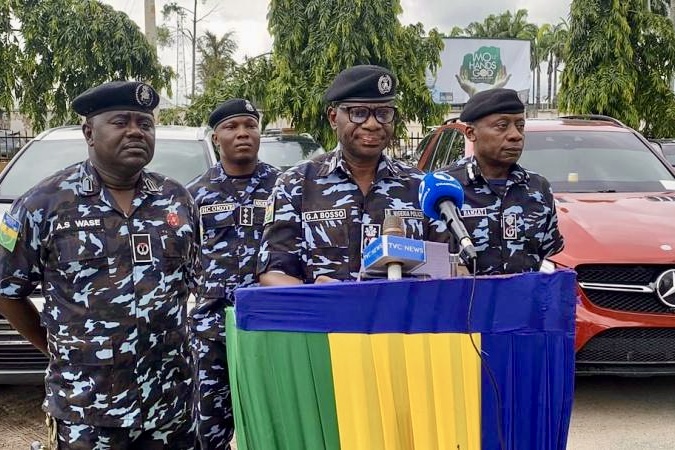
In a statement signed on 10 July 2026 by Lt Col Danjuma Jonah Danjuma, Acting Deputy Director, 2 Division Army Public Relations, the army said troops under the General Officer Commanding 2 Division, Major General CR Nnebeife, worked with special units from the Office of the National Security Adviser, the National Counter Terrorism Center, the Defence Headquarters and personnel from the Nigerian Army, Navy, Air Force, Police, DSS, NIA, NSCDC and local vigilantes, hunters and Amotekun formations.
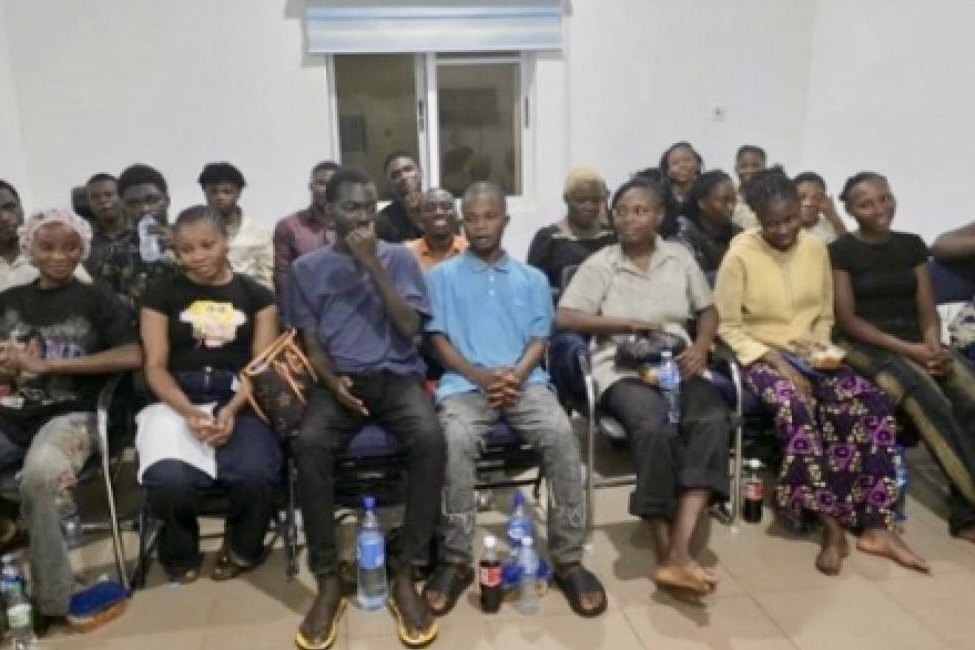
The statement said the operation led to the rescue of 44 pupils and teachers kidnapped from Oriire Local Government Area on 15 May 2026.
The military said the mission lasted more than a month and focused on identifying the alleged masterminds of the kidnapping, dismantling their logistics chains, and disrupting informants and hideouts in the Old Oyo National Park forest belt.
It said multiple arrests were made in Oyo State and in other parts of the country, adding that the pressure on the group ultimately led to the “unconditional” release of the captives.
The statement also said there were casualties among security forces, while the rescued children and teachers were receiving medical attention in an undisclosed hospital before being handed over to the Oyo State Government.
Reuters reported that at least 39 schoolchildren and six teachers kidnapped in the attack had been rescued, and that eight kidnappers were in custody. President Bola Tinubu, according to Reuters, said his government “will get justice for these children and their teachers”.
The difference in the early headcounts reflects a familiar feature of fast-moving kidnapping cases in Nigeria, where official figures can shift as operations unfold and victims are verified.
The Oyo rescue lands against a broader backdrop of violent extremism and armed kidnapping in Nigeria, where Boko Haram and Islamic State West Africa Province, or ISWAP, continue to anchor the jihadist threat in the north-east.
Reuters has recently reported renewed attacks by suspected Boko Haram and ISWAP fighters on military positions in Borno State, while ACLED and the European Union Agency for Asylum say ISWAP has increasingly used drones, motorcycle units and near-simultaneous assaults, and that Boko Haram’s JAS faction still holds enclaves around the Lake Chad basin and beyond.
The danger, however, is no longer confined to the north-east. Security monitors say jihadist and jihadist-adjacent violence is widening into Nigeria’s western and north-central corridors.
The Institute for Security Studies said violence in the Borgu-Kainji axis, which spans Niger, Kwara and Kebbi states around Kainji Lake National Park, rose sharply between 2024 and 2025, with attacks, abductions and bombings pointing to a dangerous spread along the country’s western borders.
Its analysis also identified Ansaru around Kainji, Lakurawa in the north-west and a Boko Haram splinter known as Mahmuda in the same wider theatre.
Reuters has likewise reported that militant attacks are rising along the Niger-Benin-Nigeria border zone, where porous borders and weak governance have given armed groups room to manoeuvre.
That makes the Oyo abductions significant beyond the immediate rescue. Reuters noted that schools are often targeted in Nigeria, but such attacks are less frequent in the south-west, which has historically been seen as less exposed than the north-east and north-west.
The Oyo case therefore points to a security challenge that is both geographic and organisational: criminal kidnappers, insurgent-linked cells and local informant networks can exploit forests, ungoverned spaces and weak perimeter security to strike in places once thought relatively safe.
Considered collectively, the latest reporting suggests that the country’s kidnapping threat is becoming more mobile, more networked and harder to contain in a single region.
The statement from 2 Division thanked President Tinubu for what it called strategic guidance and support, and also praised Governor Seyi Makinde of Oyo State, National Security Adviser Nuhu Ribadu, the Minister of Defence, the service chiefs, the Inspector-General of Police and the heads of the DSS and NIA.
It urged Nigerians to remain vigilant and continue to provide credible information to security agencies.
That appeal is consistent with the reality on the ground: Nigeria’s security fight is increasingly being won, or lost, in the speed at which intelligence can identify camps, routes, financiers and collaborators before abductors disappear into forests or across state lines.
Follow us on our broadcast channels today!
- WhatsApp: https://whatsapp.com/channel/0029VawZ8TbDDmFT1a1Syg46
- Telegram: https://t.me/atlanticpostchannel
- Facebook: https://www.messenger.com/channel/atlanticpostng