Editor
Tinubu’s Controversial Visit to China: Elevating Nigeria-China Relations Amid Sovereignty Concerns and Economic Risks

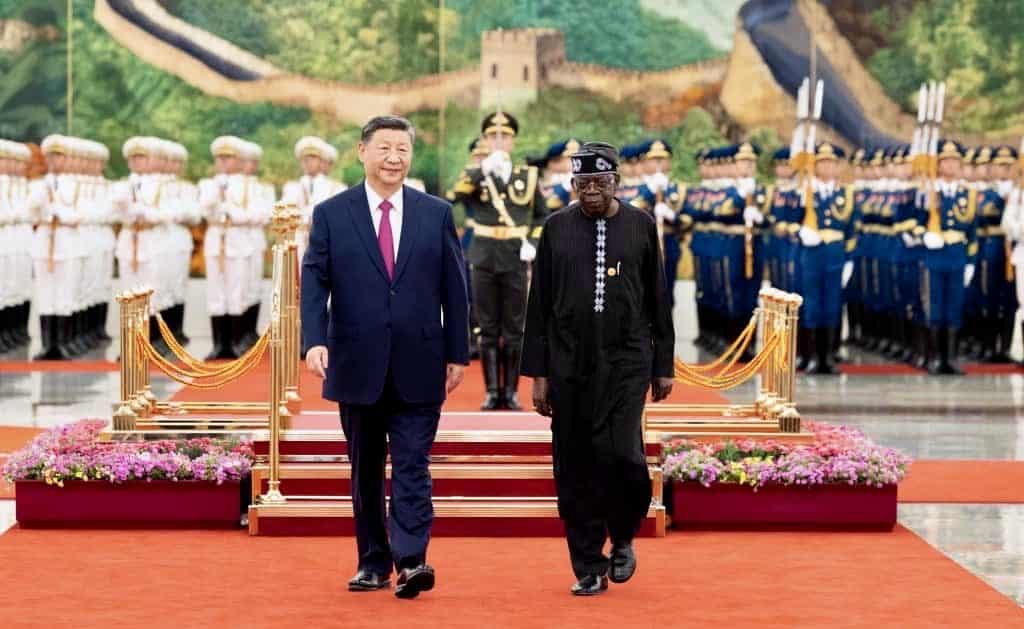
FILE 1/8: President Tinubu’s controversial visit to China results in a comprehensive strategic partnership with President Xi Jinping, raising questions about Nigeria’s sovereignty, economic dependence, and human rights commitments. September 3, 2024. 
FILE 2/8: President Tinubu’s controversial visit to China results in a comprehensive strategic partnership with President Xi Jinping, raising questions about Nigeria’s sovereignty, economic dependence, and human rights commitments. September 3, 2024. 
FILE 3/8: President Tinubu’s controversial visit to China results in a comprehensive strategic partnership with President Xi Jinping, raising questions about Nigeria’s sovereignty, economic dependence, and human rights commitments. September 3, 2024. 
FILE 4/8: President Tinubu’s controversial visit to China results in a comprehensive strategic partnership with President Xi Jinping, raising questions about Nigeria’s sovereignty, economic dependence, and human rights commitments. September 3, 2024. 
FILE 5/8: President Tinubu’s controversial visit to China results in a comprehensive strategic partnership with President Xi Jinping, raising questions about Nigeria’s sovereignty, economic dependence, and human rights commitments. September 3, 2024. 
FILE 6/10: President Tinubu’s controversial visit to China results in a comprehensive strategic partnership with President Xi Jinping, raising questions about Nigeria’s sovereignty, economic dependence, and human rights commitments. September 3, 2024. 
FILE 7/8: President Tinubu’s controversial visit to China results in a comprehensive strategic partnership with President Xi Jinping, raising questions about Nigeria’s sovereignty, economic dependence, and human rights commitments. September 3, 2024. FILE 8/8: President Tinubu’s controversial visit to China results in a comprehensive strategic partnership with President Xi Jinping, raising questions about Nigeria’s sovereignty, economic dependence, and human rights commitments. September 3, 2024.


President Bola Ahmed Tinubu’s recent diplomatic triumph in Beijing, where he secured a comprehensive strategic partnership with China, has sparked significant controversy and debate. While the agreement marks a milestone in Nigeria-China relations, it also raises critical questions about Nigeria’s sovereignty, economic independence, and commitment to human rights. As Nigeria deepens its ties with China, many are asking: at what cost?
A Diplomatic Coup or a Sovereignty Compromise?
The elevation of Nigeria-China relations to a comprehensive strategic partnership has been hailed as a diplomatic victory by the Tinubu administration. Yet, critics argue that the move could compromise Nigeria’s sovereignty and make the country overly dependent on China’s economic and political influence. The rapid expansion of Chinese investments in Nigeria’s infrastructure, energy, and technology sectors has sparked fears that Nigeria may be trading away its autonomy in exchange for short-term economic gains.
Skeptics point to the fact that China’s Belt and Road Initiative (BRI), which Nigeria has now officially signed onto, has been criticised globally for creating debt traps in developing nations. Several African countries, including Zambia and Sri Lanka, have found themselves struggling with unsustainable debt levels after participating in Chinese-funded infrastructure projects. Will Nigeria be the next victim of this so-called “debt diplomacy,” or is Tinubu confident that Nigeria can navigate these murky waters?
Economic Reforms or Economic Dependence?
President Tinubu’s emphasis on economic reforms during his visit to China has been met with mixed reactions. On one hand, his commitment to implementing far-reaching reforms across various sectors of Nigeria’s economy is commendable. On the other hand, the reliance on Chinese investment to fuel these reforms has raised alarms about the long-term implications for Nigeria’s economic independence.
Critics argue that while Chinese investments may provide a much-needed boost to Nigeria’s infrastructure and technological capabilities, they also risk making the country overly dependent on Beijing’s goodwill. The fear is that Nigeria could find itself in a situation where critical sectors of its economy are controlled by Chinese interests, leaving the country vulnerable to external pressures.
Moreover, Tinubu’s assurances that foreign investors will have easy access to bring in and repatriate their investments have sparked concerns about capital flight and the potential erosion of Nigeria’s economic sovereignty. Will Nigeria become merely a playground for foreign capital, or can Tinubu’s administration strike a balance that protects national interests?
Human Rights Concerns: A Blind Spot in the Strategic Partnership?
One of the most contentious aspects of the Nigeria-China partnership is the apparent disregard for human rights issues. China’s track record on human rights has been widely criticised, particularly its treatment of ethnic minorities, suppression of free speech, and authoritarian governance. By deepening ties with China, Nigeria risks being associated with these controversial practices, raising questions about its own commitment to human rights and democratic values.
Human rights advocates have expressed concerns that Nigeria’s engagement with China could lead to the importation of repressive tactics, particularly in areas such as media control and digital surveillance. The Memorandum of Understanding (MOU) on Media Exchange and Cooperation between China Media Group and the Nigerian Television Authority (NTA) is seen by some as a potential tool for state propaganda, rather than a means to promote free and independent journalism.
Furthermore, the collaboration with Huawei Technologies, a company often accused of facilitating state surveillance in China, has fuelled fears that Nigeria could adopt similar practices. The DigiTruck initiative, while aimed at enhancing digital literacy, could also be viewed as a vehicle for expanding China’s influence over Nigeria’s digital infrastructure, potentially compromising the privacy and freedoms of Nigerian citizens.
China-Africa Relations: A Model of Cooperation or Neo-Colonialism?
The Nigeria-China partnership is often touted as a model of South-South cooperation, but critics warn that it could also be seen as a new form of neo-colonialism. As China extends its influence across Africa through initiatives like FOCAC (Forum on China-Africa Cooperation) and the Belt and Road Initiative, there are growing concerns that African nations, including Nigeria, may become overly reliant on Chinese loans, technology, and infrastructure, to the detriment of their own sovereignty and development.
President Xi Jinping’s remarks about strengthening strategic coordination between Nigeria and China to “inject fresh impetus into China-Africa relations” sound promising on the surface. However, the reality of China’s economic dominance in Africa has left many wondering whether this “strategic coordination” is truly in Africa’s best interests, or whether it serves primarily to advance China’s geopolitical ambitions.
The Huawei Conundrum: Digital Innovation or Surveillance State?
Huawei’s involvement in Nigeria, particularly through its DigiTruck initiative and collaboration with the Nigerian government, has been both praised and criticised. While the company’s efforts to enhance digital literacy and support Nigeria’s digital economy are commendable, its controversial role in global surveillance has cast a shadow over these initiatives.
Huawei’s deep ties to the Chinese government have led to accusations that its technology could be used for state surveillance, both in China and abroad. By welcoming Huawei into Nigeria’s digital landscape, is the Tinubu administration inadvertently opening the door to increased state control and surveillance? The potential risks associated with this partnership cannot be ignored, especially in a country where concerns about government overreach and lack of transparency are already prevalent.
China’s Strategic Motive
China’s motives in elevating its relationship with Nigeria to a comprehensive strategic partnership are multi-faceted, reflecting both its global ambitions and specific regional interests in Africa. Here’s a breakdown of China’s potential motives:
Expanding Influence in Africa
Geopolitical Strategy: China has been actively seeking to expand its influence in Africa as part of its broader geopolitical strategy. By forging strong ties with Nigeria, Africa’s most populous country and largest economy, China is solidifying its position as a dominant power in the continent. This move aligns with China’s long-term goal of becoming a global superpower by establishing strongholds in key regions worldwide.
Belt and Road Initiative (BRI): Nigeria’s inclusion in the Belt and Road Initiative allows China to further integrate the continent into its global trade network. This not only helps China secure new markets for its goods and services but also strengthens its influence over critical infrastructure projects in Africa.
Securing Economic Interests
Access to Resources: Africa is rich in natural resources, and Nigeria, in particular, has significant reserves of oil, gas, and minerals. By deepening its ties with Nigeria, China ensures continued access to these vital resources, which are crucial for sustaining its own economic growth and industrialisation efforts.
Market Expansion: With its rapidly growing population and expanding middle class, Nigeria represents a lucrative market for Chinese goods, technology, and services. Strengthening economic ties allows China to penetrate this market more effectively, thereby boosting its exports and securing new revenue streams.
Infrastructure Investment: China’s investments in Nigerian infrastructure, such as railways, roads, and telecommunications, are part of a broader strategy to create dependency. By financing and constructing these critical projects, China ensures that Nigerian infrastructure is heavily reliant on Chinese technology, expertise, and maintenance, thereby creating long-term economic dependencies.
Political and Diplomatic Leverage
South-South Cooperation: By positioning itself as a key partner for Nigeria, China bolsters its image as a leader of the Global South. This strengthens China’s diplomatic clout in international forums and provides it with a broader base of support for its global initiatives, including its positions on issues like Taiwan, human rights, and global governance.
Countering Western Influence: Strengthening ties with Nigeria also allows China to counterbalance the influence of Western powers, particularly the United States and Europe, in Africa. By offering an alternative model of development and cooperation, China presents itself as a viable partner that does not impose the same conditions related to human rights and democratic governance that often accompany Western aid and investments.
Securing Strategic Assets
Military and Security Interests: China’s strategic partnership with Nigeria could eventually extend to military and security cooperation. This would give China a foothold in a key region of Africa, enhancing its ability to project power and secure its interests in the continent. This is particularly relevant in the context of China’s growing interest in establishing military bases and expanding its naval presence in strategic locations around the world.
Influence Over Regional Stability: Nigeria is a key player in West Africa, and its stability is crucial for the broader region. By aligning closely with Nigeria, China can exert influence over the political and security dynamics in West Africa, thereby ensuring a stable environment for its investments and strategic interests.
Technological and Digital Domination
Digital Infrastructure Control: Through partnerships with companies like Huawei, China is positioning itself to dominate Nigeria’s digital infrastructure. This not only opens up new avenues for economic engagement but also gives China potential control over crucial digital networks, which can be leveraged for both economic and strategic purposes.
Exporting Surveillance Technology: China’s involvement in Nigeria’s digital and communication sectors may also be aimed at exporting its model of digital governance and surveillance. By providing technology that enables state surveillance and control, China can influence how Nigeria manages its digital landscape, potentially aligning it more closely with Beijing’s own approach to cybersecurity and digital sovereignty.
Long-term Geostrategic Goals
Global Governance Influence: By securing strong relationships with key developing countries like Nigeria, China is building a coalition of states that can support its vision of global governance. This includes advocating for reforms in international institutions to better reflect the interests of developing countries, a goal that China shares with many African nations.
Preempting Competitors: By strengthening its ties with Nigeria, China preempts other global powers from gaining a foothold in a strategically important country. This is particularly relevant in the context of the increasing competition between China and the United States for influence in Africa.
China’s motives in elevating its relationship with Nigeria to a comprehensive strategic partnership are deeply rooted in its broader global strategy. From securing economic interests and expanding its influence in Africa to gaining political and strategic leverage, China’s engagement with Nigeria is a calculated move aimed at advancing its long-term goals on the global stage. However, this partnership also raises concerns about the potential implications for Nigeria’s sovereignty, economic independence, and human rights, making it a topic of significant debate and scrutiny.
The Road Ahead: Balancing Opportunities and Risks
As Nigeria and China embark on this new chapter in their relationship, the Tinubu administration must carefully navigate the opportunities and risks associated with this partnership. While the comprehensive strategic partnership offers significant potential for economic growth, infrastructure development, and technological advancement, it also comes with substantial challenges that must be addressed.
President Tinubu’s ability to balance Nigeria’s national interests with the demands of its new strategic partner will be critical in determining the success of this relationship. The administration must ensure that Nigeria does not become overly dependent on Chinese investments or allow its sovereignty to be compromised in the pursuit of economic gains.
Moreover, the Tinubu administration must take a firm stance on human rights and democratic values, ensuring that Nigeria’s partnership with China does not lead to the erosion of these principles. The government must also remain vigilant in protecting the privacy and freedoms of its citizens, particularly in the face of potential digital surveillance and media control.
Conclusion: A Partnership Under Scrutiny
President Tinubu’s visit to China has undoubtedly marked a significant milestone in Nigeria’s foreign policy and diplomatic relations. However, the comprehensive strategic partnership with China is not without its controversies. As Nigeria moves forward in this partnership, the government must be mindful of the potential pitfalls and ensure that the country’s sovereignty, economic independence, and commitment to human rights are not compromised.
The world will be watching closely as Nigeria and China deepen their ties. Will this partnership truly result in mutual benefit and shared prosperity, or will it become a cautionary tale of economic dependence and loss of sovereignty? Only time will tell.