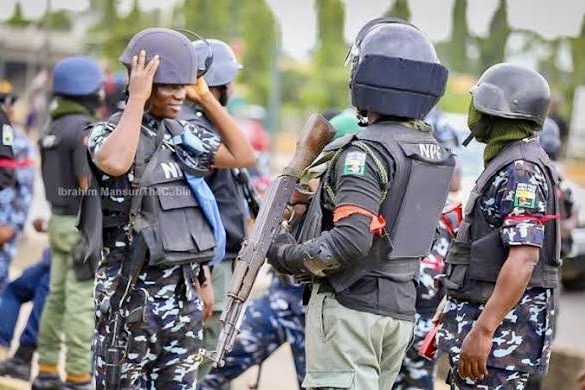
The harrowing saga of six Nigerian Law School students abducted en route to Yola Campus exposes not only the brutality of the kidnappers but also a shocking dereliction of duty on the part of our security forces.
On 20 July 2025, David Obiora of Anambra State and his fellow students were seized along the Zakibiam-Mukari Expressway by gunmen who had blockaded the road with crude barricades of sticks and tables.
What followed was five days of torture, starvation and indignity—until, contrary to official claims, the students secured their own release by paying ₦10 million each in ransom.
A Tortuous Captivity
Obiora’s account paints a chilling picture: “They beat us daily, fed us only once and forced us to drink mud-water,” he told Atlantic Post in an exclusive interview.
The six law students were held alongside traders and travellers in a makeshift camp deep in Benue’s forested borderlands.
They endured relentless physical abuse, watched by children and tended to by elderly women from Jota community—a village complicit in the kidnappers’ enterprise.
“Nobody tried to stop the evil—they were all part of it. It’s a community business,” Obiora declared, naming the Tiv-dominated settlement as both shield and supplier for the operation.
Police Deception Exposed
Official statements lauded a “rescue” by police operatives, yet Obiora is unequivocal:
“No, the police didn’t rescue us. We paid ransom and we were released. The police were just scared the kidnappers might kill us. They didn’t come close.”
This admission corrodes public confidence in law enforcement at a time when Nigeria’s kidnapping industry shows no signs of abating.
According to SBM Intelligence, from July 2022 to July 2023, at least 3 620 people were abducted across the country—an average of six victims per incident—with ransom now the primary motive behind the vast majority of these crimes.
A Business Model of Terror
Kidnapping for profit has eclipsed all other motivations. Research firm SBM Intelligence reported that “kidnapping for ransom has eclipsed other motivations for abductions, especially political reasons,” noting a proliferation of criminal syndicates operating with local complicity and, in some cases, apparent security-service collusion.
The masterminds often boast of their ill-gotten gains: one kidnapper told Obiora he had been in the trade for nine years, owned multiple SUVs and enjoyed a comfortable life for his wife and children outside the forest.
Such brazen confidence stems from the near-total impunity these gangs enjoy.
Historical Context and Comparative Scale
Kidnappings of schoolchildren became a national trauma with the 2014 abduction of 276 Chibok girls—a decade on, more than 1,400 students have been snatched from campuses nationwide, according to Associated Press analysis.
In March 2024 alone, gunmen seized 287 pupils at Kuriga, Kaduna, and another 15 at Gidan Bakuso, Sokoto.
Yet, rather than serving as a catalyst for reform, these mass abductions have become routine tragedies—normalised in the public mind even as they erode the foundations of Nigeria’s education sector and community cohesion.
Call for Drastic Intervention
Obiora’s final plea is uncompromising:
“I suggest the army, the navy, air force should go in there and wipe the entire community and clear everything there. That place should be a dry land.”
He names a former soldier as the ring-leader, leveraging forged military connections and even claiming the aid of a Kano-based jujuman to thwart any advancing troops.
His call for air-strikes stems from desperation born of systemic failure.
Demanding Accountability
The Nigerian government must answer for this betrayal of public trust. First, there must be an immediate, transparent inquiry into the role—or lack thereof—played by police in the Jota abduction.
Second, security agencies must act decisively, targeting the strongholds of ransom-kingpins with intelligence-led operations, not half-hearted raids.
Third, legislation criminalising the payment of ransoms—already on the statute books since 2022—must be enforced, and intermediaries who facilitate payments prosecuted.
Finally, the Council of Legal Education, university administrations and the private transport sector must collaborate on robust security protocols for student travel, including armed escorts and real-time tracking.
Without a wholesale shake-up of policy, attitude and action, we will continue to see more David Obioras—broken by abuse, betrayed by those sworn to protect them, and forced into extortionate ransom schemes that only embolden the kidnappers further.
The abduction of these law students is a clarion call: Nigeria’s counter-terrorism strategy is fractured, its security apparatus compromised, and its citizens left to buy back their freedom with blood-money.
Until genuine reform takes hold, every journey on our highways will carry the spectre of captivity—and every parent must wonder whether the authorities can—or will—save their child.
Follow us on our broadcast channels today!
- WhatsApp: https://whatsapp.com/channel/0029VawZ8TbDDmFT1a1Syg46
- Telegram: https://t.me/atlanticpostchannel
- Facebook: https://www.messenger.com/channel/atlanticpostng