Olatunji Disu’s two-day visit comes after at least 20 people were reportedly killed in a new wave of violence, including the ambush of a Jos-bound bus. The bigger question is whether another round of security meetings can finally translate into protection on the ground.
Plateau’s security crisis reaches another critical point
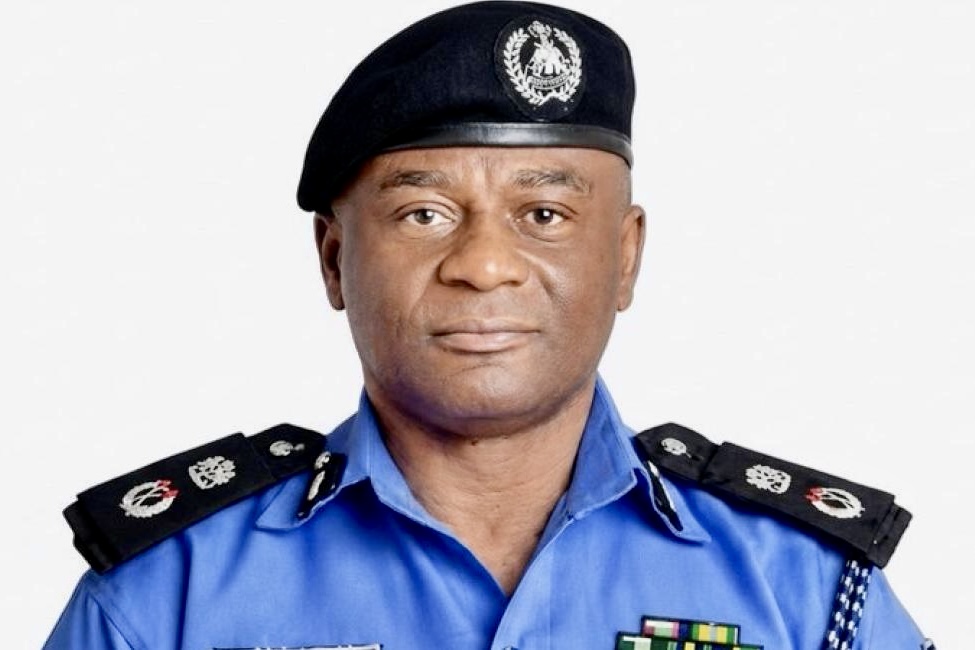
The Inspector-General of Police, Olatunji Rilwan Disu, will visit Plateau State on Wednesday as fresh killings across the state raise difficult questions about the effectiveness of security deployments, community dialogue and repeated promises to restore peace.
The visit follows a bloody run of attacks in Mangu, Jos South and Riyom that has left at least 20 people dead in different incidents over the past week, according to the latest reports surrounding the IGP’s scheduled visit. Separately, major reports have documented at least 13 deaths in the attacks around September 13, with some accounts putting the combined toll at 15 as additional victims died or were counted across the affected areas.
The most shocking incident was the attack on a commercial passenger vehicle at Dungus Junction, Kuru, in Jos South Local Government Area on Sunday night.
Nine passengers travelling towards Jos were reportedly killed when gunmen opened fire on the vehicle at about 9.40pm. Several others were injured and taken to hospitals. One of those killed was reportedly a member of Operation Rainbow, the state-supported security outfit.
The attack has changed the character of the latest Plateau crisis.
This was not simply an assault on a remote farming settlement. It was an attack on people travelling along a major route into Jos, raising fresh concerns over the ability of security agencies to protect ordinary commuters even after months of heightened military and police operations.
The lone survivor of the bus attack, Nasiru Garba, later described how he hid inside the vehicle as the attackers approached, while reports said the assailants opened the vehicle and fired at passengers.
Berom Youth Moulders spokesman Rwang Tengwong confirmed the attack.
“The incident happened around 9.40 p.m.,” he said. “The victims were all passengers travelling to Jos when the terrorists opened fire on the vehicle.”
He added that some of the wounded were taken to hospital and that a member of Operation Rainbow was among those killed.
Mangu attacks came after another security engagement
The killings in Mangu have added another layer to the controversy surrounding the security response.
The Mwaghavul Youth Movement reported four deaths in attacks on Kikyau, Larkas, Ntul and Kinat between September 11 and 12.
Among those killed was 55-year-old Geoffrey Gumut, who the group said was beheaded in Kikyau. Katbam Titus, 29, was reportedly killed in Kinat, while Pius Dachen and Zadok Irmiya were also reported dead. Another man, Danjuma Kyesle, was injured.
The timing is particularly troubling.
According to the Mwaghavul group, the Kinat killing happened only hours after the General Officer Commanding, 3 Division, Nigerian Army, Major General Wunukhe Dangana, held a security engagement in Mangu involving Mwaghavul and Fulani leaders.
The group quoted the GOC as saying: “I will not watch any group attack another. The Army would clamp down on those responsible for further attacks.”
The group is now asking a question that will be difficult for security authorities to avoid during the IGP’s visit: how can attacks occur so soon after high-level security engagements, including meetings specifically intended to prevent them?
It has called for independent investigations into the Kikyau, Larkas, Ntul and Kinat incidents, including allegations concerning the presence of security personnel during the Larkas attack.
Those allegations remain allegations and should be tested through investigation rather than treated as established fact.
Riyom adds to the pattern
Riyom Local Government Area has also recorded fresh violence.
Reports said two people were killed in a separate attack around Tahoos at about the same period as the Mangu and Dungus incidents.
The violence comes against a wider backdrop of attacks in the area.
Security forces recently arrested three men following the killing of a farmer in Fang community, Riyom. The arrests were made during an operation in Baggat and Shong 2 Fulani settlements in Bachi.
Security analysts involved in the reporting stressed that the men arrested were not necessarily the perpetrators of the killing and that the arrests were part of wider intelligence-gathering efforts.
That distinction matters.
Effective policing in a conflict environment requires more than arrests. Investigators must establish who planned an attack, who carried it out, how weapons were obtained, whether local networks provided intelligence or logistics, and whether anyone helped conceal the perpetrators afterwards.
Without that chain being established, arrests can become temporary pressure rather than a durable disruption of the groups responsible.
The IGP’s visit
The Plateau State Police Command said Disu will arrive at Jos Airport at 9.30am on Wednesday, September 16.
His programme includes a courtesy visit to Governor Caleb Mutfwang, an engagement at the National Institute for Policy and Strategic Studies and an inspection of the Police Staff College, Jos.
On Thursday, September 17, he is expected to inspect the Plateau State Police Headquarters before leaving through Jos Airport.
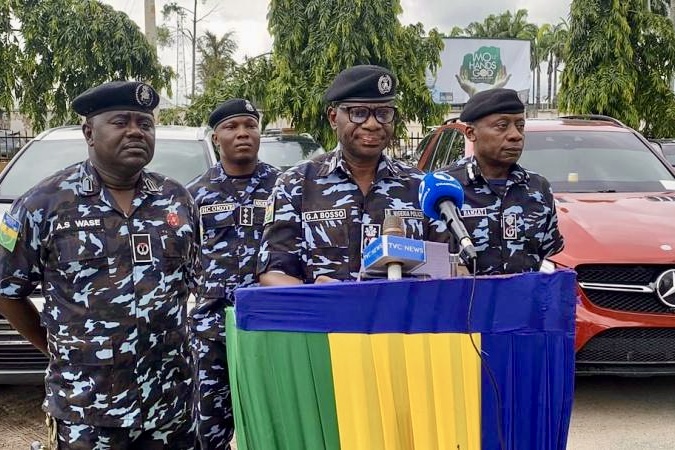
The visit is officially framed around stronger security collaboration, assessment of police formations and engagement with stakeholders on restoring peace.
But given the sequence of attacks, the more important test will be what changes operationally after he leaves.
That is because Plateau has already seen senior-level interventions.
In April, following another deadly attack in Angwan Rukuba, Jos North, Disu ordered a massive deployment and sent the Deputy Inspector-General of Police in charge of Operations to Plateau to assess the security situation and strengthen the existing security architecture.
In August, after the killing of 25 people in Mangu, the military moved the tactical office of Operation Enduring Peace to Mangu and launched Operation Hard Nut to flush out attackers.
The fresh attacks show that those measures, while significant, have not eliminated the threat.
A state caught between dialogue and violence
Plateau’s problem is not the absence of peace talks.
There have been repeated meetings involving government officials, traditional institutions, farmers, herders and security agencies.
In April, President Bola Tinubu met Plateau stakeholders at the State House and urged them to return home and work towards a permanent end to the violence. Participants identified indigeneship, religion, ethnicity and farmer-herder tensions among the forces behind past conflicts.
A separate multi-sectoral forum organised with the Plateau State Peace Building Agency also examined land disputes, criminality and farmer-herder conflict as part of the security problem.
The problem is that dialogue cannot substitute for physical protection.
A community may sign a peace agreement in the afternoon and still be attacked at night.
That is precisely why the latest killings are likely to put pressure on Disu to move beyond stakeholder engagement towards measurable operational results.
The security architecture is already substantial
Plateau is not short of security formations.
The Nigerian Army operates Operation ENDURING PEACE, while the police maintain state and tactical formations. Operation Rainbow also operates at community level.
Troops have recently conducted clearance operations in Mangu, including a September operation in Kogul Village after reports of arson, farmland destruction and the displacement of residents. A soldier was wounded during the operation.
Troops also recently prevented what was described as an attempted movement by suspected armed herders and cattle into farmlands around Manja in Mangu, after reports that crops had been uprooted and looted.
The military is therefore active.
The question is whether its activity is sufficiently intelligence-led, sustained and geographically distributed to stop attackers before they strike.
Intelligence remains the critical weakness
The Dungus attack raises the question in stark terms.
Nine people travelling in a commercial vehicle were reportedly attacked at a known junction at night.
For residents and commercial drivers, the obvious concern is not only what happened when the shooting started. It is what security agencies knew before it happened.
Were there warnings about armed men moving through the area?
Were vulnerable routes being monitored?
Were community intelligence networks functioning?
Were earlier incidents properly mapped to identify likely retaliation or escalation?
Was there adequate night patrol coverage?
These are operational questions that the IGP can reasonably be expected to address.
The issue is particularly important because the violence is not random in geographical terms. Mangu, Riyom and Jos South have repeatedly appeared in reports of attacks, counter-operations and community tensions.
The European Union Agency for Asylum identifies resource competition, farmer-herder violence and religious and communal dimensions as part of Plateau’s wider conflict dynamics.
Recent research has also pointed to land disputes, water scarcity, destruction of crops, proliferation of weapons, weak traditional authority, criminality and youth unemployment as contributing factors.
That means the police cannot solve the crisis by treating each shooting as an isolated criminal event.
The economic cost is spreading
Every fresh attack carries consequences beyond the immediate death toll.
When a road becomes dangerous at night, transport operators change routes or stop travelling. When farming communities fear raids, planting, harvesting and movement of produce are disrupted. When villages are abandoned, local markets shrink and household incomes disappear.
The consequences can eventually reach food prices and urban consumers.
Research published in 2026 has linked farmer-herder conflict in Nigeria to reduced agricultural activity and lower food production.
A government report on the August violence in Mangu said the attack destroyed homes and crops and forced women, children and elderly residents to flee.
For Plateau, a state that depends heavily on agriculture and whose government has linked improved security with renewed investor confidence, recurring violence represents a direct economic threat.
Government warns against reprisals
The Plateau State Government has condemned the latest attacks and urged residents not to retaliate.
Commissioner for Information and Communication Joyce Ramnap said the government was deeply concerned by the violence and reaffirmed its commitment to protecting lives and property. She also warned against reprisal attacks, stressing that such actions could deepen the crisis.
That warning is important because retaliatory violence can transform a single attack into a cycle of killings involving communities that may have had no direct connection to the original incident.
Plateau’s experience shows how quickly an individual killing can become a collective security crisis.
What Disu must confront
The IGP arrives in Plateau with an opportunity that goes beyond another high-level security meeting.
The immediate task is to secure vulnerable communities and roads.
The larger challenge is to improve intelligence gathering, rapid response, investigation and prosecution at the same time.
The public will also be watching what happens after the cameras leave.
Will vulnerable corridors receive sustained night patrols?
Will intelligence units identify the networks behind the attacks?
Will suspects be prosecuted rather than simply arrested?
Will allegations of security failure be independently investigated?
Will local peace agreements be linked to enforceable security plans?
And perhaps the most uncomfortable question: why are heavily discussed peace initiatives repeatedly followed by fresh bloodshed?
The visit of the IGP cannot by itself answer those questions.
But it can determine whether Plateau gets another promise of peace or a more credible security strategy capable of making the promise mean something.
Follow us on our broadcast channels today!
- WhatsApp: https://whatsapp.com/channel/0029VawZ8TbDDmFT1a1Syg46
- Telegram: https://t.me/atlanticpostchannel
- Facebook: https://www.messenger.com/channel/atlanticpostng