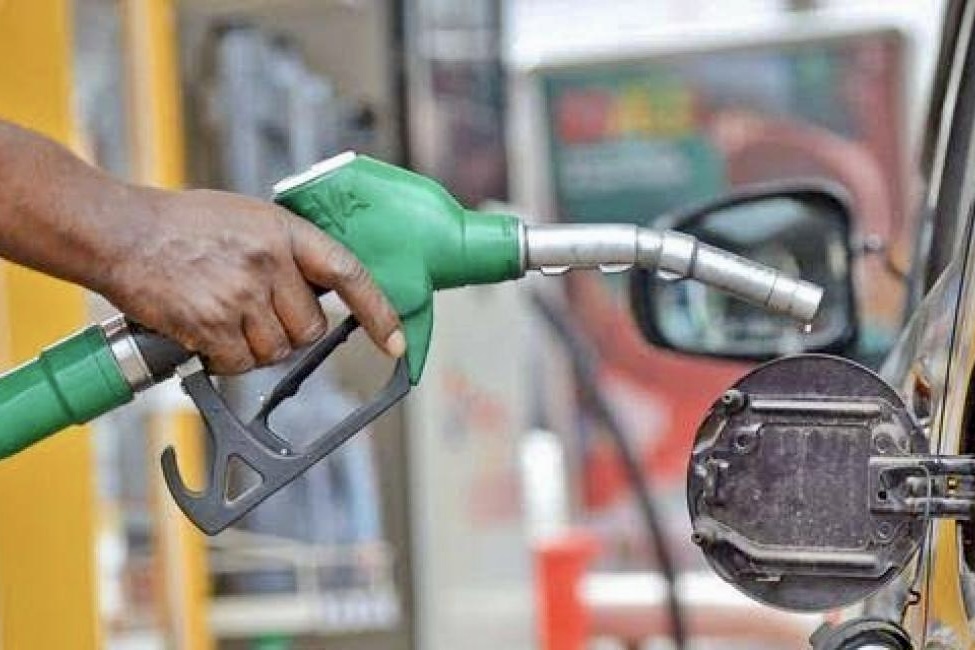
Petrol prices have climbed to as high as ₦1,350 per litre in parts of Abuja, with motorists and businesses confronting another sudden increase after Dangote Petroleum Refinery raised its Premium Motor Spirit (PMS) gantry price for the third time in eight days.
Market checks reported on Monday showed wide price differences across filling stations in the Federal Capital Territory. Eterna was selling at about ₦1,320 per litre, Gegu Oil at ₦1,310, Salbas Oil at ₦1,330, while Nipco and AY Shafa were dispensing petrol at ₦1,350. TotalEnergies was reported at ₦1,280.
The Abuja surge is the latest manifestation of a rapidly moving downstream market in which wholesale prices are being transmitted to consumers with little delay.
It is also exposing a deeper contradiction in Nigeria’s fuel economy: even after the emergence of the Dangote refinery as a major domestic source of refined products, petrol prices remain highly sensitive to the international crude market, the cost of replacing stocks, distribution expenses, market competition and the level of imported supply.
Three Dangote price increases in eight days
Dangote Refinery’s latest adjustment took effect on 29 August, when its petrol gantry price rose by ₦65, from ₦1,200 to ₦1,265 per litre.
That came after two earlier increases: from ₦1,165 to ₦1,185 on 21 August, followed by another increase to ₦1,200 on 26 August.
Taken together, the three revisions lifted the refinery’s gantry price by ₦100 per litre, representing an increase of roughly 8.6 per cent in eight days. Its coastal PMS price also rose from ₦1,582,380 to ₦1,669,545 per metric tonne.
The refinery instructed customers holding existing Authorisations to Collect to return them for repricing before loading under new volume contracts.
“You are advised to return all ATCs for repricing, and a new volume contract will be issued for immediate loading resumption,” the refinery stated.
For marketers, the instruction is significant because it means fuel already scheduled for lifting can be repriced before it enters the distribution chain. That creates a direct mechanism through which a refinery-level adjustment can reach filling stations quickly.
Why is petrol rising when crude prices can fall?
The sharpest question facing consumers is straightforward: why should petrol prices continue rising when international crude prices have not moved uniformly upwards?
The answer offered by Dangote is based on inventory economics.
A senior refinery executive explained that there is a time gap between buying crude and processing it into petrol. Crude may be contracted, shipped and delivered weeks before it is processed and sold.
“Large volumes of crude bought at higher prices remain in storage. Selling petrol based on today’s cheaper crude would mean losses on inventory acquired at higher costs,” the executive said.
The explanation goes to the heart of the economics of an unsubsidised fuel market.
A refinery does not necessarily purchase every barrel at the price visible on an international market screen on the day petrol is sold at the pump. The eventual cost can reflect the price at the time of purchase, financing, marine freight, insurance, port and terminal charges, storage, processing and distribution.
That means a fall in Brent crude does not automatically produce an immediate fall in the price of petrol.
But that argument also raises a difficult transparency question for consumers: how quickly do price reductions flow through when crude costs fall, compared with how quickly increases are transmitted when costs rise?
That asymmetry is likely to remain one of the most politically sensitive questions in Nigeria’s deregulated downstream sector.
Abuja motorists feel the shock first
For motorists, the economics are much simpler.
A driver who purchased petrol at around ₦1,230 per litre could suddenly be confronted with a price around ₦1,330 or ₦1,350.
That is not a marginal increase for a household or commercial operator already operating on narrow budgets.
For example, buying 40 litres at ₦1,230 costs ₦49,200. At ₦1,350, the same volume costs ₦54,000 — an additional ₦4,800 for one filling.
For commercial transport operators, delivery companies, artisans and businesses running generators or vehicles, repeated price increases can therefore become a working-capital problem rather than merely a household inconvenience.
The pressure is even greater because fuel costs rarely remain confined to the fuel station.
When transport operators spend more on petrol, passenger fares tend to come under pressure. When logistics firms pay more to move goods, distribution costs rise. When generators become more expensive to operate, shops, factories and service businesses may pass some of those costs into their prices.
That is how a petrol increase can become an economy-wide inflationary pressure.
The NNPCL price move adds another layer
The latest market adjustment is not restricted to independent marketers.
Reports on Monday indicated that some NNPCL retail stations in Abuja increased petrol to about ₦1,345 per litre, up from ₦1,270. An NNPCL station staff member reportedly confirmed the adjustment.
That development matters because it indicates that the latest price movement is becoming broader than isolated revisions by individual independent filling stations.
At the same time, significant differences remain between locations and outlets, illustrating that Nigeria does not have one single nationwide pump price.
Distance from refineries and depots, transportation costs, station operating expenses, local competition, stock position and the price at which a marketer sourced the product can all affect the final retail price.
In other words, ₦1,350 in Abuja does not mean every Nigerian motorist is paying ₦1,350.
It does mean, however, that the market ceiling is moving upwards in some of the country’s major consumption centres.
The hidden problem: Nigeria is still importing petrol
Perhaps the most revealing development behind the latest price instability is the continuing importance of petrol imports.
According to the latest NMDPRA data reported this month, Nigeria’s average daily domestic petrol supply fell from 32.5 million litres in June to 25.8 million litres in July, a decline of 20.6 per cent.
Over the same period, imported petrol rose from 18.1 million litres per day to 19.7 million litres per day.
Combined domestic and imported supply averaged 45.5 million litres per day in July, down from 50.6 million litres in June. Imports accounted for about 43.3 per cent of total supply, while domestic sources accounted for roughly 56.7 per cent.
That is one of the most important facts in the current fuel-price story.
Nigeria has made significant progress in rebuilding domestic refining capacity, yet the country remains dependent on imported petrol to fill supply gaps.
This creates a dual exposure.
Domestic refiners remain sensitive to the economics of crude procurement and processing, while imported products remain exposed to international petroleum prices, freight costs, exchange-rate realities and geopolitical risk.
The result is that Nigeria can produce more fuel locally and still experience international-style price volatility.
Dangote versus importers: the next pressure point
The import question has also become an increasingly contentious commercial issue.
Dangote Refinery has complained that continuing importation of petrol is making domestic-demand planning more difficult and could push more of its production towards export markets.
The underlying data gives weight to the refinery’s concern about changing market dynamics: imported PMS rose sharply between May and July while domestic refinery supply fell.
But the issue is not as simple as choosing between “local refining” and “imports”.
Imports can provide a buffer when domestic refinery output falls. Domestic refining can reduce dependence on foreign supply and create industrial value locally. Competitive imports may also place pressure on domestic producers to maintain efficient pricing.
The policy challenge is therefore to establish whether importation is filling genuine supply gaps or undermining economically viable domestic refining.
The Centre for the Promotion of Private Enterprise has warned that the surge in imports could discourage downstream investment, while citing NMDPRA figures showing imported PMS increasing from 5.9 million litres per day in May to 19.7 million litres per day in July.
That is a staggering increase in a market that was expected to become progressively less import-dependent following the arrival of large-scale domestic refining.
Then comes the Strait of Hormuz
Nigeria’s fuel-price problem is now colliding with a renewed geopolitical shock.
On 30 August 2026, US forces struck two Iranian launchers on Larak Island in the Strait of Hormuz after, according to a US official, Iranian Revolutionary Guard forces were preparing to launch rockets carrying sea mines into the strategic waterway.
Iran subsequently launched retaliatory attacks against US positions in the region.
The significance for energy markets is immense.
The Strait of Hormuz is one of the world’s most important oil-shipping chokepoints. Renewed military confrontation has revived fears that shipping could be disrupted, prompting traders to price additional risk into crude markets.
Brent crude subsequently moved above $90 per barrel, with Reuters reporting a rise of more than 2 per cent in Monday trading.
For Nigeria, however, there is an important distinction to make.
The geopolitical escalation is a risk factor, but it does not by itself prove that the Abuja pump-price increase was caused by the latest US-Iran exchange.
Dangote’s ₦1,265 gantry price became effective on 29 August, while the US strike on Larak Island took place on 30 August.
That chronology suggests that the latest refinery increase had already been announced before the newest military escalation.
The more defensible interpretation is that the geopolitical crisis may add further pressure to the market outlook rather than explain the entire current increase.
The cost of the pump-price spiral
For Nigerian households, the immediate concern is not Brent crude, inventory accounting or refinery procurement cycles.
It is survival.
A motorist quoted in the original report criticised the pace of petrol-price increases and described the pressure as unbearable.
“This is not a country where laws govern actions or wrongdoings are punished,” the motorist said.
The motorist also linked rising fuel costs to the price of cement and other commodities, saying households were struggling to cope with the wider increase in the cost of living.
“I cannot feed my children three times a day because of the high cost of things in the market,” the motorist said.
“We urge the Federal Government to urgently intervene by stabilising fuel prices.”
That frustration captures the political economy of petrol in Nigeria.
Fuel is not merely another commodity. It is embedded in transportation, agricultural logistics, manufacturing, retail distribution, electricity generation and household expenditure.
When its price changes rapidly, almost every part of the economy feels it.
What happens next?
The biggest question is whether the current increase becomes another temporary spike or the beginning of a fresh upward cycle.
Much will depend on the direction of international crude prices, the outcome of the US-Iran confrontation, the security of shipping routes, refinery output, domestic crude availability, import volumes and the competitive behaviour of petroleum marketers.
The irony is difficult to ignore.
Nigeria has spent years arguing that local refining would reduce the country’s vulnerability to imported fuel and global shocks. The Dangote refinery represents a major step towards that objective.
Yet the latest price surge demonstrates that refining domestically is not the same thing as becoming insulated from international petroleum economics.
Until Nigeria can guarantee dependable crude supply to its refineries, maintain consistent domestic output, reduce logistical bottlenecks and establish greater transparency around wholesale-to-retail price transmission, petrol prices will remain vulnerable to shocks far beyond the control of the average Nigerian consumer.
For now, the message from Abuja’s filling stations is unmistakable: the petrol-price war is no longer about whether Nigeria imports fuel. It is about who ultimately bears the cost of a volatile energy market — refiners, marketers, businesses or households.
And, for millions of Nigerians, the answer is increasingly obvious at the pump.
Follow us on our broadcast channels today!
- WhatsApp: https://whatsapp.com/channel/0029VawZ8TbDDmFT1a1Syg46
- Telegram: https://t.me/atlanticpostchannel
- Facebook: https://www.messenger.com/channel/atlanticpostng