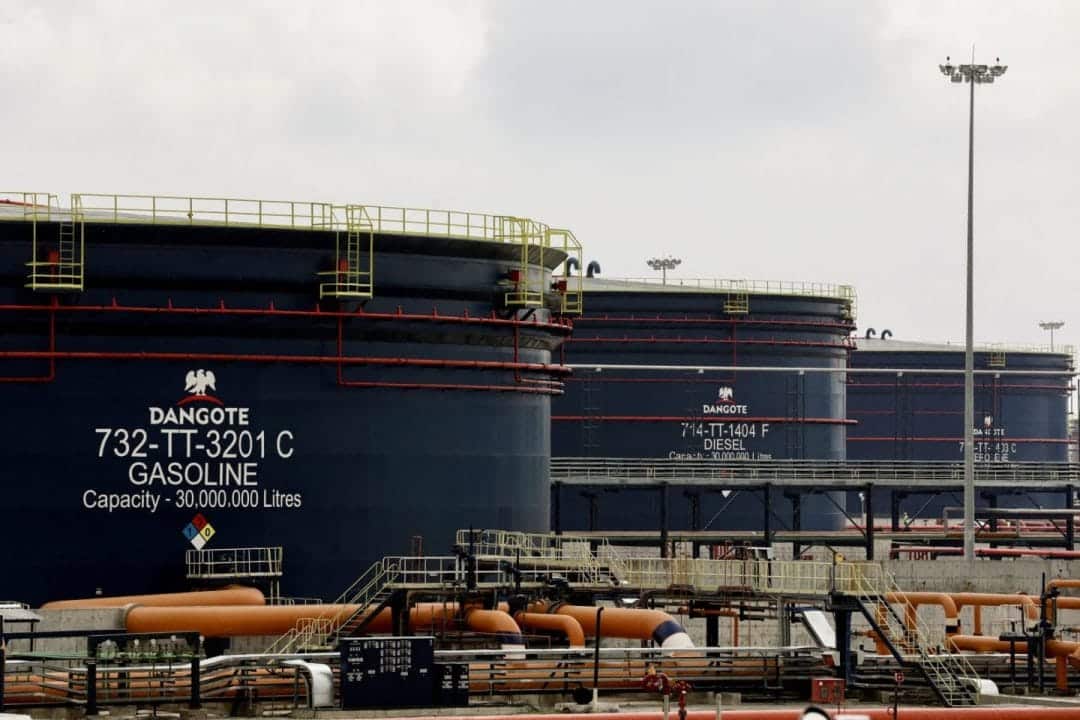
LAGOS, Nigeria — In a significant development that underscores the volatility of Nigeria’s petroleum sector, the Dangote Petroleum Refinery has announced an increase in the price of Premium Motor Spirit (PMS), commonly known as petrol, for bulk buyers.
Effective from 5:30 PM today, the refinery has adjusted its pricing structure, setting the price at N955 per litre for marketers purchasing between 2 million to 4.99 million litres, and N950 per litre for those procuring 5 million litres and above.
This adjustment represents a 6.17% increase from the previous rate of N899.50 per litre, which was introduced as a holiday discount in December 2024.
Contextualising the Price Hike
The decision to raise petrol prices is closely linked to the consistent surge in Brent crude prices, the global benchmark for crude oil. As of January 17, 2025, Brent crude has risen by 0.5% to $81.73 per barrel, marking the highest point this year.
This upward trajectory is part of a broader trend, with Brent gaining 2.5% over the past week. The increase is attributed to supply concerns stemming from U.S. sanctions on Russian energy exports, which have tightened global supply chains and driven up spot trade prices and shipping rates.
The U.S. Energy Information Administration (EIA) has projected that oil prices will face downward pressure in 2025 and 2026 due to an anticipated oversupply in the market. The EIA forecasts Brent crude prices to average $74 per barrel in 2025, an 8% decline from current levels, and further decrease to $66 per barrel in 2026. This projection is based on the expectation that global production growth will outpace demand in the coming years.
Implications for the Nigerian Market
The Dangote Refinery’s price adjustment is poised to have widespread effects on Nigeria’s downstream petroleum sector, particularly impacting private depots and retail markets. Industry experts anticipate that depots will increase the loading price of refined petroleum products due to the refinery’s significant influence on the market. Olatide Jeremiah, Chief Executive Officer of petroleumprice.ng, emphasised that the refinery’s pricing decisions set a benchmark that other players in the industry are likely to follow, leading to a probable increase in petrol pump prices nationwide.
This development comes on the heels of the refinery’s previous price reduction in November 2024, when it lowered the petrol price for marketers from N990 to N970 per litre. At that time, Anthony Chiejina, the Group’s Chief Branding and Communications Officer, described the reduction as a gesture of appreciation to Nigerians for their unwavering support.
Government’s Stance on Price Fluctuations
The Nigerian government has reiterated that the downstream petroleum sector is fully deregulated, with market forces determining the pump prices of petrol. Minister of State for Petroleum Resources (Oil), Heineken Lokpobiri, stated that fluctuations in crude oil prices on the international market are a major factor influencing domestic petrol prices.
He emphasised that the government is no longer involved in setting prices, underscoring the impact of global market dynamics on local fuel costs.
Broader Economic Considerations
The increase in petrol prices is expected to have a ripple effect on Nigeria’s economy, affecting transportation costs, goods and services pricing, and overall inflation rates. As a country heavily reliant on petrol for daily activities, any adjustment in fuel prices can significantly influence the cost of living and economic stability. The situation is further complicated by global economic factors, including U.S. sanctions on Russian energy exports and potential shifts in U.S. interest rates, which can affect global oil demand and prices.
A Gloomy Reality
The Dangote Refinery’s decision to raise petrol prices reflects the complex interplay between global oil market dynamics and domestic economic policies. As Nigeria navigates these challenges, stakeholders in the petroleum sector, government agencies, and consumers will need to adapt to the evolving landscape, balancing the realities of international market fluctuations with the imperative of ensuring economic stability and affordability for the populace.
A Looming Economic Storm: Nigeria’s Fragile Dependence on Petrol Prices
The Dangote Refinery’s announcement of a price hike comes at a precarious moment for Nigeria, a nation grappling with the broader implications of economic deregulation in the petroleum sector. While the government’s policy of deregulation has opened up the downstream market to market-driven pricing, it has simultaneously exposed the nation’s economy to the shocks of global crude price fluctuations.
Petrol, often referred to as the lifeblood of Nigeria’s economy, underpins not just transportation but also small- and medium-scale enterprises that depend on affordable energy for survival. The recent increase of over 6% in bulk petrol prices is likely to exacerbate the already fragile economic conditions for many Nigerians, particularly in the informal sector, which employs a vast majority of the population.
The Downstream Sector: Dangote Refinery’s Dominance
Since its commissioning, the Dangote Refinery has established itself as a critical player in Nigeria’s downstream petroleum sector. Its influence is largely tied to its massive refining capacity, which has disrupted the import-dependent structure of Nigeria’s petroleum market. For years, successive administrations relied on subsidies to artificially reduce fuel prices. However, the removal of subsidies and the advent of full deregulation have shifted pricing power to market leaders like Dangote.
The refinery’s pricing adjustments carry ripple effects across the supply chain, influencing the operational costs of private depots, independent marketers, and retail filling stations. Experts warn that the refinery’s market dominance is creating a quasi-monopoly that could stifle competition and innovation in the sector. Olatide Jeremiah’s assertion that private depots and major marketers will “compete with this new price” underscores the central role Dangote Refinery plays in setting the benchmark for fuel prices in Nigeria.
This monopoly-like influence raises critical questions about the long-term impact of deregulation: Is the liberalized market structure fostering healthy competition, or is it simply transferring control from the government to powerful corporate entities? These are questions that policymakers must grapple with as Nigerians contend with rising living costs.
Public Reaction: Frustration and Resignation
For many Nigerians, the news of the price hike has been met with a mix of frustration and resignation. This is not the first time in recent memory that fuel prices have been adjusted upward. However, each successive increase chips away at public trust in the promise of deregulation as a pathway to economic stability.
On the streets of Lagos, Abuja, and Port Harcourt, commuters, small business owners, and even transport unions have expressed dismay at the rising cost of fuel. “This is not what we were promised,” lamented Musa Adamu, a Lagos-based taxi driver. “They said deregulation would bring competition and lower prices, but all we see are higher costs.”
The resentment is further fueled by the perception that the government has done little to cushion the impact of deregulation on ordinary citizens. Critics argue that initiatives such as the promised palliative measures to mitigate the effects of subsidy removal have been poorly implemented or outright abandoned.
Global Oil Trends: A Double-Edged Sword
The Dangote Refinery’s pricing decisions cannot be viewed in isolation from global oil market dynamics. Brent crude, the global benchmark, has remained on an upward trajectory in recent weeks, driven by a combination of geopolitical tensions and supply constraints. The recent U.S. sanctions on Russian energy exports have tightened global supply chains, pushing crude prices to their highest levels in months.
However, while rising crude prices benefit oil-exporting nations like Nigeria in terms of foreign exchange earnings, they also pose a paradox for a country that still imports a significant portion of its refined petroleum products. The Dangote Refinery’s operational capacity, though substantial, has not entirely alleviated the need for imports, leaving Nigeria vulnerable to global price shocks.
Inflationary Pressures and Economic Inequality
The latest price adjustment is expected to intensify inflationary pressures in Nigeria, where the inflation rate has been stubbornly high. According to the National Bureau of Statistics (NBS), Nigeria’s inflation rate stood at 22.79% in December 2024, with food inflation accounting for a significant proportion of the increase. The upward adjustment in petrol prices is likely to exacerbate this trend, as transportation costs ripple through the economy, affecting the prices of goods and services.
For the average Nigerian, this means higher living costs in a country where over 40% of the population lives below the poverty line. The government’s deregulation policy, while well-intentioned, is increasingly seen as disproportionately benefiting corporate interests at the expense of the most vulnerable segments of society.
Policy Recommendations: Rethinking Deregulation
As Nigeria confronts the immediate fallout of the Dangote Refinery’s price hike, policymakers must take a hard look at the broader implications of deregulation. While market liberalization was intended to attract investment and improve efficiency in the petroleum sector, its implementation has been riddled with challenges that have undermined public confidence.
To address these issues, the government must prioritize the following:
- Strengthening Regulatory Oversight: Deregulation does not mean the absence of regulation. A strong regulatory framework is essential to prevent anti-competitive practices and ensure that market leaders like Dangote Refinery do not exploit their dominance.
- Investing in Domestic Refining Capacity: While the Dangote Refinery is a significant step forward, Nigeria must diversify its refining landscape by encouraging investment in smaller, modular refineries to reduce reliance on a single entity.
- Implementing Social Safety Nets: The government must revisit its palliative measures and ensure that they reach the most vulnerable populations. This includes targeted subsidies for public transportation and essential goods.
- Promoting Renewable Energy: Over the long term, Nigeria must reduce its dependence on fossil fuels by investing in renewable energy sources. This not only aligns with global sustainability goals but also provides a buffer against the volatility of global oil markets.
A Nation at a Crossroads
The Dangote Refinery’s decision to raise petrol prices is a stark reminder of the complexities of Nigeria’s journey toward economic liberalization. While deregulation offers the promise of efficiency and investment, it also exposes the nation to the harsh realities of global market dynamics and domestic policy gaps.
As Nigerians brace for the immediate impact of the price hike, the government and industry stakeholders must work together to chart a course that balances economic growth with social equity. The stakes are high, and the decisions made in the coming months will shape the future of Nigeria’s petroleum sector—and its economy—for years to come.
Additional report by: Taiwo Adebowale