By Editor
Introduction: The PDP’s Bold Step Towards National Reconciliation
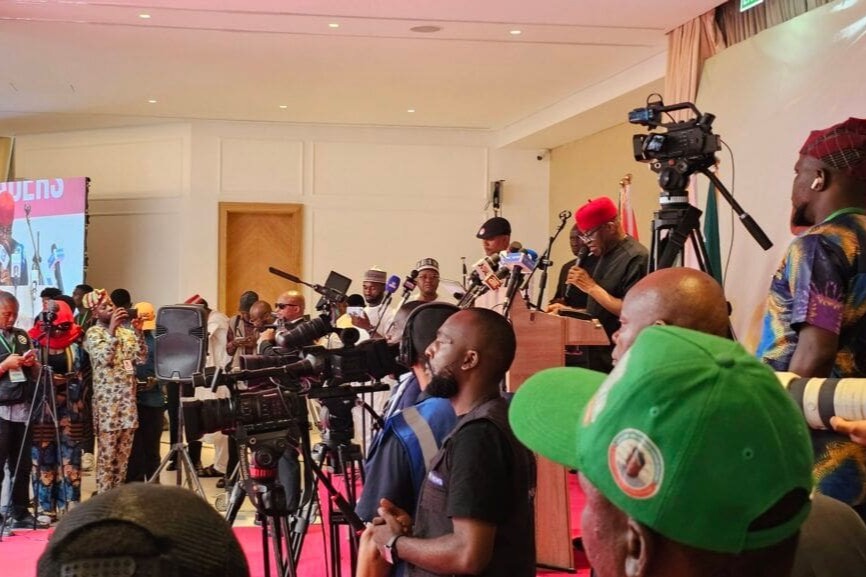
On August 9, 2024, the People’s Democratic Party (PDP) took a significant stride in what could be either a masterstroke in political strategy or a desperate attempt to regain lost ground. In a press statement, the PDP announced the constitution of its National Reconciliation Committee (NRC), a move aimed at mending the internal rifts and fractures that have plagued the party in recent years. The list of committee members, headed by H.E. Prince Olagunsoye Oyinlola, reads like a roll call of seasoned politicians and party stalwarts, each with a storied history in Nigeria’s political landscape.

But beyond the fanfare and the carefully curated list, one must ask: Is this new committee genuinely a symbol of redemption for the PDP, or is it just another chapter in the age-old saga of political theatre that has come to define Nigeria’s democratic experience?
The PDP’s Fall from Grace: A Party in Need of Reconciliation
To understand the importance of this reconciliation committee, one must first reflect on the current state of the PDP. Once the behemoth of Nigerian politics, the PDP has, in recent years, been reduced to a shadow of its former self. The party that once boasted of being the largest political entity in Africa has seen its fortunes dwindle, not just at the polls but within its own ranks. Factionalism, leadership tussles, and a seeming disconnect with the Nigerian populace have all contributed to its decline.
The need for reconciliation within the PDP cannot be overstated. The party’s internal divisions have not only weakened its electoral chances but have also created an image of disarray that is difficult to shake off. The formation of the NRC, therefore, comes at a time when the PDP is desperately in need of unity and a clear direction. The question, however, is whether this committee can truly bridge the deep-seated divides within the party or if it is merely a cosmetic exercise designed to placate disgruntled members.
Analyzing the Committee Members: The Return of the Old Guard
The composition of the NRC is perhaps the most telling aspect of the PDP’s latest move. The inclusion of political heavyweights like Prince Olagunsoye Oyinlola, Rt. Hon. Chibudom Nwuche, and Sen. Ibrahim Dankwambo, among others, signals a return to the old guard. These are individuals with deep roots in the party and the experience to navigate its complex internal dynamics.
However, this also raises concerns. While the experience and clout of these members are undeniable, their inclusion may also signal a reluctance to embrace change. The PDP has been criticized for being out of touch with the aspirations of Nigeria’s younger, more dynamic electorate. The absence of youthful, forward-thinking voices on the committee could be seen as a missed opportunity to inject fresh ideas and perspectives into the party’s reconciliation efforts.
Moreover, the presence of certain figures, particularly those who have been embroiled in past controversies, may undermine the credibility of the NRC. The PDP must be careful not to appear as though it is simply recycling old faces in a bid to maintain the status quo. For the reconciliation process to be successful, it must be seen as genuine and inclusive, rather than a means of consolidating power within a select group of party elites.
The Road Ahead: Challenges and Opportunities
The task before the NRC is daunting. Reconciliation within the PDP will require more than just meetings and negotiations; it will demand a fundamental shift in the party’s culture and approach to governance. The committee must address not only the internal power struggles that have plagued the party but also the broader ideological differences that have emerged in recent years.
One of the key challenges the NRC will face is the issue of trust. Over the years, many PDP members have become disillusioned with the party’s leadership, feeling that their voices have been marginalized or ignored. Rebuilding this trust will be essential if the NRC is to succeed in its mandate. This will require the committee to be transparent in its dealings and to genuinely listen to the concerns of all party members, regardless of their status or influence.
Another significant challenge will be the need to balance the interests of various factions within the party. The PDP is a broad coalition, comprising individuals and groups with diverse interests and agendas. The NRC will need to navigate these complexities carefully, ensuring that no group feels sidelined or excluded from the reconciliation process.
However, despite these challenges, there are also opportunities. The formation of the NRC presents the PDP with a chance to redefine itself and to chart a new course for the future. If handled correctly, the reconciliation process could help the party to heal its wounds and to emerge stronger and more united than before. It could also provide the PDP with an opportunity to reconnect with the Nigerian electorate and to regain the trust and support of the people.
The Political Implications: A Strategic Move or a Desperate Gamble?
From a political standpoint, the formation of the NRC can be seen as a strategic move by the PDP to position itself as a viable alternative to the ruling party. With the 2027 general elections on the horizon, the PDP cannot afford to be seen as a party in disarray. By constituting the NRC, the PDP is sending a message that it is serious about addressing its internal challenges and that it is committed to presenting a united front in the upcoming elections.
However, there is also the risk that this move could backfire. If the reconciliation process is perceived as insincere or ineffective, it could further erode the PDP’s credibility and weaken its electoral prospects. The party’s opponents will be watching closely, eager to exploit any missteps or failures on the part of the NRC.
The success or failure of the NRC will also have broader implications for Nigeria’s political landscape. If the PDP is able to successfully reconcile its differences and present a united front, it could provide a much-needed boost to the country’s democratic process. A strong and united opposition is essential for holding the ruling party accountable and for ensuring that the interests of all Nigerians are represented in the political arena.
On the other hand, if the PDP is unable to resolve its internal conflicts, it could further entrench the dominance of the ruling party and weaken the prospects for democratic governance in Nigeria. The stakes are high, and the outcome of the NRC’s work will have far-reaching consequences for the country’s future.
Conclusion: The PDP’s Last Chance for Redemption?
The formation of the National Reconciliation Committee represents a critical moment in the PDP’s history. It is a moment that will test the party’s ability to rise above its internal divisions and to chart a new course for the future. The stakes could not be higher, not just for the PDP but for Nigeria as a whole.
As the NRC begins its work, it must be guided by a genuine commitment to reconciliation and a determination to rebuild the party from the ground up. This will require difficult conversations, tough decisions, and a willingness to confront the hard truths about the party’s past and present. It will also require a new vision for the future, one that is rooted in the principles of inclusivity, transparency, and accountability.
Whether the PDP can seize this moment and emerge stronger from its current challenges remains to be seen. But one thing is clear: the party’s future, and indeed the future of Nigeria’s democracy, hangs in the balance. The time for political theater is over. The time for genuine reconciliation and reform is now.
The PDP must rise to the occasion, or risk fading into irrelevance, taking with it the hopes and aspirations of millions of Nigerians who still believe in the possibility of a better future.