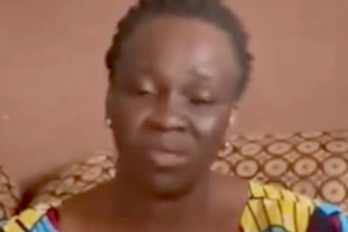
The grief of a woman in Oyo State has thrown fresh light on the true cost of the Oriire school abduction, even after the state celebrated the release of the surviving pupils and teachers. In a wrenching interview, the widow of John Olaleye said her relief turned into devastation when she discovered that her husband was not among those freed on 10 July 2026.
Reuters reported that at least 39 schoolchildren and six teachers were rescued by security forces after nearly two months in captivity, following the 15 May attack in Oriire Local Government Area.
Olaleye’s widow, speaking through tears, made a direct appeal to Governor Seyi Makinde to help recover her husband’s remains and support the three children he left behind.
“I was sad when I realised that my husband, John Olaleye, was not among those who were released on July 10, 2026,” she said, adding that the family is pleading for “mercy” and for the government to “release my husband to me”.
She also said the family has not received any official communication or assistance, despite online chatter about a possible ₦50 million payment to victims’ families.
That detail matters because it separates verified relief from social-media rumour. The widow’s remarks suggest that, at least from the family’s side, no formal compensation or structured welfare package has reached them.
Her plea is not merely for money; it is for dignity, burial rights and a basic safety net for children whose father was, by her account, the sole provider.
The wider story is also becoming more troubling. Makinde has called for a United Nations-backed or international investigation into the Oriire abduction, insisting that Nigerians deserve a “full and transparent account” of what happened.
Sahara Reporters quoted the governor as saying the circumstances were serious enough to warrant scrutiny beyond domestic channels, especially given the number of lives lost during rescue efforts.
BusinessDay further reported that three teachers and five security operatives were killed while security forces worked to secure the victims’ release.
That is why the widow’s appeal lands with such force. This is no longer just a story about a rescue. It is a story about the price paid before, during and after the operation: the trauma of parents, the death of a teacher in captivity, the deaths of security personnel, the uncertainty over the remains of the missing, and the long-term burden on children who now face an unstable future.
Reuters said President Bola Tinubu vowed that his government “will get justice for these children and their teachers” and for the family of the teacher “who the terrorists gruesomely murdered.
The security significance is just as stark. Reuters has warned that mass kidnappings by armed groups remain one of Nigeria’s major security challenges, with criminal gangs exploiting weak security and porous borders to target rural communities, students and travellers.
It also noted that school attacks, though historically more common in the north, have increasingly spread into the south-west, making the Oyo case especially alarming.
For Makinde, the political pressure now goes beyond praise for the rescue. The state must answer a harder question: how do families like Olaleye’s receive justice, closure and support after such an ordeal?
The widow’s call for the recovery of her husband’s body is also a demand that the state recognise the human remains, not just the statistics. In a country where security successes are often announced loudly but survivors are left to improvise their way through trauma, her words are a reminder that every rescue operation has an aftermath.
Follow us on our broadcast channels today!
- WhatsApp: https://whatsapp.com/channel/0029VawZ8TbDDmFT1a1Syg46
- Telegram: https://t.me/atlanticpostchannel
- Facebook: https://www.messenger.com/channel/atlanticpostng