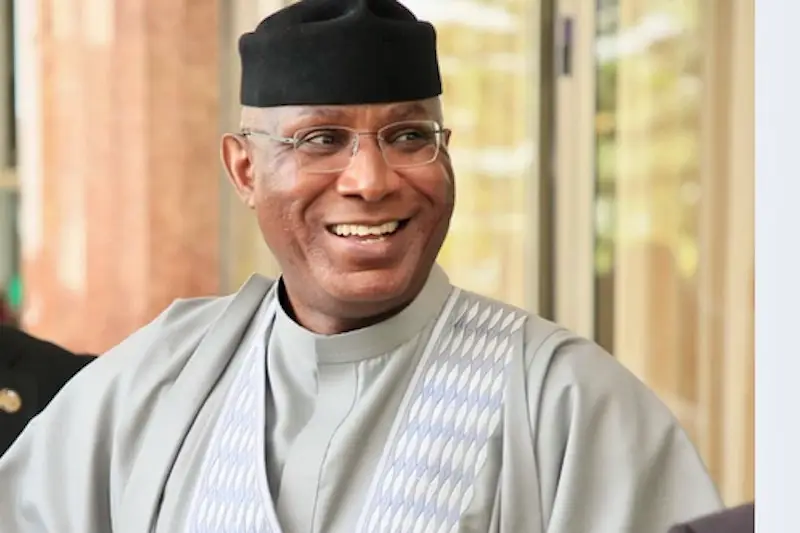
Senator Ovie Omo-Agege urges genuine reconciliation within Delta APC, pledging robust action against internal sabotage and electoral manipulation as the party readies itself for a critical showdown in the 2027 general elections.
Omo-Agege Demands Genuine Reconciliation Amidst Turbulent Times in Delta APC
WARRI, Delta State — In a candid and impassioned address at an interactive session in Warri South Local Government Area, Senator Ovie Omo-Agege, former Deputy Senate President and the 2023 Delta State governorship candidate, delivered a clarion call for authentic reconciliation within the All Progressives Congress (APC) in Delta State.
Speaking with a mix of gravitas and urgency, Omo-Agege highlighted the pressing need for unity and strategic vigilance to counter the dual threats of internal sabotage and electoral manipulation, challenges that could undermine the party’s prospects in the forthcoming 2027 general elections.
A Critical Juncture in Delta APC’s History
For decades, the APC in Delta State has battled the twin spectres of internal dissent and external political adversaries. Omo-Agege’s address comes at a time when the party is grappling with the fallout of the 2023 governorship election, an electoral contest marred by allegations of tampering and manipulation.
Despite what he described as “alterations” in the final results, Omo-Agege maintained with unwavering conviction that the APC had, in essence, emerged victorious in Warri South—a claim that underscores the deep-rooted belief in the party’s grassroots strength and electoral mandate.
This assertion is not made in a vacuum. The political landscape in Delta State has long been characterised by fierce rivalry, particularly with the Peoples Democratic Party (PDP), whose alleged interference in the electoral process remains a bone of contention.
Omo-Agege’s emphatic statement—“We will take necessary steps to prevent not just internal sabotage but also the falsification of election results by the PDP”—resonates as both a warning and a promise of relentless action to safeguard the integrity of future elections.
Unmasking the Internal Sabotage
At the heart of Omo-Agege’s address was the issue of internal sabotage—a phenomenon that has, according to him, significantly contributed to the unfavourable outcomes in past elections.
This internal disunity, often cloaked in political rhetoric and factionalism, has historically sown seeds of doubt among supporters and weakened the party’s organisational structure.
By candidly addressing these issues, Omo-Agege not only acknowledged the challenges but also positioned himself as a reformist determined to overhaul the status quo.
He criticised those within the party who have been quick to dismiss reconciliation efforts, arguing that the real challenge lies in transforming empty promises into tangible actions.
“I don’t know any politician who doesn’t talk about reconciliation. But real reconciliation is not just words; it requires action,” he asserted.
This call to action is especially potent given the backdrop of previous electoral contests where minor margins of victory were overshadowed by alleged manipulations.
His stance is a direct rebuke to naysayers who claim that his camp is unwilling to engage in reconciliation—a claim he refutes by pointing out the absence of genuine reconciliation initiatives from his detractors.
Reconciliation: Beyond Political Rhetoric
The notion of reconciliation in politics is often diluted into mere platitudes. However, Omo-Agege’s address sought to redefine this concept by emphasising sincerity and strategic planning.
He argued that reconciliation must extend beyond verbal commitments and require concrete, collaborative measures that unite the party’s disparate factions.
The emphasis on “genuine” reconciliation is a call for a paradigm shift—a move away from superficial politicking towards a model where unity is built on mutual accountability and shared vision.
This approach is not only strategic but also symbolic. By advocating for real, actionable reconciliation, Omo-Agege is laying the groundwork for a more resilient party structure that can withstand both internal dissent and external attacks.
In the volatile realm of Nigerian politics, such a cohesive approach is indispensable if the APC is to reassert its dominance in Delta State and challenge the entrenched influence of the PDP.
Leadership and Grassroots Mobilisation: The Bedrock of Success
A recurring theme throughout Omo-Agege’s speech was the indispensable role of grassroots mobilisation in shaping political destiny. His journey in Delta State politics, which has seen him evolve from a formidable campaigner to a seasoned political leader, is a testament to the power of local engagement.
“All politics is local,” he remarked, underscoring the belief that true leadership is forged at the grassroots level. This sentiment was echoed by Dr Yemi Emiko, a revered chieftain of the APC in Delta and a prominent Prince of Warri Kingdom.
Dr Emiko’s comments reinforced the notion that leadership cannot be inherited through empty claims on social media or elite posturing. Instead, it must be earned through hard work, dedication, and an unwavering commitment to delivering results at the ward and local government levels.
His endorsement of Omo-Agege as the rightful leader of Delta APC serves as both an affirmation of Omo-Agege’s political credentials and a rallying cry for party members to consolidate their efforts under his stewardship.
The 2027 Elections: A Battle for Delta’s Future
Looking ahead to the 2027 general elections, Omo-Agege’s address takes on an added layer of urgency. With electoral stakes higher than ever, the APC in Delta State is at a crossroads. The party’s ability to forge a united front, free from internal conflicts and marred by past manipulations, will be pivotal in determining its electoral fortunes.
Omo-Agege’s message is clear: without a concerted effort to address internal sabotage and to reject any attempts at electoral rigging, the APC risks ceding its hard-won ground to the PDP.
The electoral battle in Delta State is not merely a contest for political power; it is a struggle for the future of the state itself. Omo-Agege’s emphasis on unity, strategy, and determination is a strategic manoeuvre designed to galvanise the party’s base.
By positioning the 2027 elections as a watershed moment for Delta State’s political future, he is rallying supporters to view their participation as a civic duty—a call to action that transcends mere party politics.
Implications for Nigerian Politics
The unfolding drama within Delta APC has wider implications for Nigerian politics at large. The internal challenges and electoral manipulations that Omo-Agege has highlighted are not unique to Delta State but are reflective of systemic issues that have long plagued the country’s political landscape.
His call for genuine reconciliation, therefore, resonates beyond the confines of his party; it is a critique of the broader political culture that often prioritises factional interests over national progress.
In an era where the credibility of democratic institutions is increasingly under threat, Omo-Agege’s insistence on integrity and unity strikes a chord with a sceptical electorate.
His message is both a cautionary tale and a roadmap for reform—one that emphasises the need for political actors to transcend personal ambitions and work collectively towards a more transparent and accountable governance system.
A Sensational Turn in Delta Politics
The tenor of Omo-Agege’s address is as sensational as it is critical. His forthright criticism of internal sabotage and electoral manipulation has sparked a renewed debate among political commentators and party members alike.
In a climate where political manoeuvring is often cloaked in ambiguity, his candid remarks cut through the noise, forcing a reckoning with the realities of contemporary Nigerian politics.
Moreover, the public endorsement by figures like Dr Yemi Emiko lends additional gravitas to his assertions, suggesting that his vision for Delta APC is not only rooted in experience but also enjoys broad-based support among the party’s elite and grassroots alike.
This confluence of strategic insight and popular backing is poised to redefine the political dynamics in Delta State as the APC gears up for the 2027 electoral battle.
Conclusion: A Call to Action for Unity and Integrity
Senator Ovie Omo-Agege’s address is a rallying cry for all stakeholders within Delta APC. His passionate appeal for genuine reconciliation, underpinned by a detailed critique of internal sabotage and electoral manipulation, sets the stage for a transformative period in the party’s history.
As the APC in Delta State braces itself for the challenges of the 2027 general elections, the imperative for unity, strategic planning, and unwavering determination has never been clearer.
In the charged atmosphere of Nigerian politics, where every election is a test of resilience and collective resolve, Omo-Agege’s message is both timely and transformative.
His call for real, actionable reconciliation is not just a political manoeuvre—it is a declaration of intent that seeks to redefine the future of Delta State and, by extension, the broader narrative of Nigerian democracy.
With the stakes higher than ever, the path forward for Delta APC will undoubtedly be shaped by the very principles that Omo-Agege has so emphatically championed: unity, strategy, and an unyielding commitment to the truth.
As the party prepares for what promises to be a pivotal electoral contest, all eyes will be on whether the call for genuine reconciliation can translate into a powerful, united front capable of overcoming the twin spectres of internal discord and electoral malpractice. For now, the clarion call has been sounded—a call to action that may well determine the political destiny of Delta State in the years to come.
- Additional report by Osaigbovo Okungbowa, Atlantic Post Senior Political Correspondent