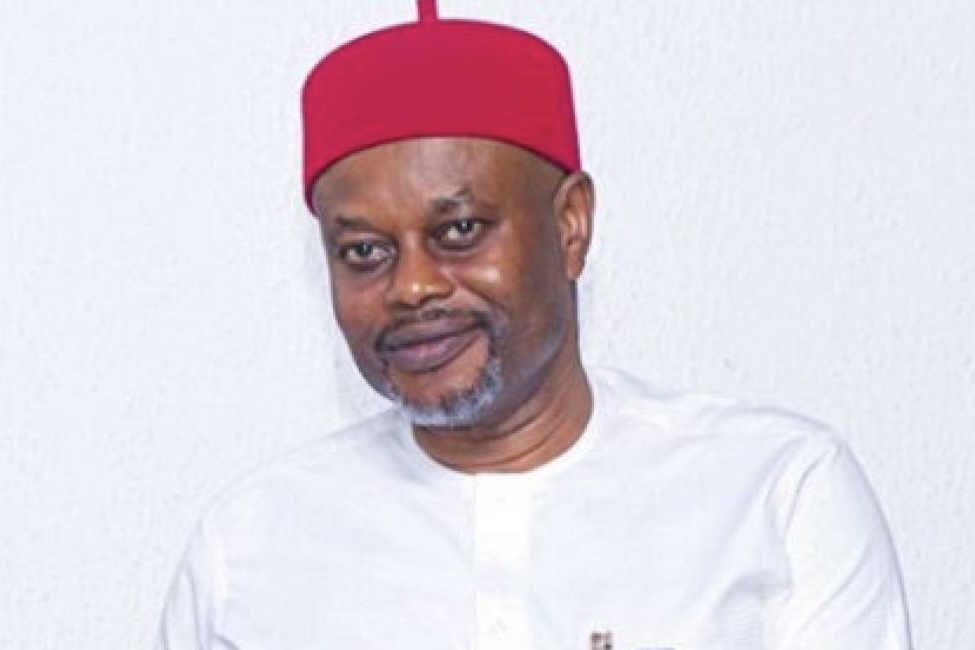
ENUGU, Nigeria — The legal team of Chief Uche Nnaji, former Minister of Innovation, Science and Technology and the Peoples Democratic Party (PDP) governorship candidate in Enugu State, has denied reports suggesting that he is facing criminal charges, saying the matter surrounding his academic records remains a civil dispute before the Federal High Court in Abuja.
In a statement issued on Tuesday by his spokesperson, Dr Robert Ngwu, the former minister’s camp said recent media reports had created confusion by “conflating separate legal proceedings” and presenting what it described as incomplete accounts of matters currently before the courts.
The statement said the purpose of its intervention was not to try the case in the media, but to clarify the legal position, explain the facts in context and restate Nnaji’s confidence in the judicial process.
According to the statement, the central case concerning Nnaji’s academic records is a civil suit marked FHC/ABJ/CS/1909/2025, filed by the former minister himself at the Federal High Court in Abuja. The suit, it said, seeks judicial clarification on his academic records and the release of his official university transcript, which he believes will confirm his graduation status.
“The statement stressed that Nnaji was not charged with any offence in the matter, nor was he arraigned as a criminal defendant.”
It added that when the case came up before Justice Hauwa Joseph Yilwa on April 20, 2026, the parties informed the court that efforts were being made to resolve the matter amicably, prompting the judge to adjourn proceedings for a report on settlement.
However, the statement said that when the matter resumed on July 8, 2026, counsel informed the court that negotiations had broken down, leading to another adjournment until October 20, 2026, for definite hearing.
Nnaji’s camp insisted that the proceedings remain civil in nature and should not be portrayed as a criminal trial.
On reports that the Independent Corrupt Practices and Other Related Offences Commission (ICPC) had filed criminal charges against the former minister, the statement said neither Nnaji nor his lawyers had, at the time of its release, been formally served with any charge, hearing notice or notice of arraignment.
It added that once proper service is effected, Nnaji would appear in court and exercise his constitutional right to defend himself.
The statement also sought to distinguish between the filing of charges and a finding of guilt, arguing that an arraignment does not amount to conviction. It said criminal responsibility can only be established after a full trial, in which both the prosecution and the defence are heard by a competent court.
Revisiting the ex parte arrest warrant earlier obtained by the ICPC, the statement said the order was based on the Commission’s claim that Nnaji had failed to honour invitations and was likely to abscond.
Nnaji, however, disputes that version of events. According to his camp, no invitation was personally served on him at his known residential addresses in Abuja and Enugu, or through his recognised email address.
The statement further maintained that he never went into hiding, saying he remained publicly visible during the period in question by attending political meetings, consulting stakeholders, receiving visitors and granting media interviews.
It said any suggestion that he was evading law enforcement agencies was inconsistent with the facts.
Nnaji’s legal team, led by Chief Wole Olanipekun, SAN, has also challenged the ex parte order at the Court of Appeal, where it has filed both an appeal and an application for stay of execution. According to the statement, the matter is still pending.
The team argued that an arrest warrant issued to compel attendance should not be treated as a judicial finding of guilt, stressing that criminal liability can only be determined after a full hearing.
Reaffirming Nnaji’s position, the statement said the former minister had “never absconded from any lawful judicial process” and remained confident that the issues raised against him would ultimately be resolved on the strength of evidence presented before the courts.
It also noted that he voluntarily resigned from office as minister in order to focus on clearing his name through the judicial process.
The statement urged the public to distinguish between civil and criminal proceedings, allegations and proven facts, arraignment and conviction, as well as media reports and judicial findings.
It concluded by restating the constitutional presumption of innocence, saying every Nigerian is entitled to be treated as innocent until proven guilty by a court of competent jurisdiction, and expressing confidence that “the truth will prevail”.
The latest clarification comes as the matter continues to attract attention in Enugu political circles and beyond, given Nnaji’s profile as a former federal minister and a prominent figure in the PDP in the state.
For now, the legal dispute remains before the courts, with the next hearing scheduled for October 20, 2026, unless there is another development in the appeal process or in the civil proceedings already before the Federal High Court.
Follow us on our broadcast channels today!
- WhatsApp: https://whatsapp.com/channel/0029VawZ8TbDDmFT1a1Syg46
- Telegram: https://t.me/atlanticpostchannel
- Facebook: https://www.messenger.com/channel/atlanticpostng