Omoyele Sowore’s fight to recover his international passport slid into fresh uncertainty on Thursday when Justice M. S. Liman of the Federal High Court in Abuja again declined to hear a long standing motion seeking its temporary release.
The refusal is the latest episode in a pattern of delays that Sowore’s lawyers say amounts to blatant judicial stonewalling and raises disturbing questions about access to fair process in politically charged prosecutions.
Sowore was granted bail on 30 January 2025 on stringent terms that included the deposit of his passport with the court.
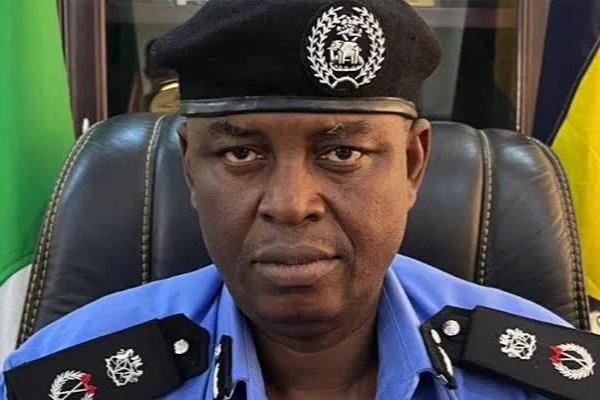
The bail order followed cybercrime charges filed by the Inspector General of Police Kayode Egbetokun who accused the activist of posting statements that allegedly sought to incite public unrest and to impugn the reputation of the police.
The bail terms and the retention of the passport have been the subject of repeated applications by Sowore for a limited release so he may travel for work and medical reasons.
On Thursday Justice Liman insisted the application could only proceed if Sowore’s legal team filed an ex parte motion.
That stance was met with incredulity by the defence who point out that the ex parte procedure relied upon by the judge is ordinarily applied to civil matters filed during court vacation and is not the correct route for a criminal application of this nature.
owore’s counsel Marshal Abubakar and A. K. Musa told the court the matter had been properly assigned and ought to be heard without such procedural contortions.
The defence contend that the insistence on an ex parte motion is a legal fiction used to stall substantive adjudication.
They note that another vacation judge, Justice Emeka Nwite, had previously heard arguments on the same matter and that there is therefore nothing novel or extraordinary about the application that would justify an ex parte route.
Lawyers familiar with the file told reporters the repeated reliance on vacation or civil technicalities smacks of selectivity and has the practical effect of denying Sowore the relief his bail order contemplates.
This most recent refusal is not an isolated mishap. Court sources and media reports show a catalogue of absences and scheduling shocks that have repeatedly stalled hearings in Sowore’s case.
On multiple dates when the motion was listed, Justice Liman either failed to appear or travelled on fiat to another jurisdiction without notifying the parties.
On one occasion the judge was said to be attending a conference in Lagos. Sowore and his legal team say there was no prior notice to them or to the prosecution when court lists were disrupted.
Those close to the defence describe the pattern as a deliberate ploy to avoid taking the matter on its merits.
Frustration in court spilled into public accusation. Mr Abubakar told the judge he would seek a transfer of the matter to another judge, citing what he described as entrenched bias since the file first came before Justice Liman.
The transfer request, if pursued, would test the court’s internal mechanisms for reassigning politically sensitive cases and will force a reckoning over how complaints of judicial partiality are handled.
The backdrop is combustible. The police maintain Sowore’s posts about officers at a Lagos airport checkpoint amounted to false statements intended to incite unrest.
Sowore has consistently denied any criminal intent and has framed his posts as legitimate criticism and public interest reporting.
Human rights groups will see the retention of the passport and the repeated procedural barbs as part of a wider pattern in which state power is used to constrain high profile critics.
The case is therefore not simply about one document but about limits on civic space and the rule of law.
Legal commentators caution that routine application of vacation or ex parte rules to criminal proceedings risks creating an unequal playing field where defendants with politically sensitive profiles are denied timely access to court relief.
The right to a fair hearing includes predictability in the calendar and an obligation on judges to manage matters so that legally protected rights are not rendered hollow by delay.
If judges can effectively postpone contentious matters indefinitely through procedural sidesteps the promise of impartial justice is seriously undermined.
What happens next is likely to define much about the character of this prosecution.
A formal application for transfer is almost inevitable. If the matter is reassigned and heard quickly the court can extinguish suspicions of manipulation.
If delays continue the case will become a cause celebre for civil liberties advocates and will deepen public scepticism about the independence of adjudication in politically sensitive prosecutions.
For now Sowore remains in the uneasy position of having to seek permission to reclaim the very document that enables him to continue activism beyond Nigeria’s borders.
The nation watches as a star protagonist of the country’s pro democracy movement confronts procedural resistance that is legal in form but, his lawyers say, deeply political in effect.
Follow us on our broadcast channels today!
- WhatsApp: https://whatsapp.com/channel/0029VawZ8TbDDmFT1a1Syg46
- Telegram: https://t.me/atlanticpostchannel
- Facebook: https://www.messenger.com/channel/atlanticpostng