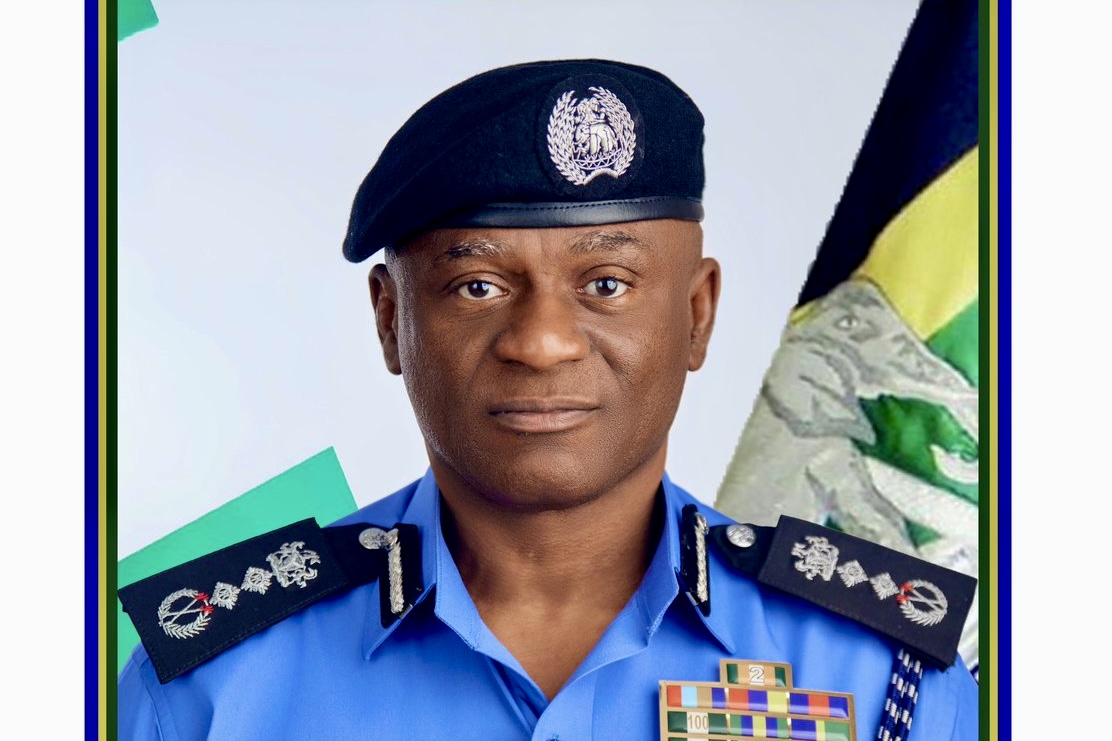
The Inspector-General of Police, IGP Olatunji Rilwan Disu, on Saturday visited Niger State to assess the security situation in Borgu and strengthen the ongoing operation to rescue worshippers and other residents abducted during a deadly attack on communities in the Dekara district.
The visit came amid mounting public concern over the fate of the victims and growing questions over the ability of security agencies to prevent armed groups from operating in remote communities along the Borgu corridor.
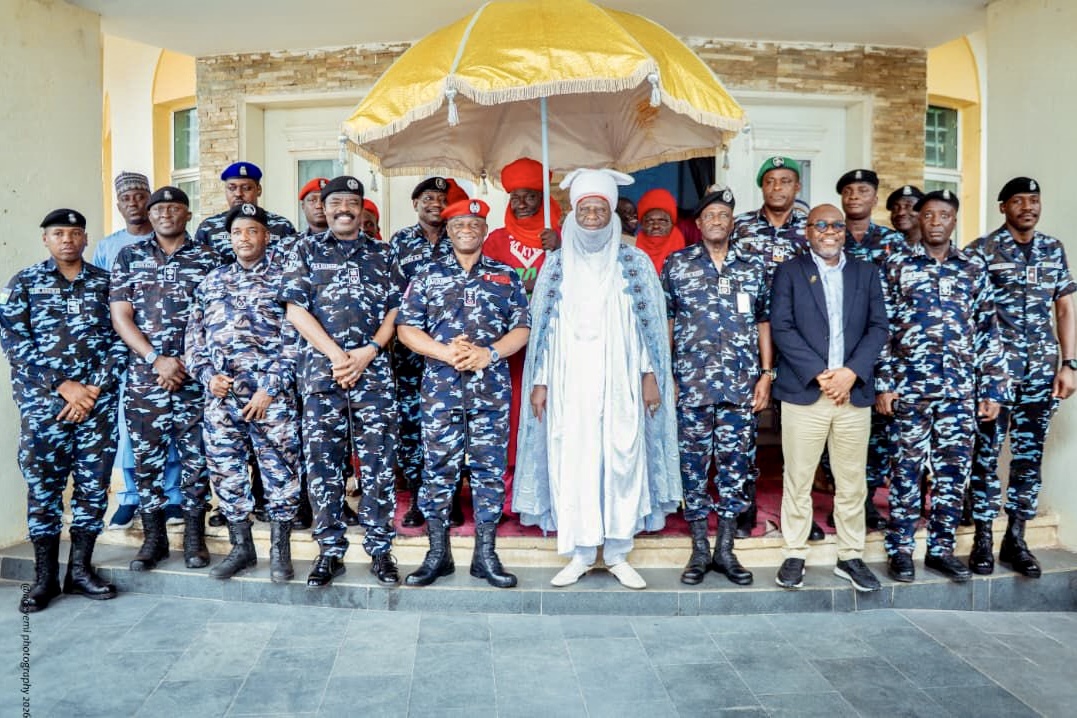
According to the Nigeria Police Force statement issued by Force Public Relations Officer, CSP Ani Iniedu, the IGP met officials of the Niger State Government, senior police officers and the Emir of Minna as part of a broader effort to reinforce intelligence, logistics, inter-agency coordination and community engagement.
Disu told officers that the safe recovery of the abducted persons and the arrest of those responsible remained the operational priority.
He also directed the Niger State Command to sustain “intelligence-led and professionally coordinated operations”, while placing the safety of victims and vulnerable communities at the centre of the response.
The IGP further ordered stronger cooperation with traditional rulers, religious leaders and community representatives, arguing that effective intelligence gathering and early intervention depend heavily on credible information moving quickly from communities to security agencies.
Channels Television separately reported that tactical and counter-terrorism teams, the Special Intervention Squad and Explosive Ordnance Disposal personnel had been deployed as part of the rescue effort.
The latest development represents a significant escalation in the federal security response to the Borgu crisis.
But it also raises a more uncomfortable question: why did armed men manage to assemble, enter communities, attack worshippers and disappear with a large number of civilians in the first place?
The Borgu Attack: What Happened?
The attack took place during Friday prayers in the Dekara area of Borgu Local Government Area, with police initially confirming that suspected terrorists invaded Gidan-Zana and Kpenya and abducted an unspecified number of people at a mosque.
Earlier reports said the attackers struck shortly after Juma’at prayers and also moved through surrounding communities including Gidan-Zana, Kpenya, Sabon Gida and other settlements.
There is, however, a significant discrepancy in the reported date of the attack. The original police account cited 21 August 2026, while some subsequent reports have described the raid as occurring on 22 August. The police chronology and multiple reports referring to the Friday attack point to 21 August as the police-recorded date, and this report therefore uses that date while flagging the discrepancy rather than presenting it as settled fact.
The human toll remains especially difficult to establish.
At the height of the crisis, an online video appeared to show what residents identified as hundreds of abducted women, children and elderly people in a forest. Reuters reported that residents estimated the group shown in the footage at about 600 people, but stressed that it could not independently verify the number.
More recent reporting citing police estimates put the number of victims at between 155 and 164, while the attackers reportedly claimed in a video that they were holding more than 500 people.
That discrepancy is not a minor statistical disagreement.
For families searching for relatives, the difference between 160 and 600 missing people is enormous. For government agencies, it determines the scale of intelligence operations, humanitarian planning, family tracing, medical preparedness and the eventual political accountability for the incident.
As at 29 August, the authorities had not produced a definitive public roll call of the abducted.
A Rescue Operation Complicated by Terrain and Infrastructure
The Borgu crisis is unfolding in an exceptionally difficult operational environment.
Security agencies have been working around the Kainji Lake National Park and heavily forested areas that provide cover and mobility routes for armed groups.
A particularly disturbing dimension is that the geography appears to be intersecting with infrastructure weakness.
Earlier this year, sections of bridges linking communities around Wawa and Luma in Borgu were reportedly destroyed in attacks, disrupting one of the few routes available for movement through parts of the area.
This matters beyond engineering.
When a bridge is destroyed in an insecure rural economy, the damage does not stop at police mobility. Farmers lose access to markets. Traders face longer and more expensive routes. Emergency responders lose valuable time. Communities become more isolated. Security forces become easier to predict and slower to deploy.
The latest Borgu operation has therefore exposed a familiar Nigerian paradox: the same infrastructure deficit that restricts economic activity can also constrain the security response required to protect that activity.
The Police Public Relations Officer, Wasiu Abiodun, has emphasised that the rescue effort must not be rushed at the expense of the hostages.
He explained: “If you rush it, you might end up losing the lives of these victims you are trying to rescue.”
That is the central dilemma confronting the security agencies — act quickly and risk the captives, or proceed methodically and risk allowing the abductors more time to move or disperse them.
IGP Disu’s Economic Warning Is the Bigger Story
The most significant aspect of Saturday’s intervention for business and economic observers is the IGP’s recognition that the Borgu crisis is not merely a policing problem.
Disu warned that attacks on innocent citizens have consequences for “economic activities and development in Niger State and the country at large.”
That observation deserves far more attention than it has received.
Borgu is not an economically empty corner of Nigeria.
The Niger State Government says farming and fishing are the principal occupations of about 90 per cent of the Borgu population, while the area also has substantial opportunities in agro-processing, cotton production, tourism and related industries.
The state’s official investment material similarly describes agriculture as a major pillar of Niger’s economy, saying more than 80 per cent of residents statewide are engaged in farming and stressing the importance of agricultural value chains, jobs and investment.
This makes insecurity in Borgu particularly dangerous.
A kidnapping in a rural farming community is not simply a criminal statistic. It potentially means fewer farmers on their land, delayed planting, disrupted harvesting, lower market participation, abandoned farms, higher transport costs and weaker rural purchasing power.
Where fishermen fear travelling to waterways, fish supply can fall.
Where traders fear roads, market days become less reliable.
Where workers cannot sleep safely in villages, labour becomes more expensive or simply unavailable.
And where investors perceive that assets may require private security just to operate, expected returns deteriorate.
Investor Confidence Is Already Under Pressure
The timing is particularly damaging for Niger State, whose government is actively trying to attract investment into mining, agriculture, infrastructure, renewable energy and agro-processing.
Just days before the IGP’s visit, Niger State Commissioner for Industry, Trade and Investment, Aminu Takuma, acknowledged that insecurity was already affecting investment inflows.
His warning was blunt: insecurity had created negative international perceptions and made Niger State a “red flag” for some prospective investors.
“Insecurity is one of the bottlenecks affecting investment inflow into Niger State, but we are not leaving any stone unturned.”
The state says it has attracted or opened discussions around mining, a Special Agro-Industrial Processing Zone, solar power, digital education and other investments.
That creates a direct contradiction.
On one side, Niger State is pitching itself as an emerging investment destination.
On the other, a major local government is struggling with terrorist infiltration, community displacement and mass kidnapping.
No serious investor ignores that contradiction.
The Rural Economy Cannot Grow When Communities Are Being Emptied
The consequences extend beyond immediate commercial losses.
Reuters reported that a traditional leader said approximately 2,000 people fled into neighbouring Benin Republic after the attacks.
Even where such displacement is temporary, its economic effects can be persistent.
People who flee do not automatically return to the same jobs, farms, businesses and schools.
Households lose productive assets.
Security analyst Kabir Adamu: The abductors are “most likely inside the reserve” while waiting to negotiate for the victims’ release.
Children lose school time.
Farmers miss planting or harvesting windows.
Small traders lose inventories and customers.
Local governments face additional pressure to provide shelter, food, transport and healthcare.
The state then has to spend money dealing with displacement that could otherwise have financed roads, schools, healthcare, agricultural extension and economic infrastructure.
That is the hidden fiscal cost of insecurity.
Kidnapping Has Become an Economic Industry
The Borgu attack also has to be examined against the wider economics of kidnapping in Nigeria.
A new SBM Intelligence assessment reported by Reuters found that 7,825 people were kidnapped between July 2025 and June 2026, while at least 1,142 people were killed.
Recorded ransom payments exceeded ₦7.78 billion, or about $5.79 million at the exchange rate cited in the report. SBM described the figures as conservative because many ransom payments are never publicly disclosed.
The significance is profound.
Kidnapping is no longer simply a by-product of insecurity. It has developed into a revenue-generating criminal business model.
The sequence is brutally rational from the criminal perspective:
Identify vulnerable communities.
Exploit weak surveillance.
Seize large numbers of people.
Move them into difficult terrain.
Create public panic.
Negotiate ransom.
Reinvest proceeds in weapons, logistics, informants and mobility.
That is why rescue alone is not enough.
A successful rescue operation saves lives, but it does not necessarily dismantle the underlying criminal economy.
Why Intelligence Is Now More Important Than Firepower
Disu’s insistence on deeper community engagement is therefore one of the most important aspects of his Niger visit.
The problem in Borgu is not simply whether Nigeria has enough guns or patrol vehicles.
It is whether security agencies know who is moving through the communities, where the attackers sleep, who supplies them, where motorcycles and vehicles are sourced, who provides food, which routes they use and how information about patrols reaches them.
The IGP’s order for closer engagement with traditional rulers, religious leaders and community stakeholders directly addresses that intelligence problem.
Yet trust cuts both ways.
Residents must believe that information supplied to security agencies will not expose them to retaliation from armed groups.
Security agencies must also be capable of acting on good intelligence before attacks occur, rather than after communities have already been devastated.
That is where operational credibility will ultimately be measured.
Another Warning From the Borgu Pattern
Saturday’s intervention did not emerge from a single isolated incident.
PUNCH reported that the latest attack was the fourth reported mass-abduction incident in Niger State within nine months, following the Papiri school kidnapping, the January Kasuwan Daji attack, the February attacks in Konkoso, Tungan-Makeri and Pissa, and another major abduction in Shiroro.
The pattern suggests that the problem is becoming geographically embedded.
The risk is that communities begin adapting economically to insecurity rather than expecting the state to defeat it.
When that happens, farmers stop farming distant land.
Businesses shut earlier.
Transporters charge risk premiums.
Insurance becomes harder or more expensive.
Land values weaken.
Investors demand higher returns.
Young people migrate.
Local markets shrink.
And government eventually spends more money managing the consequences than it would have cost to prevent the deterioration.
The Government Has Been Warned Before
Another troubling issue raised by current reporting is the allegation that some residents had previously been warned to leave highly exposed communities to permit security clearance operations.
Police spokesman Wasiu Abiodun confirmed that affected residents had previously been warned about armed groups and that authorities wanted to carry out a clearance operation, although residents were reluctant to abandon ancestral homes and farms.
Abiodun explained that it was difficult to deploy security personnel across the large rural area and said communities were expected to return after the security situation had been stabilised.
But that logic creates a painful policy challenge.
For a subsistence farmer, leaving home means potentially losing the very land that feeds the family.
For government, keeping people in a declared danger zone can increase the risk of mass casualties.
The solution therefore cannot simply be “relocate and return later”.
It must involve temporary protection, humanitarian support, alternative access routes, secure farming corridors, credible security guarantees and a clear timetable for restoring civilian control.
State Police Debate Gains New Urgency
The Borgu crisis also gives fresh relevance to Nigeria’s debate over state police.
During his visit, Disu said the establishment of state police would not disrupt ongoing security operations and could strengthen the capacity and efficiency of security personnel.
The debate is no longer theoretical.
Supporters argue that local policing could bring security personnel closer to communities and improve local intelligence.
Critics worry about political interference, abuse and the weaponisation of state security structures.
Borgu illustrates the strongest argument on the operational side: national security agencies cannot easily maintain dense human intelligence coverage across every remote settlement in a country of Nigeria’s size.
But state police, if eventually established, would have to be accompanied by strict recruitment standards, independent oversight, professional training, intelligence safeguards and clear constitutional boundaries.
Otherwise, one security problem could simply produce another.
What the IGP Must Now Deliver
Saturday’s visit sends an important signal: Abuja is no longer treating Borgu as a routine local security incident.
But political visibility is not the same thing as operational success.
The real test begins after the convoy leaves Niger State.
Families need accurate information.
The abducted need to come home alive.
The perpetrators need to be identified and prosecuted.
The communities need permanent security rather than temporary deployments.
The destroyed infrastructure must be rebuilt.
And the commercial economy must be allowed to function without farmers, traders and investors calculating the kidnapping risk before every trip.
The police say the rescue remains the focus of ongoing operations and have promised continuing support in logistics, mobility, intelligence, training and operational capacity.
That promise must now translate into measurable outcomes.
The Wider Economic Stakes for Nigeria
At national level, the Borgu episode arrives at a particularly delicate economic moment.
Nigeria has just received a more favourable sovereign outlook from Moody’s, which shifted the country’s outlook from stable to positive, citing stronger economic growth, improved external buffers and increased foreign exchange reserves, while retaining the B3 rating.
That is welcome news.
But credit ratings and investor confidence are ultimately supported by what happens on the ground.
A country can improve its foreign exchange position, reform monetary policy and attract international investment, but persistent insecurity in productive regions can undermine those gains through lost output, displaced labour, higher business costs and rising security expenditure.
This is why the Borgu crisis is bigger than Borgu.
It raises a basic question about Nigeria’s economic recovery:
Can the country sustain growth while large sections of its rural productive economy remain insecure?
The answer will depend not on speeches, but on whether citizens can farm, trade, travel, worship and invest without calculating whether armed groups control the road ahead.
For Niger State, the rescue of the abducted residents is therefore both a humanitarian imperative and an economic necessity.
For the Nigeria Police Force and its sister agencies, the operation is now a test of intelligence, coordination and institutional credibility.
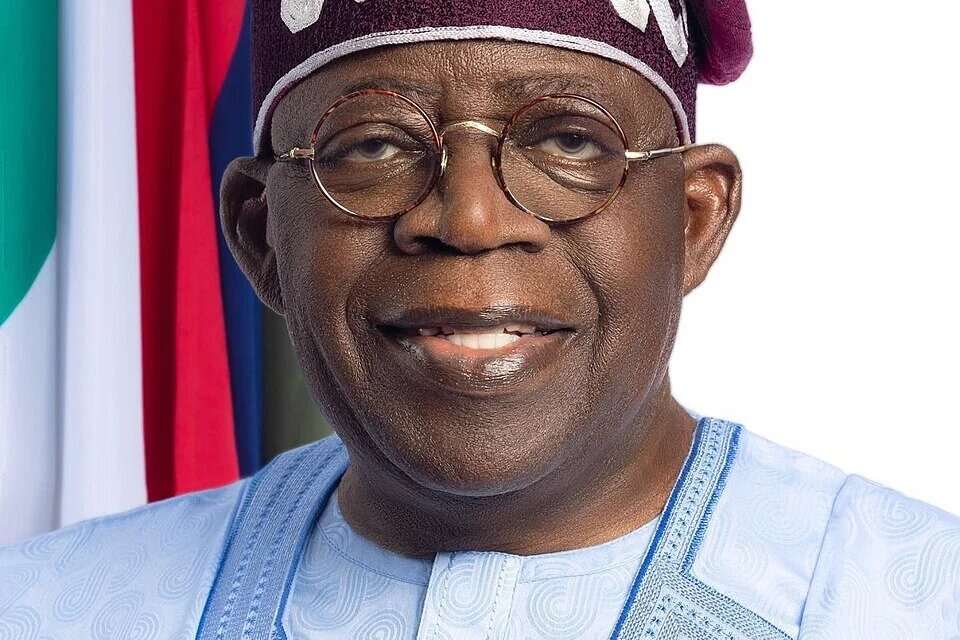
And for the Tinubu administration, the Borgu crisis is a reminder that economic reforms can only produce durable prosperity when the Nigerian state can first provide the security on which economic life depends.
Relevant Quotes
IGP Olatunji Disu: “The safe recovery of the abducted persons and the arrest of the perpetrators remain the focus of ongoing operations.”
IGP Olatunji Disu: Attacks on innocent citizens have “far-reaching consequences” for “economic activities and development” in Niger State and Nigeria.
Wasiu Abiodun, Niger State Police spokesperson: “If you rush it, you might end up losing the lives of these victims you are trying to rescue.”
Niger State Investment Commissioner Aminu Takuma: “Insecurity is one of the bottlenecks affecting investment inflow into Niger State.”
President Bola Tinubu: “Terror will not cow Nigeria. We will defend our people, protect our communities and uphold the sanctity of human life.”
Atlantic Post Investigative Take
The Borgu crisis should not be measured only by the number of people eventually rescued.
The harder question is whether government can make another Borgu-style attack materially harder to execute.
That requires more than sending tactical teams after the abduction. It means rebuilding intelligence networks, fixing access roads and bridges, securing vulnerable border corridors, protecting farming communities and breaking the financial incentives that make kidnapping profitable.
Until that happens, every successful rescue risks becoming a temporary victory in a much larger economic war.
Follow us on our broadcast channels today!
- WhatsApp: https://whatsapp.com/channel/0029VawZ8TbDDmFT1a1Syg46
- Telegram: https://t.me/atlanticpostchannel
- Facebook: https://www.messenger.com/channel/atlanticpostng