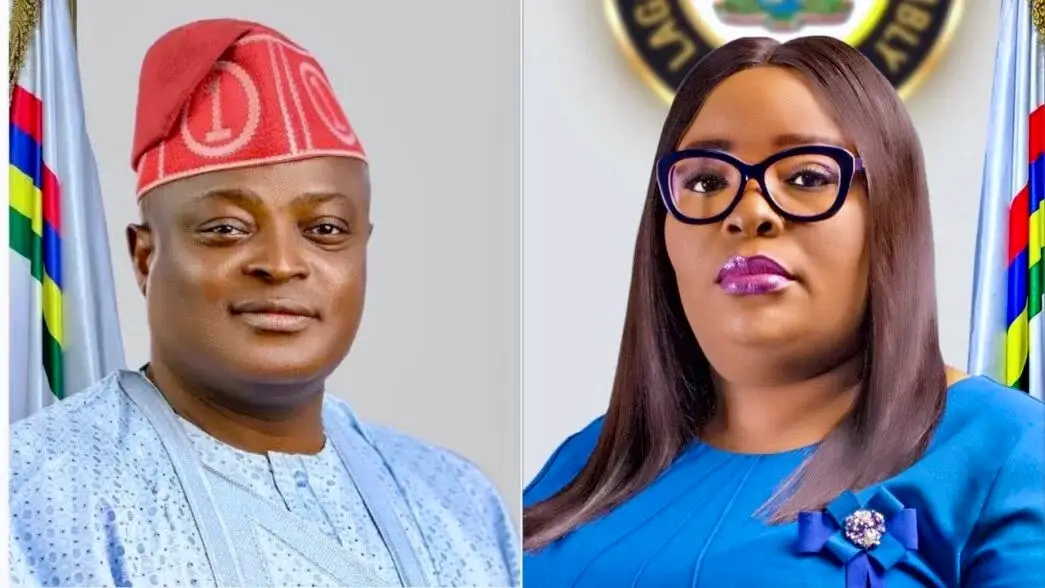
The N5 billion vehicle procurement scandal in Lagos has sparked a fierce conflict between Speaker Mudashiru Obasa and former Speaker Mojisola Meranda. Following Obasa’s removal, Meranda revised procurement plans, leading to legal battles over authority and execution. This controversy underscores systemic governance issues and the urgent need for reform and transparency in Nigerian politics.
IKEJA, Lagos — In an explosive development that has rocked the corridors of power in Lagos, a controversial N5 billion vehicle procurement has ignited a bitter feud between two heavyweight political figures: Speaker Mudashiru Obasa and his former successor, Mojisola Meranda.
The scandal, which centres on the purchase of SUVs for 40 lawmakers, has not only deepened internal rifts but also raised serious questions about governance, financial oversight, and the future direction of the Lagos State House of Assembly.
A Tale of Two Approvals
At the heart of the controversy lies a seemingly innocuous vehicle purchase that has now evolved into a full-blown political battleground. In December 2024, Speaker Obasa approved a procurement plan for N7 billion aimed at buying vehicles from a reputable bidder in Dubai.
His strategy was clear: secure state-of-the-art models from abroad for the lawmakers and, in a twist of personal ambition, allocate a portion of the fleet for his own use—including provisions for his two wives.
However, the political tides turned swiftly on January 13, 2025, when Obasa was abruptly removed as Speaker over allegations of highhandedness, financial misappropriation, and fraudulent conduct.
During Obasa’s absence, his erstwhile deputy, Mojisola Meranda, stepped into the breach. Meranda, seizing the opportunity amid the chaos, not only assumed the role of Speaker but also led a reorganisation of the vehicle procurement process.
Instead of following Obasa’s initial directive to import vehicles from Dubai, she reconfigured the plan and approved the withdrawal of N5 billion from the Assembly’s account to purchase 32 units of the 2025 Toyota Prado SUV and seven units of the 2025 Toyota Land Cruiser—an approach that reportedly saved the House N2 billion.
Yet, what was intended as a cost-saving measure quickly spiralled into a contentious debate about authorisation and executive prerogative.
The Feud: Clash Over Authorisation and Execution
For Obasa, the matter is not merely about a financial discrepancy—it is about the sanctity of his executive authority and the proper execution of procurement procedures.
Insiders reveal that the former Speaker is incensed that Meranda effectively “usurped” his original plan. “He had approved the money before his removal,” an aide confided, “but Meranda proceeded with buying them locally rather than honouring his directive to import them from Dubai.”
To Obasa, this deviation is not a mere administrative oversight; it is a breach of trust and an affront to the principles of due process.
His contention is clear: approval and execution are distinct phases, and while he had authorised the initial outlay, Meranda’s unilateral decision to alter the procurement strategy without his consent is unacceptable.
Meranda’s camp, however, maintains that her actions were entirely within her remit.
According to sources close to the former Speaker, Meranda only conducted a downward review of an already approved procurement process—thereby saving the Assembly a substantial sum while still delivering quality vehicles for lawmakers.
“Meranda never withdrew money for personal gain; she merely restructured an existing approval to suit current circumstances,” a loyal insider explained.
This argument, while appealing to fiscal prudence, has done little to ease the acrimony felt by Obasa and his supporters.
Legal Battles and Political Machinations
The vehicle purchase debacle is now just one front in a broader legal and political war. Obasa, who was controversially re-elected as Speaker on March 3, 2025—following intense intervention from top All Progressives Congress (APC) leaders and President Bola Tinubu—has dragged Meranda, along with 33 lawmakers and the Assembly itself, to the Lagos State High Court.
His suit challenges the legality of his removal and questions the execution of the procurement process. Obasa’s legal team, led by Chief Fashanu Afolabi (SAN), is determined to “trash out” the allegations of fraudulent malpractice and highhandedness that have long dogged his tenure.
The court proceedings, now set for an adjourned hearing on March 17, 2025, promise to be a battleground where constitutional principles and political ambitions collide.
Obasa’s argument hinges on the claim that his impeachment was procedurally flawed and that the subsequent procurement actions taken by Meranda were executed without his proper authorisation.
His legal representatives have submitted additional affidavits that intensify the scrutiny over the vehicle purchase, demanding that Meranda’s name be expunged from the list of former Speakers—a move that underscores the severity of the dispute.
Financial Implications and the Question of Accountability
Beyond the legal wrangling and political theatrics, the financial implications of this saga cannot be overstated. In a government where public funds are increasingly scrutinised, the allocation of billions of naira for what appears to be lavish expenditure on official vehicles is a stark reminder of the systemic challenges facing Nigerian politics.
Critics argue that the N7 billion originally budgeted by Obasa could have been channelled into more pressing state needs—such as healthcare, education, and infrastructure—rather than into a fleet of SUVs.
The subsequent decision by Meranda to scale down the expenditure to N5 billion, while saving N2 billion, has sparked a debate over whether fiscal prudence is truly at the heart of governance in Lagos, or if it is merely a smokescreen for political manoeuvring.
Opponents of the current leadership contend that such high-profile procurement decisions not only underscore the mismanagement of public funds but also expose a culture of opacity and corruption that pervades the political elite.
The fact that Obasa had earmarked vehicles not only for lawmakers but also for his personal entourage—including a controversial allocation for his wives—has further fanned the flames of public indignation.
In an era when Nigerians are increasingly demanding accountability, the spectacle of lavish spending by those in power serves as a potent symbol of the disconnect between the political class and the people they serve.
The Wider Political Landscape: A Crisis of Governance
This isn’t an isolated incident. The tumult in the Lagos State House of Assembly is emblematic of deeper issues that have long plagued Nigerian politics. The feud between Obasa and Meranda has, in many ways, become a proxy battle for the control of power within the APC—a party whose internal strife has often spilled over into public view.
The political drama has not only divided the Assembly but has also sent ripples through the state’s Governance Advisory Council (GAC), raising concerns among party loyalists and the general public alike.
The leadership crisis is reflective of a broader trend where political ambition and personal rivalries often take precedence over the welfare of the citizens.
While the legal dispute over the vehicle procurement is still unfolding, the public is left grappling with the implications of a system where decisions of monumental consequence are made in the corridors of power without adequate transparency or accountability.
The ongoing controversy underscores a disturbing reality: the pursuit of power often eclipses the need for ethical governance and responsible stewardship of public resources.
An Argument for Reform and Transparency
Amid the cacophony of legal briefs, court dates, and political jostling, there is a clarion call for reform. The vehicle procurement debacle is a microcosm of the broader governance issues that have long undermined the credibility of public institutions in Nigeria.
For Lagos State—a hub of commerce, culture, and political influence—the need for stringent oversight and accountability has never been more urgent.
Advocates for reform argue that the current crisis should serve as a catalyst for sweeping changes in how public funds are managed and allocated.
Greater transparency in procurement processes, enhanced checks and balances, and the strict enforcement of constitutional provisions are essential steps towards restoring public trust.
In a climate where citizens are increasingly aware of and vocal about government mismanagement, it is imperative that elected officials prioritise the collective interest over personal gain.
The Road Ahead: Uncertain and Contentious
As the legal proceedings continue and the political feud shows no signs of abating, the future of Lagos State’s legislative leadership hangs in the balance.
Obasa’s re-election as Speaker, following his dramatic reinstatement, has not only reignited old grievances but also set the stage for an ongoing battle that could reshape the political landscape in Lagos.
Meranda’s brief tenure as Speaker—a period marked by controversy and rapid reversals—serves as a cautionary tale of how political expediency can lead to deep institutional fractures.
For the citizens of Lagos and indeed for Nigerians across the country, the saga is a stark reminder of the high stakes involved in political governance.
The exorbitant sums involved in the vehicle procurement, coupled with the legal and constitutional battles that have ensued, highlight the urgent need for a more accountable and transparent system of governance.
With the court set to hear the case on March 17, 2025, all eyes will be on the judiciary to deliver a verdict that not only settles the score between Obasa and Meranda but also sends a strong message to political elites about the inviolability of constitutional norms.
Conclusion
In the volatile arena of Lagos politics, the N5 billion vehicle purchase controversy is much more than a dispute over SUVs—it is a battleground where the integrity of democratic processes is being fiercely contested.
As Speaker Obasa fights to reclaim his authority and challenge the decisions made in his absence, and as Meranda defends her actions as a necessary recalibration of a flawed process, the entire episode underscores a systemic malaise that has long undermined Nigerian governance.
Whether this latest chapter in the Lagos State House of Assembly saga will lead to meaningful reform or simply add another layer to the complex tapestry of political intrigue remains to be seen.
What is clear, however, is that for the sake of Lagos and Nigeria at large, the time for sweeping reform and uncompromising accountability is now.
The fate of public funds—and indeed the credibility of the nation’s political institutions—depends on it.
- Additional report from Osaigbovo Okungbowa, Atlantic Post Senior Political Correspondent