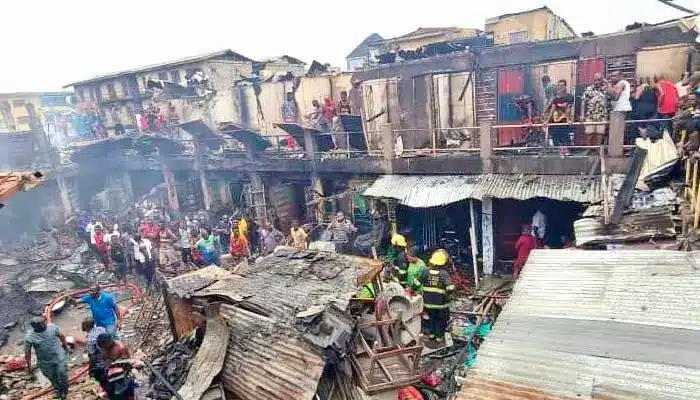
A devastating fire at Ladipo Market in Lagos destroyed goods worth millions and raised significant concerns about public safety and infrastructure. Investigations attribute the cause to an electric surge following power restoration. While no injuries occurred, the economic impact is severe, highlighting the need for stricter safety measures and regulatory oversight.
LAGOS, Nigeria — In a harrowing turn of events that has sent shockwaves through Lagos’ commercial heartland, a devastating fire engulfed parts of Ladipo Market on Tuesday, obliterating goods worth millions of Naira. This incident marks a critical juncture in the ongoing debate over public safety and infrastructural shortcomings in the city.
According to Dr Olufemi Oke-Osanyintolu, Permanent Secretary of the Lagos State Emergency Management Agency (LASEMA), emergency calls began flooding in at precisely 00.09hrs via the agency’s 767 and 112 toll-free lines.
Within mere seconds, a rapid response team was dispatched from the Cappa Base, reaching the scene at 00.16hrs. However, despite the prompt intervention, a warehouse—nestled amidst a cluster of bustling shops—was already reduced to smouldering ruins.
Preliminary investigations point to an electric power surge as the trigger, following the recent restoration of the public electricity supply. This explanation, while technically plausible, raises unsettling questions about the reliability and safety protocols governing Nigeria’s energy infrastructure.
In an environment where power supply is often fraught with inconsistencies, the incident is a damning reminder that the restoration process itself can pose catastrophic risks if not managed with meticulous care and updated technology.
The inferno, which ravaged the warehouse, claimed an array of valuable commodities. Eyewitnesses reported the destruction of high-value electronics, generating sets, bicycles, auto spare parts, mobile phones, and home appliances—a devastating economic blow not just to individual shop owners but to the local economy as a whole.
The sheer scale of the losses underscores a systemic issue: the apparent lack of adequate preventative measures and the urgent need for stricter regulatory oversight in commercial establishments.
While it is a small relief that no injuries or fatalities were reported, the economic ramifications of the blaze are profound. Local traders are now grappling with the harsh reality of rebuilding their livelihoods, a task that will undoubtedly strain both personal finances and state resources.
The incident invites a broader debate on whether the current safety sensitisation measures are sufficient to prevent such calamities. Dr Oke-Osanyintolu mentioned that the warehouse occupants have been re-educated on proper safety practices, yet this reactive approach seems insufficient in the face of escalating infrastructural failures.
This tragedy should serve as a clarion call to Lagos State authorities and private sector stakeholders alike. It is imperative that robust, proactive measures be implemented—ranging from modernising electrical grids to enforcing stringent safety audits within commercial premises.
The Ladipo Market fire is not merely an isolated incident but a symptom of a deeper malaise that, if left unchecked, could lead to further economic and human losses.
As the community reels from this catastrophic loss, the need for accountability and comprehensive reform in public safety protocols has never been more pressing.
The resilience of Lagos and its people will ultimately depend on our collective ability to learn from such disasters and commit to transformative change.
Atlantic Post remains dedicated to bringing you incisive, well-researched news analysis with unwavering commitment to truth and public interest.
- Additional report by Taiwo Adebowale, Atlantic Post Senior Business Correspondent