The worsening insecurity in Benue South has now crossed another border: diplomacy. Faced with a fresh wave of killings, displacement and rural devastation, the Idoma Association USA (IAUSA) says it will petition United States President Donald Trump and seek an audience with US lawmakers for the Och’Idoma V, His Royal Majesty Agaba’Idu John Elaigwu Odogbo Obagaji, as the group intensifies international pressure over what it describes as an unacceptable humanitarian emergency. Trump is currently the sitting US President, according to the White House.
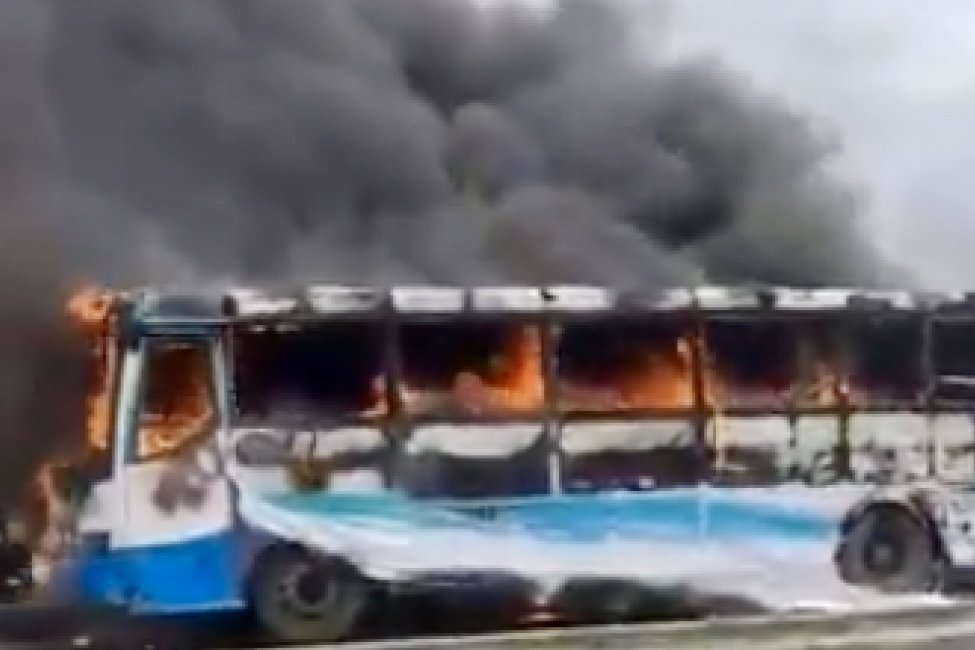
The move comes against a grim security backdrop. Reuters reported that at least 18 people were killed in a Benue attack on 13 July 2026, while another attack in Efeyi village, Otukpo area, left at least 14 dead on 28 July 2026. Reuters has repeatedly described Benue as a hotspot for violence linked to farmer-herder conflict and wider armed attacks, with repeated killings continuing to fuel fear across communities in the state. Amnesty International earlier said Benue was facing a humanitarian disaster, with more than 510,000 internally displaced people recorded across the state.
IAUSA’s latest decision, announced at its 30th Annual Convention in Virginia Beach, Virginia, under the theme “Building Unity Through Accountability,” is therefore more than a symbolic gesture. It is an attempt to internationalise a crisis that many in the region say has outlived official assurances and security pledges. The association said the killings, destruction of communities and mass displacement in Benue South and other parts of Benue State must not become “the new normal” and urged the federal and state authorities to take decisive steps to protect lives and restore peace.
In its communiqué, the association said it was “deeply disturbed” by the “persistent insecurity” across Benue South and vowed that the loss of life “must never be normalised”. That line captures the anger now building among diaspora groups that believe the situation at home has become too dangerous to be managed only through local interventions. IAUSA also said it would intensify engagement with governments, international organisations, human rights institutions, policymakers and global media, insisting that advocacy must be “factual, responsible, and directed towards practical outcomes.”
The diplomatic push did not begin with Trump. In July 2026, the association had already petitioned President Bola Ahmed Tinubu over the insecurity in Benue South, seeking urgent military intervention and stronger protection for rural communities. The new decision to reach for Washington suggests that many in the diaspora consider domestic responses inadequate, or at least too slow to stop the body count. In effect, IAUSA is widening the arena of pressure: from Makurdi and Abuja to Washington, and now potentially to the committees and corridors of the US Congress.
That shift matters because diaspora advocacy is often most effective when it is tied to concrete humanitarian outcomes. IAUSA says it intends to organise a medical mission to Nigeria in December 2026, deploying diaspora health professionals to provide free consultations, medication and health education across Idoma land. The association says advocacy and practical intervention must move together, so that public statements are matched by relief on the ground. It is a telling formulation: the group is not merely accusing, but attempting to organise a response architecture of its own.
The convention also looked beyond security to political accountability. Delegates urged voters in Benue South to reject ethnic sentiment, party loyalty and financial inducement in future elections, and to judge candidates by competence, integrity and character. That warning is especially relevant in a state where insecurity, land pressure, rural poverty and political grievance increasingly overlap. IAUSA’s message is that violence cannot be separated from governance failure, and that communities left unprotected will eventually demand answers from anyone who claims to represent them.
What makes the latest move significant is not simply that a diaspora group wants to petition an American president. It is that an ethnic and civic association believes the crisis in Benue South has become serious enough to warrant international humanitarian and diplomatic attention. The association’s appeal to the Och’Idoma V to brief American lawmakers adds another layer: it seeks to bring a traditional ruler into the centre of global advocacy, turning the Idoma homeland into a cause that can be argued in both cultural and political language. IAUSA thanked Statesman J.P. Paige of Norfolk, Virginia, for his support in helping to facilitate the delivery of the petition, further underlining the transatlantic nature of the campaign.
Still, the central question remains unchanged: will the killings stop? Reuters’ latest reports show that Benue’s insecurity remains active and deadly, with fresh attacks in July 2026 alone. The humanitarian cost is already deep, the displacement severe, and the fear entrenched. For IAUSA, the petition to Trump is a public declaration that silence is no longer an option. For the authorities, it is another reminder that every unresolved attack becomes a political problem, a security failure and a humanitarian wound at the same time.
In the end, IAUSA’s final warning may be the most consequential line of all: “The true measure shall not be the speeches delivered in Virginia Beach, but the actions that follow them.” That is the challenge now facing both Nigeria’s security institutions and the international actors the association hopes to enlist. The Benue crisis is no longer only a local tragedy; it is a test of whether sustained killings can still be treated as a domestic issue alone.
Follow us on our broadcast channels today!
- WhatsApp: https://whatsapp.com/channel/0029VawZ8TbDDmFT1a1Syg46
- Telegram: https://t.me/atlanticpostchannel
- Facebook: https://www.messenger.com/channel/atlanticpostng