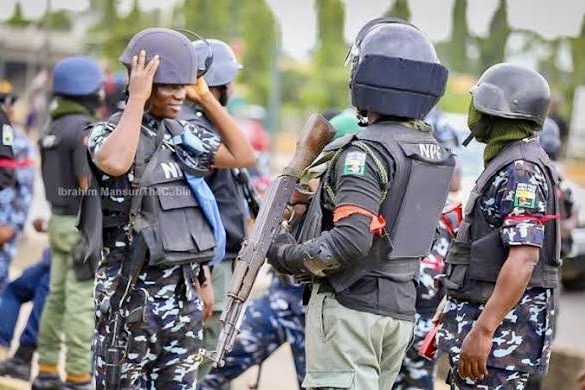
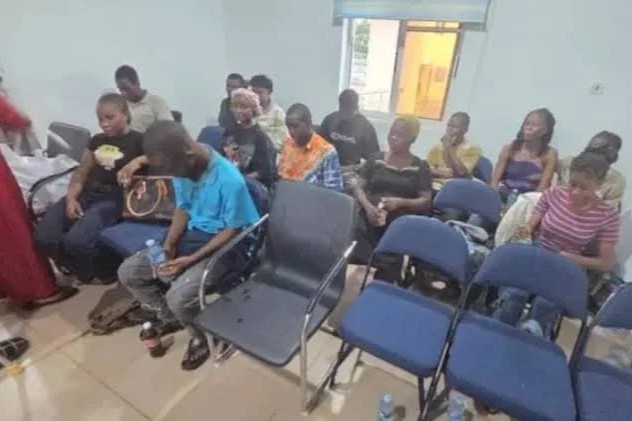
This audit exposes a network of smuggling corridors that run across Nigeria and into the Sahel. Fuel, rice, consumer goods, arms, and hard drugs move along the same tracks. Governments either neglect these tracks or pretend to control them.
Local economies reorient around illicit flows. Security agencies make headline seizures but fail to dismantle the pathways and the protection systems that sustain them.
Smugglers benefit from weak border infrastructure, porous checkpoints, collusion by officials and regional demand imbalances. The result is lost revenue, emboldened criminal networks and a corrosive effect on governance in border communities.
This report presents three field case studies. It includes a forensic analysis of why routes persist. It also offers a practical policy menu to shut the most damaging corridors. The proposals start with targeted intelligence reform and end with regional cooperation tied to local development.
Walk any dirt track that links Nigeria to a neighbour and you will find the same trade pattern. A Peugeot 504 stuffed with sacks of rice. Motorbikes laden with jerrycans. A pickup truck with soft drinks and petrol sealed in kegs.
The goods leave through bush crossings and river fords. They reappear in markets across borders for a profit margin that dwarfs the risks. Governments issue bans, make dramatic seizures and release selective statistics. The smuggling continues. The routes endure.
Background and context
Nigeria sits at the heart of West Africa. Its land borders touch six neighbours and its coastline faces international shipping lanes. Geography alone makes it a corridor. Political choices and economic shock deepen the problem.
Currency depreciation and price distortions since subsidy reforms have created profitable arbitrage. Where official trade is costly, informal trade will supplant it.
Recent investigations of the Saki Okerete corridor between Oyo State and Benin reveal openly operating markets. This occurs despite formal bans and empty checkpoints. The route serves as a de facto conduit for Nigerian petrol. Consumer goods are cheaper when converted into stronger neighbouring currencies. The pattern is repeated in many border towns.
At the northern rim, the Sahel has become a major transhipment zone for cocaine. It is moving from South America to Europe and beyond. The surge in seizures and the growth of local consumption testify to a new reality.
Armed groups and organised criminal networks now run logistics chains across vast, sparsely policed expanses. The flow of drugs has a multiplying effect. It finances violent groups, corrodes official institutions and creates new demands for arms and people smuggling.
Analysts tracking organised crime highlight a web of routes originating in Libya, Mali, Niger, and Cameroon. These routes feed markets inside Nigeria. They also serve as onward corridors to Europe and the Gulf.
The traffic is not random. It follows rivers, trade tracks and local social networks that are invisible to conventional border management.
Methodology and sources
This report includes field reporting from market towns. It features interviews with current and former enforcement officials. Additionally, the report involves a review of recent open source investigations and organisational reports.
The aim is practical. We trace how goods move, who profits and where enforcement fails. Where possible we corroborate local testimony with seizure records and independent reporting.
Case study 1: Saki Okerete corridor, South West
The Saki Okerete track is archetypal. The corridor is officially closed to goods movement. However, it still hosts weekly markets and sees a persistent flow of petrol, food, and soft drinks. Local drivers and traders organised into ad hoc syndicates handle movement across bush paths.
Earnings from a single trip can exceed the monthly wages in formal employment. That profit motive is the first layer of resilience.
Security checks are sporadic. Where checkpoints exist they are often bypassed by secondary tracks less than a mile away. Local customs posts are thinly staffed and poorly equipped.
Attempts by federal agencies to interdict have produced bold headlines and temporary disruptions but not durable interdiction. The economic incentives remain intact.
The human cost is real. Road accidents are frequent. Informal crossings bypass health and safety standards. They expose men, women, and children to exploitation. This occurs when journeys are longer and irregular.
The wider loss is fiscal. Informal flows deprive the treasury of duties and excise while nurturing illicit markets that undercut legitimate traders.
Case study 2: Sahel to Nigeria cocaine corridor
Trafficking networks moving cocaine through the Sahel have evolved rapidly. Once marginal, land based routes now handle tonnes of cocaine a year. The narcotics are moved in small consignments that proliferate on feeder routes.
Criminal groups use local knowledge of desert tracks and exploit weak state presence. This allows them to transport shipments in large quantities to coastal exit points or inland markets.
Seizure data and UN assessments show dramatic rises in land based cocaine traffic through Mali, Niger and neighbouring states. The consequence for Nigeria is twofold.
First, drugs move southward and into urban markets. Second, groups that traffic drugs also traffic arms and people. Combatting one commodity without addressing the composite logistics will leave the network intact.
The Sahel phenomenon is not abstract. The same networks that shift cocaine may also supply weapons to bandits operating in northern Nigeria. Interdiction operations focused solely on local smuggling of staples will miss the strategic threat.
Case study 3: Maritime and coastal routes
Nigeria’s coastline provides another set of gaps. Small fishing vessels and local cargo boats move goods between hidden coves. Fuel, fish, used vehicles and contraband find their way in and out of ports beyond official oversight.
Maritime interdiction requires naval coordination, technology and international cooperation. Absent these, the coastline becomes a long tail of supply for inland smuggling rings.
Why governments keep failing to shut routes
There is no single reason. The persistence of smuggling routes is structural and political.
1. Economic distortion and arbitrage
Price gaps create irresistible margins. When a commodity is cheaper on one side of the border, smuggling occurs. It is a way the market corrects a distortion when the commodity is more valuable on the other side. Removing that incentive requires macroeconomic adjustment and harmonised regional pricing. Enforcement alone will not close the gap.
2. Weak border infrastructure and coverage
Many official crossing points are unmanned or under resourced. In some regions a large share of approved border points lack physical presence by state agencies. That vacuum invites informal routes and community level arrangements that evade formal controls.
3. Collusion and corruption
Smuggling requires complicity. Evidence from recent probes shows instances where officials turn a blind eye or actively facilitate movement. Collusion may be local and petty. In other cases it is institutional and organised. Either way it undercuts interdiction.
4. Fragmented enforcement and intelligence failures
Border security remains stove piped. Customs, immigration, police and military operate with limited data sharing. Intelligence driven operations are sporadic. Seizures make headlines but do not follow through into dismantling networks that adapt quickly.
5. Regional politics and weak coordination
Smuggling is transnational. A unilateral ban by one state without reciprocal action by neighbours merely shifts the route. Effective closure requires coordinated enforcement and shared incentives for legal trade. Without a regional compact the problem migrates.
6. Criminal diversification
Smuggling networks are adaptable. When one commodity becomes risky they switch to another. Fuel smugglers become food smugglers and then weapons couriers. This flexibility makes single issue campaigns ineffective.
The enforcement record in brief
States publish seizure statistics that create the illusion of effective control. But seizures are snapshots. A high profile seizure of a tanker, a truckload or an arms cache is political capital for an institution. It does not show systemic control.
For example, in 2024, there was a mass shutdown of fuel outlets and protests in the northeast. These events followed an anti-smuggling crackdown. This crackdown disrupted local flows but did not end the trade. The closure produced short term pain and a black market that reconstituted quickly.
Worse, enforcement without reforms fuels perverse outcomes. When a crackdown is perceived as selective, it generates resentment and parallel economies that further undermine the rule of law.
A forensic view of the networks
Smuggling networks are layered.
• Local operatives who handle day to day transport and market distribution
• Mid level organisers who coordinate routes across districts and maintain safe houses
• Regional brokers who manage cross border transfers and currency conversion
• International handlers who arrange maritime logistics, air lifts and larger shipments
These actors rely on finance, transport assets and political protection. Dismantling requires targeted efforts at each level. Arresting low level couriers while ignoring brokers and financiers will not break the chain.
Firearms trafficking in the region has increased alongside drug flows. Regional law enforcement reports show seizures of weapons and ammunition tied to organised groups.
This combination is volatile because arms allow roadblocks, kidnappings and protection rent seeking that secure smuggling corridors.
Recommendations: A practical menu to shut the worst corridors
Shutting routes is hard. It is doable where leaders act with strategy.
1. Intelligence led operations with federal coordination
Create a joint border fusion centre. Place customs, immigration, police and military intelligence under a shared operational command for targeted raids and follow through. Focus on brokers and logistics networks not only couriers.
2. Targeted financial investigative units
Follow the money. Use financial intelligence to trace profits and freeze assets of mid level organisers. Target cash couriers and hawala style transfers that underwrite networks.
3. Local economic substitution
Where smuggling is driven by wage gaps, invest in border communities. Legal livelihoods, market integration and cross border trade facilitation will erode the incentive to smuggle.
4. Regional harmonisation of tariffs and enforcement calendars
Work with neighbouring states to harmonise key commodity pricing, tariffs and enforcement windows. A unilateral ban without reciprocity simply moves routes.
5. Technology and selective infrastructure spending
Prioritise a network of well staffed, digitalised checkpoints at known chokepoints. Use drones and coastal radars where practical. Physical presence deters low level movement and forces traffickers onto fewer, more observable tracks.
6. Anti corruption and accountability measures
Introduce robust anti collusion mechanisms. Rotate staff in sensitive posts. Protect whistleblowers in customs and immigration. Prosecute complicit officials to change the incentives calculus.
7. Maritime interdiction partnerships
Partner with international navies and regional partners to monitor coastal movement of contraband. Share intelligence and standardise vessel tracking.
8. Community based reporting schemes
Give border communities a stake in enforcement. Offer reward based intelligence schemes that protect locals and replace illicit incomes with public services.
What success looks like
Success is not an immediate zeroing of smuggling. It shows a measurable contraction in the operational space of networks. There are fewer seizures of the same routes. Authorities achieve more arrests of organisers. A decline in the market premiums makes smuggling less profitable. Success combines law enforcement wins with economic shifts. It is regional. It is sustainable.
In conclusion, smuggling routes persist because they answer demand, exploit weak state reach and are shielded by human networks. The spectacle of seizures will continue while the underlying architecture remains untouched.
If Nigeria and its neighbours want to close these routes, they must combine intelligence led enforcement with economic fixes. They must also implement diplomatic solutions. The alternative is a world where seizures become theatre and smuggling becomes a permanent feature of the borderland economy.
Follow us on our broadcast channels today!
- WhatsApp: https://whatsapp.com/channel/0029VawZ8TbDDmFT1a1Syg46
- Telegram: https://t.me/atlanticpostchannel
- Facebook: https://www.messenger.com/channel/atlanticpostng