Borno’s education crisis reveals the deeper cost of more than a decade of insurgency as the state races to rebuild schools, restore enrolment and convince families that classrooms are safe again.
MAIDUGURI, Nigeria — More than a decade after Boko Haram turned schools, teachers and children into casualties of its insurgency, Borno State is still confronting one of the conflict’s most enduring legacies: an education system that was attacked physically, emptied psychologically and pushed backwards by years of insecurity.
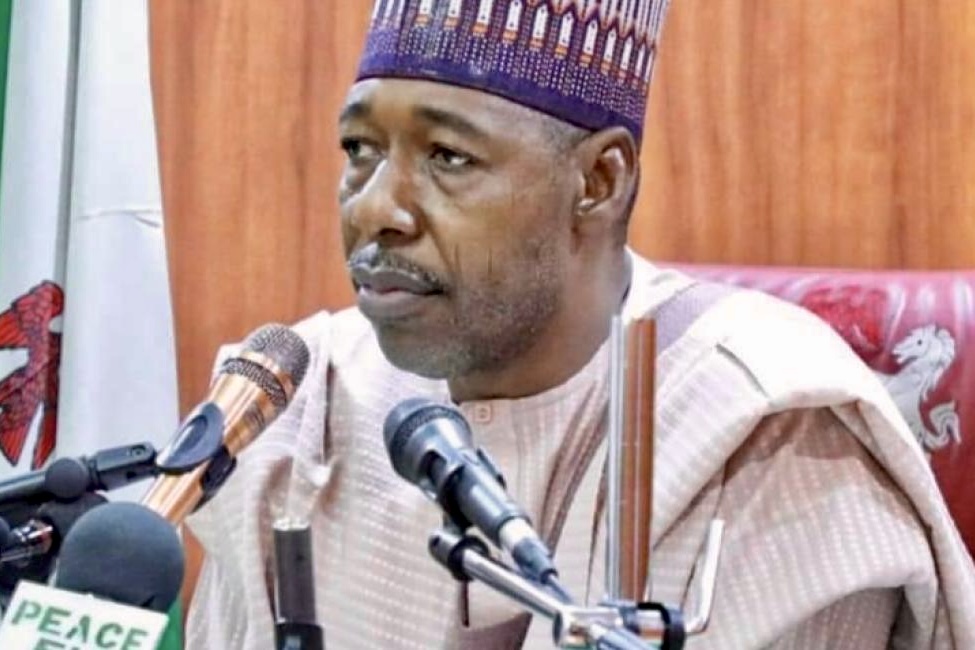
Governor Babagana Umara Zulum has now put the scale of the destruction at more than 5,000 school structures, saying the insurgency left about 2.2 million children out of school at the height of the crisis, with fewer than 500,000 children enrolled.
The figures, disclosed by Zulum in Maiduguri during the commissioning of education and infrastructure projects, provide a stark measure of what the insurgency did to a state where education became one of the most dangerous public services to deliver.
“The insurgency destroyed more than 5,000 school structures, while at its peak, an estimated 2.2 million children were out of school, with fewer than 500,000 enrolled,” Zulum said.
Yet the numbers also expose a more complicated question.
Can a state declare an education recovery simply by rebuilding schools, or must recovery also be measured by whether children can travel safely to school, teachers can work without fear, displaced families can afford to keep children enrolled and security forces can prevent insurgents from regaining access to communities?
That is the real test facing Borno.
The scars left by the insurgency
Boko Haram’s assault on education in north-east Nigeria was never limited to burning classrooms.
Teachers were killed. School administrators were targeted. Children were abducted. Families fled. Schools closed. Communities lost confidence in formal education.
UNICEF reported during the height of the crisis that more than 2,295 teachers had been killed and 19,000 displaced across the north-east since 2009, while almost 1,400 schools had been destroyed. At the time, more than 57 per cent of schools in Borno were closed.
The Chibok schoolgirls’ abduction in April 2014 became the international symbol of the danger. UNICEF later noted that attacks on schools and abductions had a direct secondary effect: parents became afraid to send children to school, while affected children were left traumatised even after institutions reopened.
The destruction was therefore both physical and institutional.
Classrooms could be rebuilt.
Trust could not.
That distinction remains important in assessing Borno’s recovery today.
A five-year enrolment surge
According to Zulum, enrolment across Borno schools rose from 766,551 learners in 2019 to 1,801,295 in 2026.
That represents an increase of more than one million learners in seven years, a substantial rebound from the years when insecurity drove families away from formal schooling.
Zulum attributed the increase to expanded access, greater public confidence and continued investment in education.
The governor said the number of usable classrooms in public pre-primary and primary schools had risen to 5,792, while usable water, sanitation and hygiene facilities had increased to 4,563.
At senior secondary level, he said the number of functional schools rose from 34 in eight local government areas in 2019 to 129 across 25 LGAs in 2026.
These figures suggest that Borno has moved significantly beyond emergency education towards reconstruction and expansion.
But enrolment alone cannot demonstrate educational recovery.
A child counted in an enrolment register is not necessarily attending regularly. Nor does enrolment automatically mean that the child is learning at the required level.
UNICEF continues to describe education in the north-east as a major emergency. Its current Nigeria education information says 2.8 million children in Borno, Adamawa and Yobe need education-in-emergencies support, while at least 802 schools remain closed across the three states and hundreds of classrooms remain destroyed or damaged.
That gap between reconstruction statistics and lived reality is one of the most important indicators to watch.
The N46.9bn question
Zulum said Borno invested N46.987 billion in basic and secondary education during the 2025 and 2026 fiscal years.
He said the investment formed part of a wider programme covering 136 education and infrastructure projects, including completed projects, those awaiting commissioning and projects still under construction.
The scale of spending is substantial.
But the bigger question for policymakers and residents is what the money produces beyond buildings.
The state needs classrooms, but it also needs teachers, learning materials, electricity, water, sanitation, transport links, school security, psychosocial support and reliable funding to keep facilities functioning after commissioning ceremonies are over.
That is particularly important in communities where displacement has concentrated thousands of children into already overstretched schools.
In Dikwa, for example, UNICEF reported in 2025 that more than 5,000 children were enrolled at Dikwa Central Primary School, largely because of its proximity to 14 formal and informal internally displaced persons camps. The school had previously struggled with children learning under trees and severe teacher shortages.
The lesson is significant.
Reconstruction can create classrooms faster than it can create the human and social infrastructure needed to support them.
Security forces have improved access — but not eliminated the threat
Any assessment of Borno’s education recovery must also assess the performance of the security forces.
The picture in 2026 is considerably different from the darkest years of the insurgency.
Operation Hadin Kai, supported by the Nigerian Army, Nigerian Air Force and Civilian Joint Task Force, continues to conduct offensive and defensive operations across Borno.
In early September, troops reportedly foiled a suspected Boko Haram ambush along the Buni Gari-Buratai axis in Biu Local Government Area and dismantled makeshift camps used by terrorists.
Days later, troops supported by air and ground components also repelled an attempted Boko Haram/ISWAP assault on a military position in Pulka, Gwoza Local Government Area.
On September 12, the military said an intelligence-led operation in the Tumbuns area killed 18 terrorists after surveillance identified a meeting and logistics location used by high-profile insurgent elements.
The operational picture indicates that Nigerian forces retain the capacity to disrupt terrorist formations, attack logistics networks and prevent some attempts to overrun fixed positions.
A further sign of pressure on the insurgency came on September 14, when the military announced the surrender of a Boko Haram/ISWAP member in Borno.
These are meaningful gains.
They show that the security forces have considerably improved their ability to contest territory, protect strategic locations and deny insurgents some freedom of movement.
But they should not be confused with the complete defeat of the threat.
The recent attacks and attempted attacks demonstrate that Boko Haram and ISWAP retain the ability to organise, move, establish temporary camps and mount assaults in parts of the state.
For education, that distinction matters enormously.
A school does not become safe merely because the nearest military formation is operational.
The real measure of security
The most important security test is therefore not the number of terrorists neutralised.
It is whether ordinary families believe their children can attend school without being kidnapped, attacked or caught in fighting.
UNICEF has repeatedly warned that attacks on schools produce consequences beyond the immediate casualties.
In a 2024 assessment, the agency said insecurity in Borno, Adamawa and Yobe had contributed to the closure of 113 schools because of documented attacks in 2022 and 2023.
That means every military operation that keeps an insurgent group away from a community potentially protects more than lives.
It protects the classroom.
It protects the school calendar.
It protects household confidence.
And it protects the economic future of children who otherwise risk joining the ranks of the permanently excluded.
Five thousand structures, but what counts as a school?
Zulum’s latest figure of more than 5,000 destroyed school structures is striking, but it should not be casually compared with every previous estimate of schools destroyed during the insurgency.
Earlier UN and UNICEF figures used different definitions and covered different periods and geographical areas. UNICEF, for example, reported almost 1,400 schools destroyed across the north-east in its 2017 assessment, while later UN-backed documentation referred to approximately 1,500 schools targeted or destroyed since 2014.
The apparent difference does not necessarily mean that one set of figures is false.
A “school structure” can refer to a physical school compound, a classroom block or multiple structures within a school. A “destroyed school” may refer to an institution rendered unusable rather than every physical building within it.
That distinction should be resolved by the Borno government through a publicly accessible reconstruction audit.
Such an audit should identify the original number of affected school sites, structures destroyed, structures rebuilt, schools reopened, classrooms added, pupils returned, teachers recruited and schools still operating below capacity because of security or displacement.
Without that level of detail, the headline figures remain politically powerful but difficult for the public to independently test.
Teachers are the missing link
Zulum said Borno has recruited 5,000 teachers and trained more than 11,000 basic-level teachers, with N4 billioncommitted to teacher training and professional development since May 2023.
He said the combined teaching workforce across basic, secondary, technical, vocational and Islamic education now stands at 19,316, translating to approximately one teacher for every 38 pupils.
That is an important step.
But Borno’s teacher challenge is not purely numerical.
Teachers must be willing and able to work in insecure, remote and heavily displaced communities. They require accommodation, regular salaries, training, teaching materials and protection.
The crisis has already shown what happens when education workers become targets.
UNICEF’s earlier documentation of teacher deaths and displacement demonstrates that Boko Haram did not simply destroy schools. It attacked the people needed to keep those schools alive.
Islamic education and the second recovery
Borno’s education strategy also includes the revival of the Sangaya system and the integration of Islamic learning with science, mathematics, technology and foundational English under an NBAIS-approved curriculum.
Zulum said 25 Higher Islamic Colleges had either been completed or were at advanced stages out of 27 planned.
The state is also registering and validating Sangaya centres, facilitators, enumerators and Islamiyya schools.
This could become strategically important.
A major challenge in northern Nigeria is the divide between formal education and children receiving primarily Qur’anic or non-formal instruction. UNICEF notes that many children classified as out of school are receiving Qur’anic education that does not provide core literacy and numeracy skills.
Integrating those systems carefully could widen access to recognised education without forcing families to choose between religious identity and academic opportunity.
Digital skills and vocational education
Borno is also trying to connect reconstruction to the future economy.
The governor said N13.135 billion had been committed to 25 Digital Literacy and ICT Centres, with 18 operational and seven under development.
Another N1.4 billion had reportedly been spent on computers and solar power in 100 secondary schools to support computer-based testing.
The state has also established five Vocational Enterprise Institutes, reactivated 11 Vocational Training Centres and created three Second Chance Skills Entrepreneurship Schools for women and girls.
More than N15 billion, according to Zulum, has gone into establishing, rehabilitating and equipping these institutions, as well as providing starter packs and grants.
Those investments matter because the ultimate measure of post-insurgency reconstruction is not merely whether buildings have returned.
It is whether the generation that lost years to war can recover economically.
A young person who leaves school without marketable skills remains vulnerable to poverty even if the school itself has been rebuilt.
Can reconstruction outpace insecurity?
Borno’s recovery is now entering its most difficult phase.
The state has demonstrated that schools can be reconstructed and enrolment can grow dramatically.
The security forces have demonstrated greater operational resilience and an ability to disrupt terrorist formations.
But neither achievement is irreversible.
The north-east still faces displacement, poverty, damaged infrastructure and continuing militant activity. UNICEF’s recent work with Borno has continued to target children who remain outside the formal education system, including accelerated literacy and numeracy programmes for children who lost years of schooling because of conflict.
That is an important reminder that recovery statistics can conceal a second crisis: children who are physically back in communities but academically far behind their age group.
For them, reopening a school is only the beginning.
The next security benchmark
The performance of the security forces in Borno should now be judged against a broader benchmark.
Can troops keep major population centres secure?
Can they protect roads used by pupils and teachers?
Can intelligence prevent attacks before they reach schools?
Can communities return permanently without fear of another displacement?
Can the government keep schools open when insurgents shift tactics rather than simply retreat?
These questions matter because Boko Haram’s greatest damage to education was not the destruction of concrete and roofing sheets.
It was the destruction of continuity.
A generation learned that school could close overnight.
A teacher could disappear.
A village could be attacked.
A family could flee.
The rebuilding of Borno therefore demands more than construction contracts.
It requires a security system strong enough to protect education year after year.
Zulum captured that wider challenge when he said rebuilding schools was about more than replacing damaged structures.
“For us, therefore, rebuilding schools goes beyond constructing physical structures. It is about restoring access to education, rebuilding confidence in our communities and providing our children with the opportunity to secure a better future,” he said.
That is perhaps the most important test of all.
The success of Borno’s reconstruction will ultimately be measured not by the number of schools commissioned, but by whether a child can walk into one every morning without fear — and whether that child can leave school with the knowledge, skills and confidence to build a life that Boko Haram failed to destroy.
Follow us on our broadcast channels today!
- WhatsApp: https://whatsapp.com/channel/0029VawZ8TbDDmFT1a1Syg46
- Telegram: https://t.me/atlanticpostchannel
- Facebook: https://www.messenger.com/channel/atlanticpostng