Editor

Introduction: The Whistleblower vs. The State
In a case that has sent shockwaves through Nigeria’s political and civil rights communities, whistleblower Isaac Bristol Tamunobifiri, popularly known as PIDOM, has been remanded in Kuje Correctional Centre after being arraigned on a nine-count charge by the Federal Government. This case, which is unfolding before the Federal High Court in Abuja, has captivated the nation and highlighted the deep-seated tensions between those who seek to expose corruption and those in power who may have much to lose.
Justice Emeka Nwite’s decision to remand PIDOM in prison, pending a ruling on his bail application, has sparked a fierce debate. The charges against PIDOM include allegations of money laundering, cybercrime, and the unlawful obtaining, retaining, and dissemination of classified documents. However, beneath these legal accusations lies a larger battle over the very soul of Nigeria’s democracy—one that pits the forces of transparency and accountability against a government increasingly seen as intolerant of dissent.
This article delves deep into the case against PIDOM, the implications for Nigeria’s whistleblower protections, and the broader context of the ongoing struggle for political accountability in the country. As the nation watches this legal drama unfold, the stakes could not be higher for the future of free speech and the fight against corruption in Nigeria.
PIDOM’s Crusade for Transparency: Hero or Villain?
Isaac Bristol Tamunobifiri, or PIDOM as he is widely known, is no stranger to controversy. For years, he has operated as a whistleblower, exposing what he claims are the corrupt dealings of some of Nigeria’s most powerful figures. His revelations, often disseminated through social media and various online platforms, have earned him both praise and condemnation. To his supporters, PIDOM is a courageous figure—a modern-day Robin Hood who risks his life to bring the truth to light. To his detractors, he is a dangerous agitator, using his platform to spread misinformation and undermine the state.
The charges against PIDOM are severe, but they are also emblematic of the challenges faced by whistleblowers in Nigeria. Among the most serious allegations is that of money laundering, with the prosecution claiming that PIDOM received funds derived from unlawful activities. The case also accuses him of cybercrime, specifically the illegal obtaining and dissemination of classified documents, a charge that strikes at the heart of his activities as a whistleblower.
One of the most damning accusations is that PIDOM mobilised support for the #EndBadGovernance protests—a movement that has been a thorn in the side of the Nigerian government since its inception. The protests, which began as a call for an end to police brutality, quickly evolved into a broader critique of government corruption and mismanagement. PIDOM’s alleged role in these protests has been cited as evidence of his intent to destabilise the government—a charge that could carry severe penalties.
Yet, to view PIDOM purely through the lens of these charges would be to ignore the broader context of his work. In a country where corruption is endemic and political accountability is often elusive, whistleblowers like PIDOM play a critical role in exposing wrongdoing and advocating for reform. His arrest, therefore, raises uncomfortable questions about the Nigerian government’s commitment to transparency and its willingness to tolerate dissent.
The Legal Battle: A Fight for Justice or a Show of Force?
The legal proceedings against PIDOM are more than just a courtroom drama—they are a litmus test for the Nigerian judiciary’s independence and the country’s broader commitment to justice. The charges, as outlined by the prosecution, paint a picture of a man engaged in a sustained campaign to undermine the Nigerian state. But to many observers, the case smacks of political retribution, a calculated move by the government to silence one of its most vocal critics.
The prosecution’s case is built on a series of allegations that, if proven true, could see PIDOM facing lengthy prison sentences. The charges of money laundering and cybercrime are serious enough on their own, but the most politically charged accusation is that of unlawfully obtaining and disseminating classified documents. This charge, which invokes the Official Secrets Act of 1962, is particularly contentious. The Act, a relic of Nigeria’s colonial past, has long been criticised for its broad and vague definitions, which can be used to stifle legitimate investigative journalism and whistleblowing.
PIDOM’s defence team, led by the prominent activist and lawyer Deji Adeyanju, has mounted a robust defence, arguing that the charges are politically motivated and that their client is being persecuted for his role in exposing corruption. Adeyanju has emphasised PIDOM’s right to free speech and his obligation as a citizen to hold the government accountable. The defences argument is that PIDOM’s actions, far from being criminal, are in the public interest and that the charges against him are an abuse of power.
The defence has also questioned the legality of the evidence presented by the prosecution. For instance, one of the charges against PIDOM is that he attempted to destroy evidence by flushing his Techno Phantom X phone down a hotel toilet. This charge, which seems almost absurd on its face, has been dismissed by some legal experts as a desperate attempt to bolster a weak case. The defence is likely to argue that the evidence against PIDOM was obtained illegally or through coercion, further undermining the prosecution’s case.
As the case progresses, the Nigerian judiciary will be under intense scrutiny. The outcome of this trial will send a powerful message about the state of the rule of law in Nigeria and the ability of citizens to speak out against corruption without fear of retribution. If PIDOM is convicted, it will be seen by many as a victory for those who wish to suppress dissent and a blow to the fight for transparency. Conversely, an acquittal could embolden other whistleblowers and activists to continue their work, knowing that the courts will protect their rights.
The Broader Context: Whistleblower Protections in Nigeria
The case against PIDOM has highlighted the precarious position of whistleblowers in Nigeria. Despite the passage of the Whistleblower Protection Act in 2017, which was intended to provide legal protections for individuals who expose wrongdoing, the reality is that whistleblowers in Nigeria continue to face significant risks. These include not only legal repercussions but also threats to their personal safety and livelihoods.
PIDOM’s case is a stark reminder of the limitations of the current legal framework. While the Whistleblower Protection Act offers some safeguards, it has been criticised for its narrow scope and lack of enforcement. For instance, the Act does not provide adequate protection for whistleblowers who expose corruption in the private sector, nor does it cover individuals who, like PIDOM, disseminate information through unofficial channels.
Moreover, the Act’s reliance on government agencies to investigate and act on whistleblower reports creates a conflict of interest, particularly in cases where the whistleblower is exposing corruption within those very agencies. This has led to a situation where whistleblowers are often left vulnerable to retaliation, with little recourse to justice.
The international community has taken note of Nigeria’s shortcomings in this area. Organisations such as Transparency International have repeatedly called on the Nigerian government to strengthen its whistleblower protections and to create an independent body to oversee the implementation of the Whistleblower Protection Act. However, progress has been slow, and cases like PIDOM’s demonstrate the urgent need for reform.
The lack of robust whistleblower protections has also had a chilling effect on the fight against corruption in Nigeria. Without the assurance that they will be protected, many potential whistleblowers are deterred from coming forward, allowing corrupt practices to continue unchecked. This, in turn, undermines public trust in government institutions and erodes the very foundations of democracy.
Public Reaction: Outrage, Fear, and Determination
The news of PIDOM’s remand in Kuje Prison has elicited strong reactions from across the country. Civil rights organisations, political activists, and ordinary citizens have condemned the government’s actions, describing the case as an attempt to intimidate and silence those who dare to speak out against corruption.
Protests have erupted online, with Nigerians calling for PIDOM’s release and demanding greater protections for whistleblowers. Social media has been ablaze with the hashtag #FreePIDOM, as Nigerians express their support for the whistleblower and their outrage at what they see as an abuse of power by the government.
The case has also sparked a broader conversation about the state of free speech and human rights in Nigeria. Many Nigerians see PIDOM’s arrest as part of a wider pattern of repression, in which the government uses the legal system to target its critics. This perception has been fuelled by other recent cases, including the arrest of journalists, activists, and opposition figures.
Yet, despite the fear and uncertainty, there is also a sense of determination among those who support PIDOM. They see his case as a rallying point for the fight against corruption and a test of the Nigerian people’s resolve to hold their leaders accountable. The protests and campaigns online have drawn attention to the broader issues at stake, and there is hope that this case could be a catalyst for change.
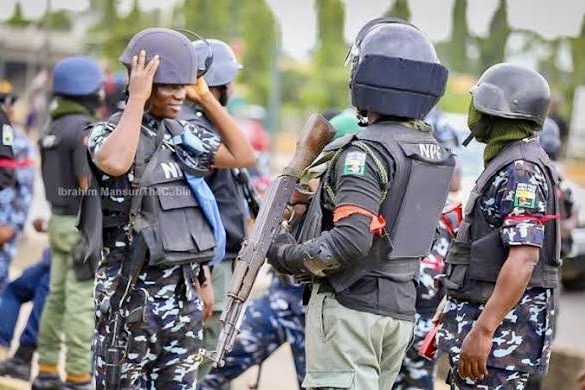
However, the Nigerian government has a reputation of responding to protests has with heavy-hand, with reports of arrests and the use of force to disperse demonstrators. This aggressive approach has only served to heighten tensions and deepen the sense of mistrust between the government and its citizens. The situation is volatile, and how it unfolds in the coming weeks could have significant implications for Nigeria’s political landscape.
The Implications for Nigeria’s Democracy: A Turning Point?
The remand of PIDOM in Kuje Prison, pending the outcome of his trial, is more than just a legal matter; it is a reflection of the broader struggles within Nigeria’s democracy. The case has exposed the fragility of the country’s democratic institutions and the ongoing challenges in safeguarding fundamental rights such as free speech and the right to protest.
For many, PIDOM’s case is a litmus test for the Nigerian government’s commitment to upholding democratic principles. If a whistleblower who seeks to expose corruption can be silenced through legal intimidation, what hope is there for the ordinary citizen who wishes to hold their leaders accountable? This case raises critical questions about the direction in which Nigeria is heading.
One of the most concerning aspects of this case is the precedent it could set. If PIDOM is convicted on charges that many believe are politically motivated, it could embolden the government to take similar actions against other whistleblowers, activists, and journalists. The chilling effect this would have on free speech and civic engagement cannot be overstated.
Moreover, this case could have serious repercussions for Nigeria’s international standing. The country has long been criticised for its human rights record, and the treatment of whistleblowers like PIDOM is likely to attract further scrutiny from the international community. Organisations such as Amnesty International and Human Rights Watch have already expressed concern over the case, and it is likely that pressure will mount on the Nigerian government to ensure a fair trial and respect for PIDOM’s rights.
The implications for Nigeria’s fight against corruption are also significant. Whistleblowers are an essential part of any anti-corruption strategy, and if they are not protected, efforts to combat corruption will be severely undermined. The Nigerian government has made numerous commitments to tackle corruption, but cases like PIDOM’s cast doubt on the sincerity of these efforts. If whistleblowers are treated as criminals, it sends a message that corruption will not be challenged, and those who expose it do so at their peril.
Conclusion: The Battle for Nigeria’s Future
As the legal proceedings against PIDOM continue, the nation watches with bated breath. The outcome of this case will have far-reaching consequences, not just for PIDOM himself, but for the future of Nigeria’s democracy. At its core, this case is about more than just one man’s fight for justice; it is about the struggle for transparency, accountability, and the protection of fundamental rights in a country where these principles are increasingly under threat.
PIDOM’s supporters argue that his actions, far from being criminal, are acts of courage in the face of overwhelming odds. They see him as a symbol of resistance against a government that has become increasingly authoritarian and intolerant of dissent. Whether or not the court agrees with this view remains to be seen, but what is clear is that this case has touched a nerve in Nigerian society.
The protests, the online campaigns, and the international attention that this case has garnered are all indicative of a broader desire for change. Nigerians are demanding a government that is transparent, accountable, and respectful of their rights. They are calling for a judiciary that is independent and free from political influence. And they are insisting that investigative journalists, activists and whistleblowers, who play such a vital role in exposing corruption, be protected rather than persecuted.
As the September 23rd court date approaches, the stakes could not be higher. The ruling on PIDOM’s bail application will be a significant moment, but it is just one step in what is likely to be a long and contentious legal battle. The outcome of this case will reverberate far beyond the walls of the courtroom, shaping the future of free speech, whistleblower protections, and the fight against corruption in Nigeria.
In the end, the case of PIDOM is a reminder that the battle for democracy is never truly won. It is a continuous struggle that requires vigilance, courage, and a commitment to the principles that underpin a free and just society. As Nigeria faces this critical moment in its history, the actions of its government, its judiciary, and its people will determine the path forward.
The question now is whether Nigeria will rise to the challenge and protect the rights of those who seek to hold power to account or whether it will succumb to the forces of repression and fear. The world is watching, and the outcome of this case will speak volumes about the state of democracy in Africa’s most populous nation.
An Atlantic Post Editorial.