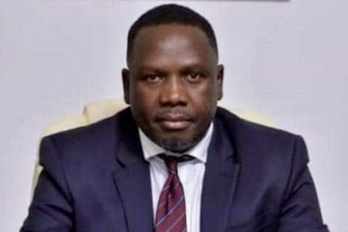
Daniel Bwala, Special Adviser to President Bola Ahmed Tinubu on Policy Communication, has mounted a forceful defence of the Federal Government’s borrowing drive, insisting that Nigeria is still on “amber, not red” and arguing that the state has no real choice but to keep borrowing if it intends to fix infrastructure and stimulate growth.
In an interview on ARISE News, he said the World Bank, the IMF and other experts had not placed Nigeria in a danger zone, adding that “borrowing is part of it” because the government does not have enough money to do what it wants to do.
Yet the numbers beneath that defence remain heavy and politically explosive. The Debt Management Office says Nigeria’s total public debt stood at N152.40 trillion as of 30 June 2025, equivalent to $99.66 billion, with N80.55 trillion in domestic debt and N71.85 trillion in external debt.
That means the debt stock is not a distant abstraction in Abuja’s policy debates but a live fiscal burden sitting on the country’s balance sheet.
The pressure is sharpening because debt service is swallowing an alarming share of national income. Reuters reported last week that President Tinubu said Nigeria is projected to spend about $11.6 billion servicing debt in 2026, nearly half of projected government revenue, up from $5.15 billion in 2025.
Tinubu’s warning was not a private complaint but a public admission that debt costs are crowding out spending on infrastructure, healthcare and education.
This is the heart of Bwala’s argument and the reason it has landed so sharply. He is not claiming Nigeria is debt free or fiscally comfortable. He is saying the opposite, that the state is too strapped to finance roads, power, transport and broader economic revival out of revenue alone.
In his telling, borrowing is a tool of necessity, not indulgence. That is also why his comments were framed around expert guidance rather than social media outrage.
But the international institutions Bwala invoked are not giving Nigeria an unqualified clean bill of health. The IMF’s 2025 Article IV report said Nigeria’s sovereign stress risk is assessed as moderate, while also noting that public debt rose to about 53 per cent of GDP in 2024.
In the same report, the authorities said they were aiming to keep public debt under 40 per cent of GDP and align the debt service-to-revenue ratio with the 30 per cent threshold. That is a far cry from the impression of a problem that is comfortably under control.
The IMF report also contains a sharper warning hidden inside the fine print. Its risk analysis says the fanchart module points to a high medium-term risk of sovereign stress, while the report itself notes a still very high interest-to-revenue ratio and says containing debt accumulation and lowering funding costs are important to sustainability.
In other words, the Fund is not saying Nigeria is collapsing, but it is also not saying the country can keep borrowing indefinitely without consequence.
The World Bank’s own Nigeria page adds another layer of nuance. It says Nigeria has made meaningful progress in restoring macroeconomic stability after bold reforms, with inflation easing and external and fiscal positions strengthening.
That gives Bwala some room to argue that the economy is not in a red-alert situation. But it also shows the real policy dilemma. Stability has improved, yet the gains are fragile and heavily dependent on whether the government can translate borrowing into visible productivity rather than more debt with weak returns.
That is where the Tinubu administration’s communication problem turns into a trust problem. President Tinubu himself has repeatedly defended borrowing, including his well known line that “borrowing is not leprosy.”
He has also argued that Nigeria is not asking for charity, but for a system that allows African economies to industrialise and compete.
The administration’s case is therefore simple on paper: borrow for capital formation, growth and infrastructure. The public’s fear is just as simple: borrow today, pay tomorrow, and still be left with potholes, power shortages and rising hardship.
That public fear has been intensified by the lived reality of reform. Tinubu’s subsidy removal, currency devaluation and tax changes have been sold as painful but necessary steps to repair the economy, yet ordinary Nigerians are still dealing with expensive food, transport, rent and a weak naira.
In that climate, every fresh loan request is interpreted through the lens of survival, not strategy. So when Bwala says borrowing is necessary, he is not merely making a technical argument. He is defending a political choice that many voters now associate with hardship, not relief.
The deeper issue is not whether Nigeria may borrow at all. It is whether the borrowing is disciplined, transparent and linked to projects that raise productivity, broaden revenue and reduce future dependence on loans.
On the evidence now available, the Tinubu government can argue that Nigeria is not in an immediate debt crisis, but it cannot honestly argue that the debt burden is benign. The facts point to a country that is still standing, but standing under strain.
Follow us on our broadcast channels today!
- WhatsApp: https://whatsapp.com/channel/0029VawZ8TbDDmFT1a1Syg46
- Telegram: https://t.me/atlanticpostchannel
- Facebook: https://www.messenger.com/channel/atlanticpostng