The editorial board
The Battle Lines Drawn – Mid-Term Scorecard Spurs Outcry
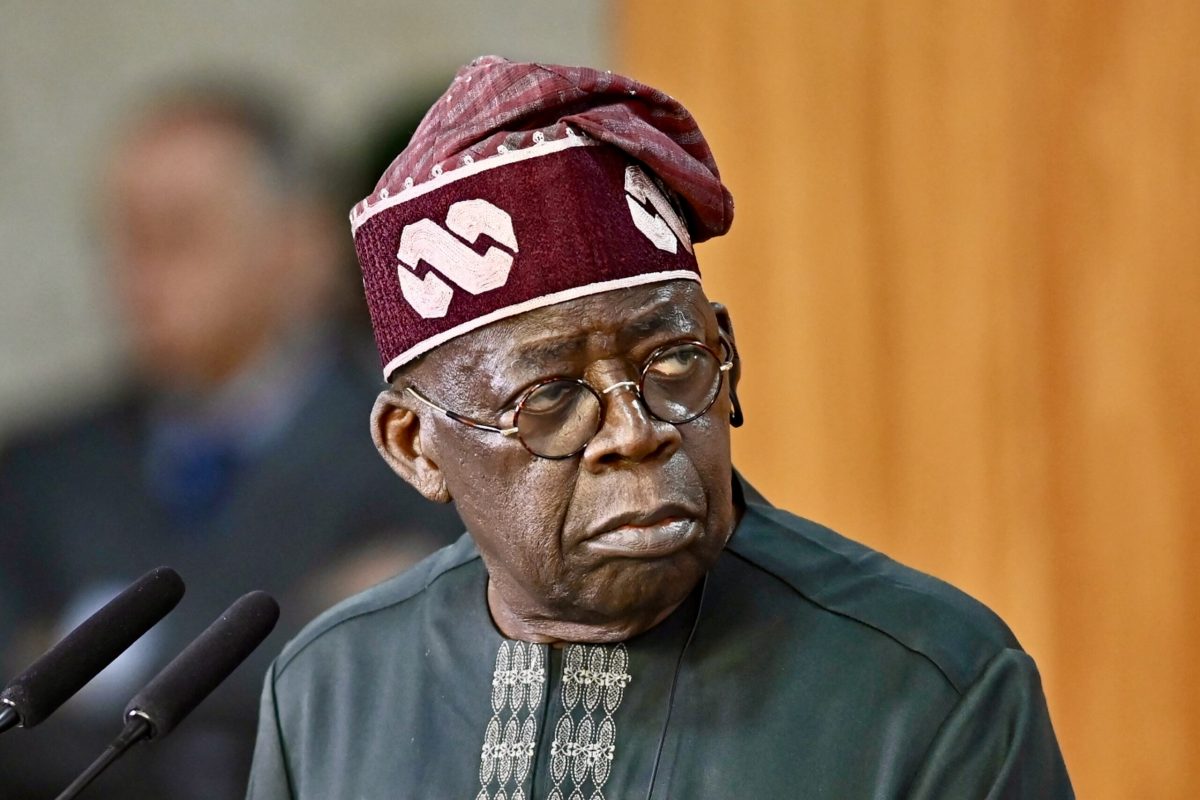
As President Bola Ahmed Tinubu marked his second year in office with a self-praise fest of “Renewed Hope,” Nigeria’s streets and social media roiled with anger and disbelief.
From the hallowed halls of Ohanaeze Ndigbo to the spirited campaigns of the African Democratic Congress (ADC), critics lambasted Tinubu’s mid-term report as a hall of mirrors: glittering on the surface, but rotten at its core.
Their verdict: two years of broken promises, punishing economic pain, and a leadership more interested in politicking than practical solutions.
Tinubu’s Self-Assessment: Bold Claims, Bruised Reality
In a speech laden with statistics, the President trumpeted fiscal victories: a reduction in the budget deficit from 5.4% of GDP in 2023 to 3.0% in 2024, and robust improvements in internally generated revenue.
He hailed the removal of fuel and electricity subsidies, along with naira devaluation, as the painful medicine Nigeria sorely needed—arguing these “neo-liberal reforms” would save the nation from “fiscal doomsday.”
Yet, ordinary Nigerians beg to differ. According to the National Bureau of Statistics, headline inflation in April 2025 eased only marginally to 23.71%, down from 24.23% in March—a decline hardly cause for celebration when family budgets are being shredded daily.
Food, transport and housing costs remain grotesquely inflated, with many households spending upwards of 70% of their income on essentials.
Meanwhile, the Debt Management Office warns that Nigeria’s public debt has soared, with debt-to-GDP tipping 53%—a threshold critics say betrays Tinubu’s pledge to “clear the debt”.
And as the government presses parliament for an additional $21.5 billion in foreign loans, opponents fear the country is digging itself deeper into a borrowing pit that will cripple future generations.
Ohanaeze Ndigbo: “Abysmal Performances” and the Charge of “Yorubanisation”
Leading the chorus of condemnation, Ohanaeze Ndigbo’s National Deputy President, Mazi Okechukwu Isiguzoro, unleashed a blistering statement from Abakaliki.
He lambasted Tinubu’s administration as “tainted by incompetence and corruption,” accusing ministers of failing “to deliver any meaningful economic relief,” and declaring that “ordinary Nigerians are enduring untold hardships” under an “experimental leadership”.
Central to Ohanaeze’s grievance is the perceived marginalisation of the South-East. Isiguzoro decried the so-called “Yorubanisation” of key appointments, arguing that merit and national unity have been sacrificed on the altar of geo-political patronage.
He called for urgent cabinet reshuffles, the sacking of ineffective ministers, and the elevation of proven performers such as Ministers Dave Umahi (Works) and Nyesom Wike (FCT)—whose infrastructure projects, he conceded, have been “shining examples” of what competent leadership looks like.
Ohanaeze further urged Tinubu to champion the creation of two additional South-East states in the forthcoming constitutional review, framing it as a necessary counterbalance to historical imbalances.
Crucially, they warned of electoral repercussions in 2027: if the government fails to pivot towards inclusivity and competence, the Igbo vote may swing decisively against the APC.
ADC’s John Chuma Nwosu: “Vacuous” Speech, Vanishing Hope
Not to be outdone, ADC Anambra gubernatorial candidate John Chuma Nwosu minced no words. He dismissed the anniversary address as a “vacuous propaganda exercise” that betrayed the so-called “Renewed Hope” slogan, insisting Nigerians are “worse off than they were two years ago.”
He painted a harrowing picture:
“Fuel, electricity, transport, food, housing, and medical prices have all soared by over 40%. The naira is grossly devalued, leaving citizens in a state of permanent shock. Most people are no longer living; they are barely surviving.”
Illustrating the human toll, Nwosu recounted a lament from a distressed Lagosian:
“Under Tinubu, my family and I are no longer trying to make ends meet; we are only trying to make ends see each other from a distance.”
He charged that the administration’s economic measures amount to “knee-jerk reactions” which have deepened Nigeria’s socio-economic malaise.
Nwosu warned that if these hardships are allowed to normalise, the democratic power of protest votes will erupt in 2027—with the electorate poised to eject any party that failed to deliver tangible benefits.
Civil Society Rises: #EndBadGovernance, NYSF, JAF & YAM in Unison
As the drumbeat of dissent grows louder, organised civil society groups have united in a chorus of condemnation, accusing President Tinubu’s administration of abandoning Nigerians to insecurity, repression and an unchecked borrowing spree.
#EndBadGovernance Movement (EBG)
At a high-profile briefing at the International Press Centre in Lagos, the EBG Movement tore into the President’s claim to have “cleared” national debt, charging instead that the APC is mortgaging Nigeria’s future.
The movement’s organising committee, led by Hassan Taiwo ‘Soweto’ and Oloye Adegboyega-Adeniji, warned that Nigeria’s debt burden—already at ₦144.67 trillion by end-2024—is ballooning towards ₦200 trillion, thanks to fresh foreign and domestic borrowings.
They pointed to Tinubu’s letter to the National Assembly, seeking approval for over $21.5 billion in external loans, plus €2.2 billion and ¥15 billion more, alongside a domestic bond issuance of ₦757 billion—a policy they describe as “neo-colonial debt mercantilism”.
The EBG insisted Nigerians never mandated such IMF- and World Bank-led structural adjustments and vowed to lead nationwide protests on June 12 at Ikeja Underbridge to resist the “anti-people agenda.”
National Youth Stakeholders Forum (NYSF)
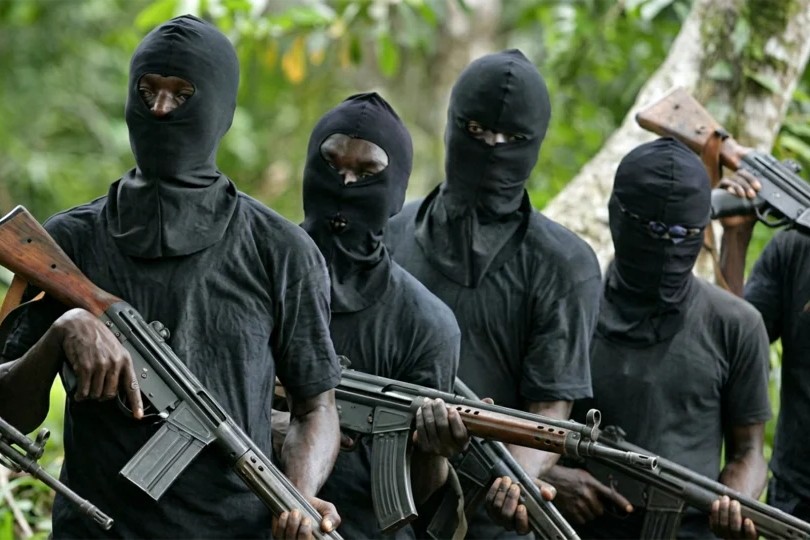
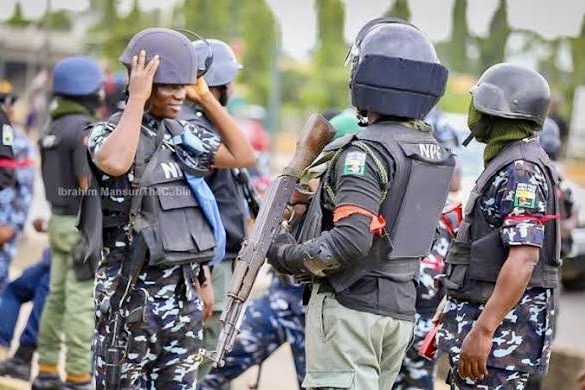
Meanwhile, the NYSF decried the worsening security situation: mass kidnappings in Zamfara, incessant communal clashes in Benue and Plateau, and an insurgency in the North-East have left entire communities terrorised.
Citing the same mid-term address in which Tinubu conceded that “insecurity persists,” the youth forum accused the government of “complacency and silence” in the face of mounting bloodshed.
They demanded a tactical national emergency on insecurity or risk watching Nigeria descend into fragmentation.
Joint Action Front (JAF)
In parallel, JAF lambasted the continued detention of peaceful protesters arrested during last August’s fuel and electricity subsidy protests.
The group condemned charges of treason as “state-sanctioned intimidation,” accusing the government of trampling civil liberties.
They called for the unconditional release of all political detainees and urged labour leaders—Nigeria Labour Congress and Trade Union Congress—to mobilise a nationwide solidarity strike against what they labelled “anti-democratic reform measures.”
Youth Arise Movement (YAM)
YAM focused on the financial toll of reckless borrowing. They highlighted Central Bank of Nigeria data showing $5.47 billion swallowed by external debt servicing between January 2024 and February 2025, even as foreign reserves hover near $37 billion.
Their plea was simple: “Stop mortgaging our future for headline-grabbing bonds and loans; invest in jobs, security and health.”
APC Strikes Back: Blaming the Past to Salvage the Present
In Abuja, APC National Publicity Secretary Felix Morka convened a press conference to counter the avalanche of criticism.
He argued that Tinubu inherited a legacy of “postponed doomsday” from previous administrations and that landmark reforms—fuel subsidy removal, electricity tariff hikes and naira unification—were unavoidable “painful medicine” to save the nation from collapse.
Fiscal Defence: Morka reiterated the President’s claim that the fiscal deficit narrowed from 5.4% of GDP in 2023 to 3.0% in 2024, crediting enhanced revenue mobilisation under Tinubu’s economic team.
Subsidy Rationale: He maintained that incremental subsidy cuts by past governments merely delayed the inevitable, likening Tinubu’s bold approach to a “crawling child” who must strengthen its legs before walking.
Long-Term Vision: Dismissing short-term pain, Morka insisted hardships would recede as Nigeria ramps up oil output to 2 million barrels per day, garners fresh foreign direct investment and leverages a unified exchange rate to stabilise reserves.
Yet, even within APC ranks, unease is palpable. Several backbench senators privately fretted over the social fallout of soaring pump and electricity tariffs, while governors in the South-East reportedly questioned the optics of a “Yorubanised” cabinet.
Stakes for 2027: A Nation at the Crossroads
All roads lead to the 2027 general elections. Should the Tinubu administration fail to translate its lengthy policy roll-out into tangible improvements—stable power, affordable fuel, improved security and a reversing inflation trend—its political capital will evaporate.
Swing States: Ohanaeze’s warning to South-East governors to reconsider their APC allegiance hints at a potential Igbo exodus from the ruling party .
Youth Bulge: With over 60% of the electorate under 30, groups like NYSF and YAM represent a seismic vote bloc primed for mobilisation.
Labour Power: A JAF-orchestrated general strike remains the ultimate wild card, capable of paralysing the economy and toppling governments.
In this charged atmosphere, every policy decision, every ministerial appointment and every security brief will be scrutinised through a political lens.
The Tinubu administration has two years left to rewrite its narrative—to deliver on its promise of “renewed hope” or face an electorate primed to deliver “renewed wrath.”
Infrastructure Scorecard, Key Metrics and the Road Ahead
1. Infrastructure — From Highways to Power Grids
a. Roads & Highways: Umahi’s “Mega Projects” vs. Reality
Minister of Works Dave Umahi has boasted of 13 major road contracts under his watch, including the Enugu–Port Harcourt Expressway, the Umuahia–Aba section, and the Lagos–Calabar Coastal Highway segments in the South-East and South-South.
Yet independent monitoring reveals mixed progress:
Enugu–Port Harcourt Expressway (176 km): Earthworks nearly complete with just 2 km left, but only 40% of asphalt surfacing done against a June 2025 deadline..
Lagos–Calabar Coastal Highway: Flag-off ceremonies in April 2025 notwithstanding, pace remains slow at the South-East stretch, with fewer than 10 km of the planned 60 km actually graded.
East–West Road: Promised for December completion, yet local contractors report delays due to late mobilisation of equipment and security concerns in the Niger Delta.
Such discrepancies fuel allegations of “photo-op governance” and phantom projects—dubbing Umahi’s highways a vanity portfolio rather than a genuine connectivity revolution.
b. FCT Infrastructure: Wike’s “14 Projects” on the Brink
In Abuja, Minister Nyesom Wike has identified 14 road and civic works slated for completion by end-2025, including major arterials N5 and N16, the International Conference Centre (ICC) upgrades, and inner-city resurfacing.
Wike claims that his tenure has delivered “unprecedented” gains, yet:
Gridlock persists: Despite resurfacing, peak traffic delays on N16 remain over 90 minutes during rush hours, according to Abuja commuters.
Budget overruns: The N1.78 trillion FCT statutory allocation is 15% overspent on consultancy and land compensation, leaving only 70% for actual construction.
Peripheral neglect: Satellite towns such as Zuba and Gwagwalada report zero progress, stoking accusations of inner-Abuja bias.
Ohanaeze’s praise of Wike’s competence rings hollow for many who still navigate potholes and grid failures.
c. Power & Energy: Generation Gains amid Distribution Gaps
The administration trumpets a rise in generation capacity from roughly 4,300 MW in May 2023 to peaks of 5,148 MW on 25 April 2025 and claims of 6,003 MW average output thanks to anti-theft drives and meter installations.
Yet:
Volatile supply: National grid performance dipped to 4,998 MW the week before, triggering rolling blackouts that cost businesses N₦45 billion daily.
Metering shortfall: Of the promised 3.205 million meters due in April, just 1.1 million were delivered, leaving 40% of urban households still unbilled for actual consumption.
Access inequality: Only 150 million Nigerians have “adequate” electricity; rural regions average less than four hours of supply per day.
Such erratic power undermines economic recovery—eroding factory outputs by an estimated 8% year-on-year.
d. Oil Production: Ambitious Targets, Lukewarm Returns
President Tinubu’s goal of 2 million bpd by 2025 has faltered. Official data pegs March output at 1.60 mbpd (down from 1.68 mbpd in February), and April at 1.48 mbpd, jeopardising budget projections.
While Operation Delta Sanity claims a rise from 1.4 to 1.8 mbpd late last year, ongoing crude theft and pipeline vandalism still siphon off 200,000 barrels daily.
Loss of oil revenue deepens fiscal strain: the 2025 budget assumed $75/barrel and 2 mbpd, yet April’s Brent prices averaged $82—with actual receipts 18% below target, widening the budget deficit back toward 4.2% of GDP.
2. Performance Metrics Across Key Ministries
| Ministry | Key Metric | Tinubu’s Claim | Independent Data |
|---|---|---|---|
| Finance | Fiscal deficit | 3.0% of GDP (2024) | 3.9% projected (2025) |
| Central Bank | Foreign reserves | $37.2 billion | $35.8 billion (April 2025) |
| Works | Major road km completed | 1,200 km | ~820 km (69% completion) |
| Power | Installed generation capacity | 6,003 MW | Peak 5,148 MW, avg. 4,900 MW |
| Petroleum Resources | Daily oil production | 2,000,000 bpd target | 1.48–1.60 mbpd |
| Debt Management Office | Public debt (% of GDP) | Cleared old debt claims | 53% (end-2024) |
(Sources: Debt Management Office; NBS; NERC; Proshare; Daily Post; Reuters.)
3. Charting the Remaining Path: Critical Pillars for 2027
a. Security & Rule of Law
Tactical emergency: Civil society and NYSF demand a declared national security crisis, with joint military-police task forces in high-risk zones.
Judicial independence: Release of peaceful protesters to restore trust; review of treason charges against demonstration leaders.
b. Economic Relief & Social Safety Nets
- Targeted subsidies: Reintroduce conditional social transfers, tentatively, for the poorest 20%, funded by bond yields from restructured petrol revenues, as advocated by social welfare advocates.
- SME credit guarantees: Low-interest lending schemes to revive agribusiness and manufacturing, tied to job creation targets.
c. Infrastructure Delivery & Transparency
Real-time project dashboards: Public portals showing live completion rates, audited by independent engineers.
Geo-tagged payments: Require contractors to submit GPS-stamped invoices for disbursements, curbing ghost contracts.
d. Inclusive Governance & Federal Balance
State creation: Fast-track constitutional amendment for two South-East states, as urged by Ohanaeze, or better, convene a Sovereign National Conference, to strengthen national cohesion.
Census reforms: Incorporate ethnicity and religion, as part of electoral roll purification, enhancing representation fairness.
e. Debt Sustainability
Borrowing cap: Legislate a public debt ceiling of 55% of GDP, with parliamentary oversight on all external loans.
Asset recovery transparency: Full disclosure of recovered funds (₦277 billion, $967 million) and parliamentary report on their utilisation.
Conclusion: The Reckoning Approaches
President Tinubu’s remaining two years will define his legacy. Will he pivot from rhetoric to rigour—ensuring roads are paved, lights remain on, and security is restored?
Or will he double down on policies that have thus far delivered hardship and heightened distrust?
With inflation still stubbornly above 23%, debt spiralling beyond 53% of GDP, and critical infrastructure lagging at two-thirds completion, the window for course correction narrows daily.
The next phase demands not just ministerial reshuffles or soundbites, but radical transparency, a genuine inclusive agenda, and measurable relief for millions of Nigerians barely surviving.
As the 2027 elections loom, the choice will not merely be between parties, but between tangible progress and renewed wrath.
Nigerians have heard the “renewed hope” refrain—now they demand renewed action.
Additional reporting from Osaigbovo Okungbowa, Taiwo Adebowale, Peter Jene, Suleiman Adamu, Omonigho Macaulay & Kalada Jumbo