By Editor
The Grim Confirmation: Nigeria’s Chief of Army Staff Dies Amid Initial Denial of Rumours

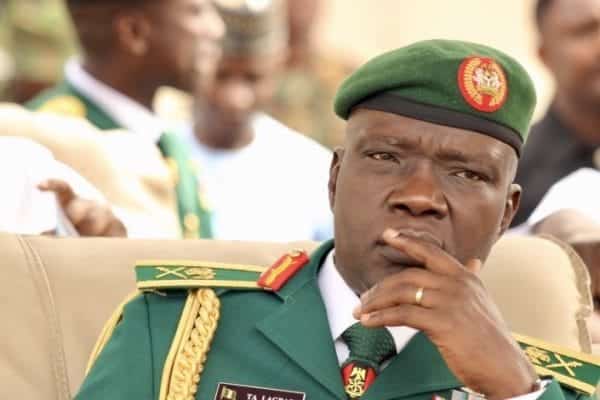
The news of Lt. General Taoreed Abiodun Lagbaja’s passing has rocked Nigeria’s Armed Forces and the broader public alike, casting a pall over the nation as Nigerians grapple with the loss of one of their most esteemed military leaders. Lagbaja’s death, initially rumoured and subsequently denied by official sources, has now been confirmed by the Nigerian State House in a sombre statement. The government’s delayed acknowledgment has only added to the shock, sparking intense public discourse about the handling of sensitive information regarding national security figures.
This unsettling episode shines a spotlight on the communication protocols within Nigeria’s highest offices. Public information, particularly concerning prominent figures who are pillars of national stability, must be handled with transparency and expedience. The decision to initially dismiss reports surrounding Lagbaja’s illness and death has left a lingering sense of mistrust, as citizens question why the government withheld vital information about a public figure whose leadership influenced not only the Armed Forces but the entire nation’s security framework.
President Tinubu’s Statement: A Sombre and Sudden Admission
President Bola Ahmed Tinubu’s statement, delivered via his Special Adviser Bayo Onanuga, conveyed deep regret over the loss of a “significant figure” within Nigeria’s Armed Forces. Tinubu praised Lagbaja’s contributions to national security, expressing condolences to the grieving family and the military community. However, critics have pointed out that the president’s expression of regret, while heartfelt, cannot easily undo the damage caused by the initial denial and subsequent delay in confirming the General’s death.
The manner in which this announcement was handled raises profound concerns about transparency within Tinubu’s administration. When matters of national security and prominent figures are involved, the public rightfully expects accurate information to be communicated promptly. In the case of Lagbaja’s death, the presidency’s cautious approach may have stemmed from a desire to control public response or avoid early speculations; however, it inadvertently amplified public doubt. This delay has implications not only for the Tinubu administration’s credibility but also for Nigeria’s image on the international stage, where transparency is increasingly seen as a measure of governmental stability.
For President Tinubu, a leader elected on promises of reform and a new era of integrity, this episode underscores the necessity for a re-evaluation of his administration’s communication strategy. Failure to convey timely information in critical moments can alienate public trust, casting doubt on future announcements and reducing confidence in government actions. Analysts suggest that this incident offers a crucial lesson on the need for openness and the risks associated with information delays, especially in an era when public skepticism toward government is already heightened.
A Stalwart Military Career: From Platoon Commander to Chief of Army Staff
Lt. General Taoreed Abiodun Lagbaja’s military career was a testament to perseverance, resilience, and strategic foresight. His journey from the Nigerian Defence Academy, where he began as a cadet in 1987, to his appointment as Chief of Army Staff on June 19, 2023, speaks volumes about his dedication and capability as a soldier. For over three decades, Lagbaja’s name became synonymous with operational excellence within the Nigerian Armed Forces, particularly in his efforts to tackle insurgency and regional insecurity.
Upon commissioning as a Second Lieutenant in the Infantry Corps in 1992, Lagbaja embarked on a career that would see him ascend through some of the most gruelling roles within the army. As a platoon commander in the 93 Battalion, he proved his mettle in high-stakes environments, honing leadership skills that would serve him well in Nigeria’s protracted fight against insurgency. His role in the 72 Special Forces Battalion highlighted his adaptability, enabling him to lead specialised units that operate in high-risk zones. This experience proved critical as Nigeria faced unprecedented security challenges in the subsequent decades, with Lagbaja often at the helm of frontline strategies aimed at restoring peace.
General Lagbaja was not merely a commander but a strategist whose insights were pivotal in some of Nigeria’s most complex and challenging military operations:
Operation ZAKI in Benue State: Assigned to address internal security crises in Benue, Lagbaja’s command of Operation ZAKI saw him confronting armed militia groups who posed significant threats to local communities. His approach combined tactical offensives with strategic deterrence, successfully stabilising the region during his tenure.
Lafiya Dole in Borno: In the troubled northeastern region of Borno, Lagbaja played an instrumental role in Operation Lafiya Dole, Nigeria’s long-standing counter-terrorism initiative against Boko Haram. His leadership emphasised not only military might but also community engagement and intelligence gathering, thereby reducing Boko Haram’s influence in critical areas.
Operation Udoka in the Southeast: As part of efforts to restore order in the conflict-ridden Southeast, Lagbaja spearheaded operations against various armed separatist groups. His work in this region demonstrated a nuanced understanding of Nigeria’s diverse socio-political landscape, reflecting his capacity to apply different strategies to varying conflict dynamics.
Operation Forest Sanity in Kaduna and Niger States: In one of his more recent campaigns, Lagbaja led Operation Forest Sanity, focusing on countering banditry and kidnappings that have terrorised communities across Kaduna and Niger States. His campaign in these northern regions aimed at restoring a semblance of peace and normalcy, garnering him significant respect among local populations affected by violent crime.
General Lagbaja’s involvement in these operations underscored his unwavering commitment to national security, and his hands-on leadership style set him apart from his peers. His tactical approach in these varied regional conflicts exemplified an understanding of Nigeria’s unique security challenges and the intricate balance required to maintain order across ethnically and politically diverse states.
The Academic Soldier: Honing Strategy at the U.S. Army War College
In addition to his field experience, Lt. General Lagbaja understood the value of strategic education and international military collaboration. As an alumnus of the prestigious U.S. Army War College, he earned a Master’s degree in Strategic Studies, a testament to his dedication to mastering both the theoretical and practical aspects of military command. His academic background equipped him with a sophisticated understanding of modern warfare and operational planning, factors that greatly influenced his strategic approach during his tenure as Chief of Army Staff.
General Lagbaja’s education at the U.S. Army War College was not only a personal accomplishment but a gain for Nigeria’s Armed Forces, which benefited from his exposure to global military tactics, strategic foresight, and leadership training. The War College is renowned for producing top military minds capable of navigating complex geopolitical and operational challenges. This institution instilled in Lagbaja a level of preparedness that allowed him to assess and counter Nigeria’s insurgent and militant threats with refined strategy, from counter-terrorism to urban conflict management.
His approach to Nigeria’s security issues reflected this balanced perspective, drawing upon his deep understanding of tactical manoeuvres while incorporating higher-level strategic planning. Lagbaja’s intellectual depth, a rarity among military leaders, allowed him to analyse security threats from a broader, global context. His expertise became an asset in coordinating joint operations with international allies, improving intelligence-sharing, and adapting Nigeria’s security approach to contemporary threats.
Lagbaja’s focus on continuous professional development highlights an often-overlooked aspect of military leadership: the importance of adapting to new threats and evolving technologies. His tenure reminded Nigerians and fellow military personnel of the need for an adaptable, well-educated force capable of countering complex modern threats. In this regard, Lagbaja served as a model for younger officers, embodying the ideal of a soldier who pairs field experience with intellectual rigour.
Impact on Nigeria’s Military Landscape and National Security
The untimely demise of Lt. General Lagbaja has left a void in the Nigerian Armed Forces, creating an atmosphere of uncertainty that has rippled across the nation’s military landscape. His absence is not merely a loss of leadership; it represents a disruption to ongoing strategic initiatives and operations that Lagbaja was uniquely positioned to guide. His successor will inherit a complex array of security challenges, including entrenched insurgency in the northeast, rising banditry in the northwest, and separatist tensions in the southeast.
Lagbaja’s legacy as a leader who was both respected and trusted within the Armed Forces underscores the unique challenge of finding a successor who can match his tactical knowledge and field experience. His deep involvement in operations, often working closely with troops on the ground, earned him admiration from soldiers who viewed him as a leader who genuinely understood their struggles. This rapport with his men fostered morale and loyalty, elements that are crucial to an effective fighting force.
As Nigeria continues to battle various forms of insecurity, Lagbaja’s loss threatens to disrupt the continuity of leadership that is essential for maintaining momentum in ongoing operations. His successor will face immediate pressure to affirm their leadership and prove capable of continuing the initiatives Lagbaja had pioneered. However, the potential for disorientation within the ranks and a slowdown in strategic decision-making looms large as the Armed Forces adjust to the absence of a seasoned commander.
The Political Fallout: Repercussions for the Tinubu Administration
The Tinubu administration now finds itself at the centre of a crisis that has stirred up criticism and skepticism, particularly over the handling of Lagbaja’s passing. For a government striving to assert control over Nigeria’s complex security issues, the timing and handling of this announcement represent a blow to its credibility. Critics argue that the government’s apparent reluctance to promptly disclose information regarding Lagbaja’s death suggests a lack of transparency, prompting questions about what other sensitive matters may be similarly concealed from public knowledge.
In light of the initial denial of the rumours surrounding Lagbaja’s health, analysts contend that this situation could become a catalyst for discussions on information dissemination within government ranks. The administration must confront the reputational damage that comes with perceived opacity, especially as Nigerians demand greater accountability and transparency from their leaders. If President Tinubu’s government fails to address these concerns, the incident may be a stain on his administration, undermining public trust at a time when the nation’s security situation remains volatile.
Analysing the Security Implications of Lagbaja’s Death: A Dangerous Void in Leadership?
Lt. General Lagbaja’s sudden death not only brings sorrow to those who knew him but also raises alarms across the security apparatus of Nigeria. At a time when the nation faces an unprecedented array of threats—ranging from militant insurgencies to banditry, kidnappings, and communal violence—losing a seasoned, respected leader in charge of the Army leaves a dangerous void. Lagbaja’s initiatives were at the centre of a concerted effort to stabilise key regions, but now his absence puts these operations at risk of stalling, or even failing altogether.
The Nigerian Army, tasked with spearheading many of the country’s counter-terrorism, counter-insurgency and counter-banditry operations, may face setbacks as it tries to manage this transition in leadership. Without a clear, immediate successor who matches Lagbaja’s familiarity with Nigeria’s security terrain and his hands-on experience, there is concern that the operational momentum against groups like Boko Haram and the Islamic State West Africa Province (ISWAP) could be lost. The urgency for new leadership to re-establish command and prevent operational disruptions is paramount, as delays or lapses could embolden insurgent factions to escalate their activities, potentially reversing hard-won gains.
Furthermore, General Lagbaja’s relationships with regional leaders, local communities, and international partners played a critical role in the effectiveness of security operations across various states. His death complicates ongoing efforts, as his successor will need to rebuild those relationships to ensure the continued cooperation of key allies. The risk here is that a weakened, fragmented military command may struggle to maintain unified operational coherence, potentially creating openings for criminal elements and violent groups to exploit.
The Public Backlash: Renewed Demand for Transparency and Accountability
The public response to Lagbaja’s passing and the administration’s initial denial highlights a brewing discontent over governmental opacity. When rumours of Lagbaja’s health emerged, citizens were quick to demand official clarification. Instead, they were met with vague statements that were later contradicted, leading to further distrust. This event has ignited a larger discussion on the need for transparency, particularly concerning issues that bear significant implications for national security and public welfare.
This backlash has become a focal point for critics who argue that the current administration has repeatedly faltered in handling sensitive information with due openness. Lagbaja’s death is now being viewed as a catalyst for deeper demands for accountability, with many insisting that the government should adopt a policy of proactive disclosure to restore public faith. The clamour for transparency is also fuelled by concerns that delayed, filtered information could have detrimental consequences, particularly if security risks or critical health information about public officials are withheld from public view.
A significant portion of the Nigerian populace is growing increasingly disillusioned, viewing government statements with skepticism due to past experiences of withheld or altered information. Analysts warn that the Tinubu administration’s approach to handling this tragedy could have long-lasting effects on its relationship with the public, particularly as it navigates a host of other pressing issues like economic instability, corruption, and widespread insecurity. If trust is not reestablished, the administration could face heightened public scrutiny, making it difficult to garner the broad-based support needed to implement its agenda effectively.
Historical Parallels: The Challenges of Military Leadership Transitions in Nigeria
The challenges Nigeria faces following the death of Lt. General Lagbaja are not without precedent. Over the past decades, Nigeria has experienced a handful of similar leadership transitions within its military ranks under tense circumstances, often with mixed results. Each transition brought a unique set of challenges and underscored the complexities of maintaining continuity amid high-stakes national security issues.
Historically, the sudden loss of senior military figures has led to periods of adjustment, during which Nigeria’s Armed Forces faced operational slowdowns and restructuring. These disruptions often left the country vulnerable to surges in violence, underscoring the critical role of continuity in military leadership. While some transitional periods were handled smoothly, others exposed gaps in Nigeria’s crisis management mechanisms, leading to intensified public scrutiny of both the military and government.
General Lagbaja’s death adds another chapter to this history, once again testing the resilience of Nigeria’s military hierarchy and its capacity to sustain stability under duress. His successor will not only inherit Lagbaja’s operational responsibilities but will also bear the burden of managing a military organisation grieving its fallen leader. This delicate balance between emotional recovery and operational readiness will be a challenging hurdle, particularly as armed groups seek to exploit perceived weaknesses.
The historical patterns suggest that to avoid repeating past mistakes, the Nigerian government and Armed Forces must prioritise a swift, transparent, and well-communicated process for appointing Lagbaja’s substantive successor and submitting same to the Nigerian Senate for screening and confirmation. Any delay or perceived indecisiveness could exacerbate public fears, adding to the anxiety already heightened by Lagbaja’s sudden passing.
Lagbaja’s Legacy: A Soldier’s Soldier in a Time of Need
Throughout his career, Lt. General Lagbaja epitomised the archetype of a “soldier’s soldier,” a leader who commanded respect not through rank alone but through his actions on the frontlines. His reputation for staying close to his troops in operational zones earned him an unusual level of loyalty and admiration within the military. Colleagues and subordinates frequently described him as a man of integrity and courage, traits that endeared him to many in an organisation where hierarchical rigidity often places commanding officers at a distance from the rank and file.
In an era when Nigeria’s Armed Forces faced criticism for internal corruption and inefficiency, Lagbaja represented a refreshing contrast. His direct involvement in operations and his insistence on discipline and accountability were a source of morale for soldiers who valued his straightforward approach. He remained unwaveringly committed to restoring honour to the military, focusing on operational discipline and ensuring that troops were well-prepared and equipped to face the diverse threats confronting Nigeria.
Moreover, Lagbaja’s emphasis on the professional development of younger officers showcased his commitment to grooming a generation of leaders capable of continuing his legacy. Many of these officers have since spoken of his influence on their careers, crediting him with instilling a sense of duty and respect for the complex social dynamics within Nigeria’s security landscape. For a military struggling with generational divides and shifting operational paradigms, Lagbaja’s mentorship was invaluable.
What Lies Ahead: Choosing a Successor and the Path Forward
The selection of Lt. General Lagbaja’s successor will be a defining moment for the Tinubu administration and the Armed Forces. With heightened scrutiny on the government’s decision-making processes, the choice of Lagbaja’s replacement must be one that inspires confidence among military personnel and the public. Security experts and analysts warn that the wrong choice could create further instability, particularly if the successor lacks Lagbaja’s experience, command respect, or fails to garner support within the Army’s ranks.
Given the critical nature of this decision, there are calls for the Tinubu administration to prioritise candidates who demonstrate a strong operational background, strategic thinking, and an understanding of the specific security challenges Nigeria faces. In recent times, Nigeria’s defence policies have shifted towards multi-dimensional, intelligence-driven approaches to counter insurgency and other security threats. Lagbaja’s replacement must be equipped not only with tactical expertise but also with an appreciation for the evolving nature of modern threats.
The path forward also demands a re-evaluation of communication strategies within Nigeria’s highest offices. The backlash over Lagbaja’s passing has underscored the dangers of inadequate or delayed disclosure, pushing the Tinubu administration to reconsider its approach to public information. Restoring confidence in government statements will require a commitment to transparency, especially in an era where misinformation can proliferate and damage trust at unprecedented speeds.
National Reflection: Honouring a Life of Service Amidst Sorrow and Uncertainty
As Nigeria mourns the loss of Lt. General Lagbaja, the country is also prompted to reflect on the sacrifices made by countless military personnel who risk their lives to protect the nation. Lagbaja’s death is a sobering reminder of the burdens borne by those in uniform, as they navigate a volatile security environment often with limited resources and unyielding expectations. His legacy, characterised by courage and an unwavering commitment to duty, serves as an inspiration for a country grappling with complex security challenges.
Beyond the Armed Forces, this tragedy also speaks to the broader Nigerian society’s relationship with its military and its leaders. While public opinion on the military is mixed, particularly due to reported incidents of abuse and misconduct, figures like Lagbaja challenge prevailing stereotypes. He stands as a reminder of the values of integrity, discipline, and sacrifice that many soldiers embody, offering a counter-narrative to the often negative portrayals of Nigeria’s Armed Forces.
Lagbaja’s passing has sparked a renewed sense of patriotism among citizens who view his career as a symbol of resilience and devotion to Nigeria’s security. For some, this moment represents an opportunity to bridge divides between the military and the civilian population, fostering a shared commitment to national unity and collective progress. Leaders across various sectors have echoed the importance of honouring Lagbaja’s memory by ensuring that his values continue to guide the country’s approach to security.
Final Thoughts: A Nation in Mourning, A Legacy to Uphold
The death of Lt. General Taoreed Abiodun Lagbaja has left a nation in mourning, grappling with the sudden loss of a steadfast protector and a symbol of courage. His passing not only signals an end to an illustrious military career but also serves as a call to action for Nigeria’s leaders to uphold the values he championed. Lagbaja’s legacy will endure, but it is now up to his successors and the nation at large to continue his fight against the threats that endanger Nigeria’s stability.
President Tinubu’s administration faces a critical juncture, tasked with filling the void left by Lagbaja and reaffirming its commitment to a transparent, responsive government. For the Nigerian people, this moment is a solemn reminder of the human cost of security—a call to honor those who serve by demanding a government that respects its citizens through honesty, accountability, and an unrelenting dedication to the nation’s welfare.
With reporting from Osaigbovo Okungbowa, Peter Jene and Suleiman Adamu, Atlantic Post Senior Political, National Affairs and National Security/Defence Correspondents, respectively.