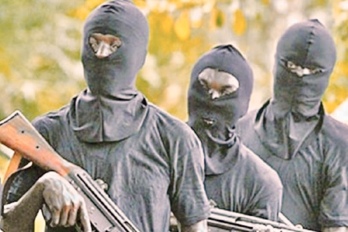
A viral video from an unnamed Nigerian soldier has reopened one of the country’s most explosive questions: is insecurity merely a security failure, or has it become a business model protected by powerful interests?
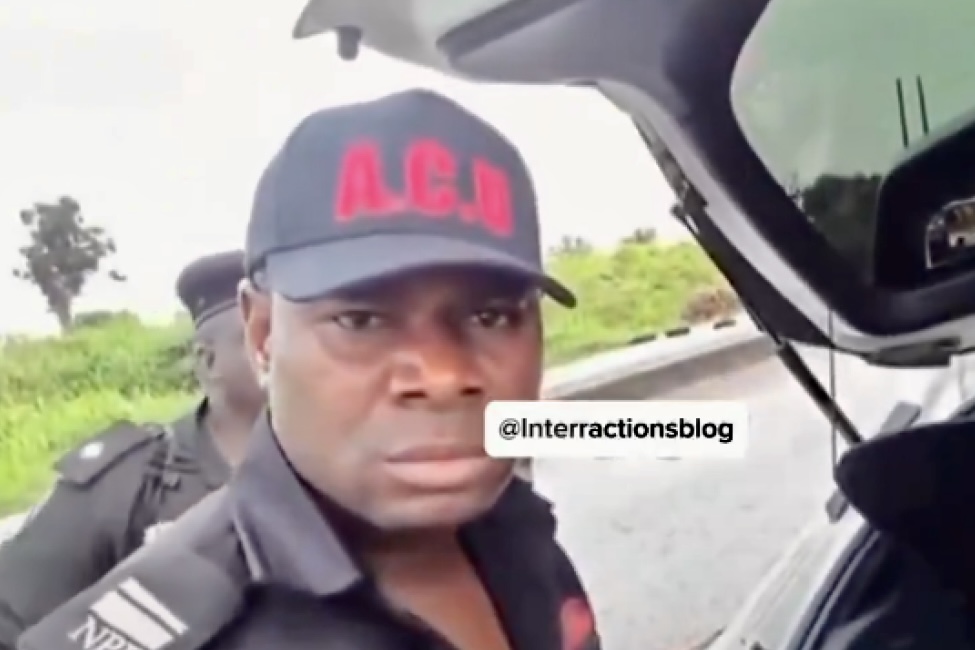
In the clip circulating online on Monday, 8 June 2026, the soldier said he knew there was an order barring personnel from airing views on social media, but insisted that “my heart is boiling”.
He asked permission to speak because, in his words, insecurity is being sustained by “cabals” who allegedly profit from violence, sabotage farming communities, and keep illicit businesses alive in mineral rich terrain.
His accusation is stark. The soldier alleged that “these cabals” deliberately fuel unrest in states where valuable mineral deposits are discovered, then use the chaos to drive villagers and farmers away so they can operate illegally in the bush.
He further claimed that these unnamed networks are so influential that they can shape politics behind the scenes, manipulate institutions and survive public scrutiny because their names rarely appear on the front pages, even though their reach is deep both locally and internationally.
The most disturbing part of the video is not only the allegation itself, but the fear that followed it. The soldier said powerful people could “use any agency” against him and warned that if Nigerians did not hear from him again they should “ask questions”.
That line has resonated because it captures the chilling reality of whistleblowing in a country where soldiers, activists, journalists and civilians alike often claim that speaking up carries a heavy price.
Yet the soldier’s warning does not arrive in a vacuum. Nigeria’s mining sector remains a contested space, and the state has already acknowledged serious problems around illegal extraction and licence abuse.
Reuters reported in April 2024 that the federal government revoked 924 dormant mining titles immediately, after earlier revocations of more than 1,600 titles, saying the move was meant to curb “licence racketeering” and clean up the sector.
Reuters also reported that Nigeria is trying to attract investors while enforcing tougher rules against illegal mining, with mining contributing less than 1 per cent of GDP.
That is important because the soldier’s claim is not disconnected from broader evidence that illegal resource extraction and violence can feed each other. An analysis by LSE Africa said illicit gold extraction contributes to prolonging violent conflict in states such as Zamfara, while insecurity across Nigeria persists because root causes have not been properly addressed.
Reuters likewise reported in December 2024 that Nigeria lifted its ban on mining exploration in Zamfara only after improved security, having suspended the activity in 2019 following incessant bandit attacks.
Reuters also noted that illegal miners had exploited the state’s resources during the suspension.
The soldier’s invocation of the North-East is especially significant because the region remains one of the epicentres of Nigeria’s long war against Boko Haram and ISWAP.
Amnesty International said in April 2024 that 82 Chibok girls were still in captivity a decade after the original abduction, while at least 1,700 children had been abducted by gunmen since 2014 in 17 mass school kidnappings.
Amnesty argued that the repeated attacks show a failure to prevent violence and to protect children adequately.
That record gives the soldier’s despair a brutal context: Nigerians have lived with insecurity long enough to know that it does not always end when the headlines fade.
His comments about Chibok and Dapchi also sharpen the moral edge of the story. By recalling girls who were taken as schoolchildren and remain symbols of a national failure, he linked today’s insecurity to yesterday’s unresolved trauma.
In effect, his message was that Nigeria has normalised emergency. Communities are displaced, schools are attacked, farms are abandoned, and then the cycle moves on while financiers, smugglers and armed groups adapt.
That is why his claim that terrorists can be replenished as quickly as they are cleared is so politically damaging. It points to an ecosystem, not just isolated attacks.
For the authorities, the challenge is twofold. First, the soldier’s specific allegations must be tested through credible, intelligence led investigation rather than dismissed as a mere outburst from a distressed trooper. Second, the state must confront the wider pattern that repeatedly links insecurity with illegal mining, licence corruption and the abuse of rural spaces.
Nigeria has already signalled that the mineral sector is too valuable to leave to racketeers and armed groups. The real test is whether it can prove that law enforcement, political will and economic reform are strong enough to break the link between violence and profit.
Follow us on our broadcast channels today!
- WhatsApp: https://whatsapp.com/channel/0029VawZ8TbDDmFT1a1Syg46
- Telegram: https://t.me/atlanticpostchannel
- Facebook: https://www.messenger.com/channel/atlanticpostng