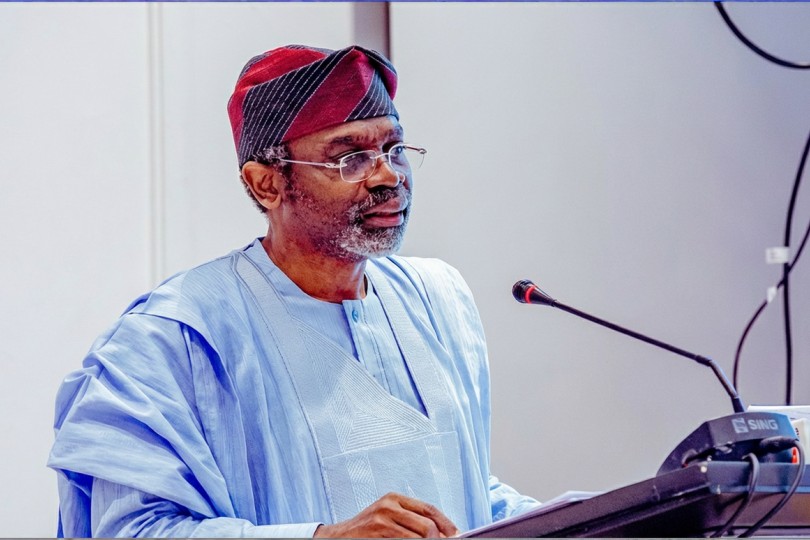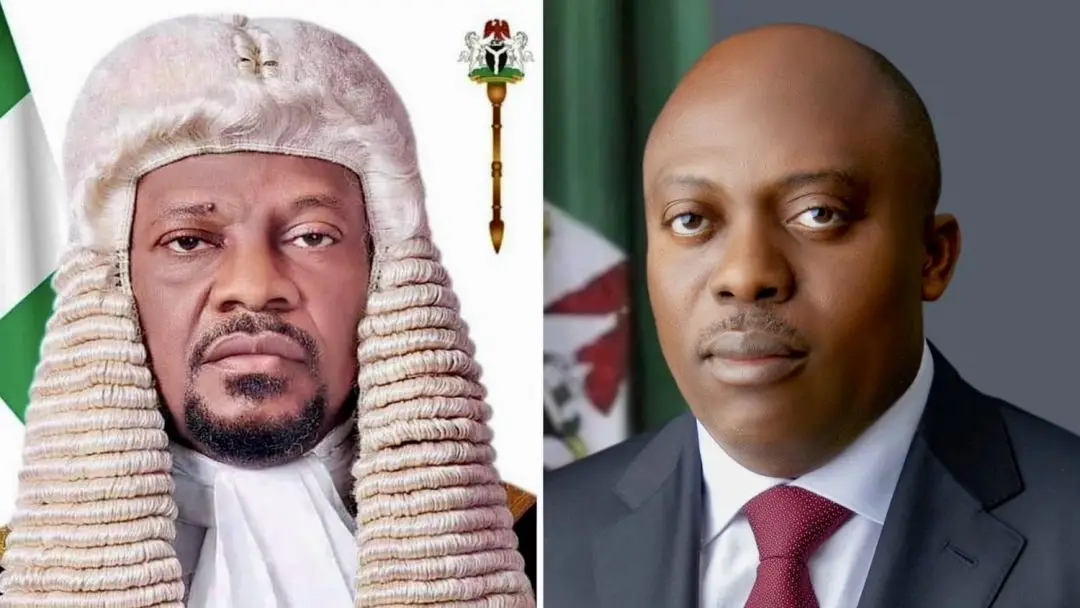
In a press briefing on March 14, 2025, Hon. Enemi Alabo George criticised Governor Simnalaiyi Joseph Fubara for authoritarianism and neglecting constitutional duties in Rivers State. The Assembly’s attempts to engage the governor regarding budget and appointments were met with hostility. George emphasised the need for lawful governance and unity for citizens’ welfare.
PORT HARCOURT, Rivers — In a fiery press briefing delivered on Friday, 14 March 2025, by Hon. Enemi Alabo George—the Chairman of the House Committee on Information and Spokesperson of the Rivers State House of Assembly—the 10th Assembly painted a damning picture of the state of governance in Rivers State.
The briefing, laden with accusations of authoritarianism and blatant disregard for constitutional principles, has rocked the political landscape of the oil-rich state and set the stage for an all-out confrontation between the executive and legislative arms.
A Battle for Constitutional Supremacy
The press briefing came on the heels of the recent Supreme Court judgement on the state budget, which had already exposed the governor’s inability to adhere to the rule of law.
Hon. Enemi Alabo George reminded Rivers citizens that following the Supreme Court’s decision, Governor Simnalaiyi Joseph Fubara was mandated to present the appropriation bill to the legislature for swift consideration.
The Assembly had promptly written to the governor, urging him to present the bill so that it could be passed by 15th March 2025—a critical deadline to enable the timely release of funds from the Federal Government that had been withheld pursuant to the judgement.
However, what followed was a series of shocking rebuffs. The Assembly’s initial letter was met with outright rejection; staff sent to deliver the correspondence were reportedly brutalised at the gate of the Government House and forced to return.
Undeterred, the Assembly resorted to using a courier service to ensure that their communication reached its intended destination. Yet, the governor continued to ignore their requests, a move that Hon. George described as “a flagrant act of contempt for the democratic process.”
A Descent into Authoritarianism
The briefing did not stop at budgetary issues. Hon. George detailed further grievances stemming from the Supreme Court’s dismantling of the governor’s previously appointed Commissioners—appointments that were deemed illegal and unconstitutional.
In a bid to forestall a leadership vacuum, the Assembly had written to the governor to submit a list of Commissioners for immediate screening. Once again, their overtures were met with disdain.
The letter was rejected at the Government House, forcing the Assembly to dispatch the message via courier.
In an astonishing twist, the governor instructed his aides to take legal action against the Assembly, while simultaneously barring all ministries, agencies, and departments from receiving any communication from the House.
Adding fuel to the fire was the governor’s recent attempt to manipulate public perception. While en route to Ogoni for a programme, he allegedly stopped at the gate of the House of Assembly Quarters to grant an interview to the press.
In this interview, he claimed to have sent a letter to the Assembly stating his intention to present the appropriation bill—a claim the Assembly vehemently denies.
According to Hon. George, no such letter was ever received, and allegations that the letter was sent via WhatsApp are “awkward, unprofessional and embarrassing.”
He challenged the governor and his aides to produce any acknowledgement of such a letter, labelling the claim as a calculated move to “demonise the House of Assembly and play to the gallery.”
The House Under Siege
The press briefing offered a stark account of the suffering endured by the Assembly over the past 15 months. Hon. George recounted the traumatic events that have left a deep scar on the institution.
The Assembly’s hallowed chamber was burnt down by the governor’s forces, the entire House of Assembly Complex was demolished—along with personal effects and belongings—and even the Speaker’s residence did not escape unscathed.
Residential quarters were invaded, and allowances for legislators have been withheld for over a year and a half, leaving them in a state of perpetual hardship.
“This is not just a political struggle; it is a battle for the soul of Rivers State,” declared Hon. George. “Our legislature, which is a constitutional pillar, has been battered almost beyond repair. Yet, we stand resolute in our duty to the people of Rivers State.”
His words resonated with a palpable mix of grief and defiance, as he reminded the public of the critical roles played by the legislature in ensuring that government functions properly.
The Call for Unity and Constitutional Respect
Despite the litany of abuses, the Assembly’s message was not solely one of condemnation but also a call for unity and progress. Hon. George urged all Rivers citizens, and indeed all Nigerians, to join in demanding that the governor revert to lawful and respectful governance.
He stressed that the House of Assembly is not an appendage of the executive—its members are not slaves or bondservants but independent representatives tasked with upholding the principles of the 1999 Constitution.
Echoing the words of the Supreme Court, Hon. George noted:
“A government cannot be said to exist without one of the three arms that make up the government of the state. The executive’s attempts to collapse the legislature have rendered the government of Rivers State non-existent.”
This piercing reminder of constitutional fundamentals served as a rallying cry for those disillusioned by the governor’s despotic rule. It is a stark warning to any leader who might be tempted to sideline an independent legislature in pursuit of autocratic power.
A Plea for the People
In his address, Hon. George pivoted towards the pressing needs of the Rivers people, outlining the dire consequences of continued executive overreach. The Assembly’s appeal was not merely a political statement but a heartfelt plea to safeguard the welfare of the citizenry.
He stressed that government pensions, teachers’ salaries, funding for public schools, and the operation of health facilities are all at risk if the current impasse is not resolved.
The governor’s actions, he asserted, are toying with the lives and livelihoods of the people, an outcome that is both unacceptable and unsustainable.
“We have witnessed hell,” Hon. George lamented, referring to the burnt chambers, demolished complexes, and the brutal treatment of Assembly members.
“We must not allow one man’s ego to continue to inflict suffering on our people. The people of Rivers State deserve better—a government that respects the rule of law and works in unison for their prosperity.”
The Road Ahead: A Test of Democratic Resilience
The press briefing by Hon. Enemi Alabo George has thrown down the gauntlet. The Assembly’s persistent efforts to engage with the governor stand as a testament to their unwavering commitment to democratic principles.
With the Supreme Court’s judgement serving as a potent reminder of constitutional limits, the coming days will be crucial in determining whether the governor will relent and work with the legislature, or whether his recalcitrant stance will lead to further isolation and legal challenges.
Political analysts across Nigeria are now closely watching the developments in Rivers State. Many believe that the governor’s latest actions—especially his attempt to create a false narrative about having communicated with the Assembly—are indicative of a broader strategy to maintain power at all costs.
Such a strategy, however, may backfire if the public continues to rally behind the beleaguered legislature, which has clearly demonstrated its commitment to transparency and accountability.
The Assembly’s resolute stance is a beacon of hope for many in a state that has long been plagued by executive overreach and political subversion.
It is a call to all branches of government to respect the delicate balance enshrined in the Constitution—a balance that is essential for any nation that aspires to democracy and the rule of law.
Conclusion: The Imperative of Constitutional Governance
As Rivers State stands at a crossroads, the press briefing by Hon. Enemi Alabo George encapsulates the urgency of restoring normalcy and respect for constitutional processes.
The Assembly’s passionate plea for a return to lawful governance is not merely a political manoeuvre but a profound reminder of the responsibilities borne by those in power.
If the governor continues to flout these responsibilities, the repercussions could be dire—not just for the political elite, but for every citizen who depends on a stable and functioning government.
In the coming weeks, all eyes will be on the interactions between the governor and the Assembly.
Will Governor Fubara finally present the appropriation bill and engage with the legislature in a manner befitting his office, or will his recalcitrant behaviour further isolate him from the institutions of state?
For the people of Rivers State, the answer to this question will determine the future trajectory of governance in their beloved state.
With 40 years of political reportage behind us at Atlantic Post, we remain committed to bringing you the latest, most incisive coverage of this unfolding crisis.
As the struggle for democratic renewal intensifies, our newsroom stands ready to document every twist and turn in this high-stakes battle for constitutional supremacy.
The time for polite rhetoric has long passed; now, Rivers State must decide whether it will continue down the path of authoritarianism or embrace a future founded on transparency, accountability, and the rule of law.