By Editor
In a surprising turn of events, the much-anticipated one million-man march, spearheaded by leaders of the #EndBadGovernance protest, failed to materialize on Saturday, marking a significant downturn in a movement that once held the nation in its grip. The low turnout was not just a setback; it was a glaring sign of the dwindling momentum in a protest that aimed to challenge the very foundations of Nigeria’s governance.

The Rise and Fall of a Movement: What Happened to #EndBadGovernance?
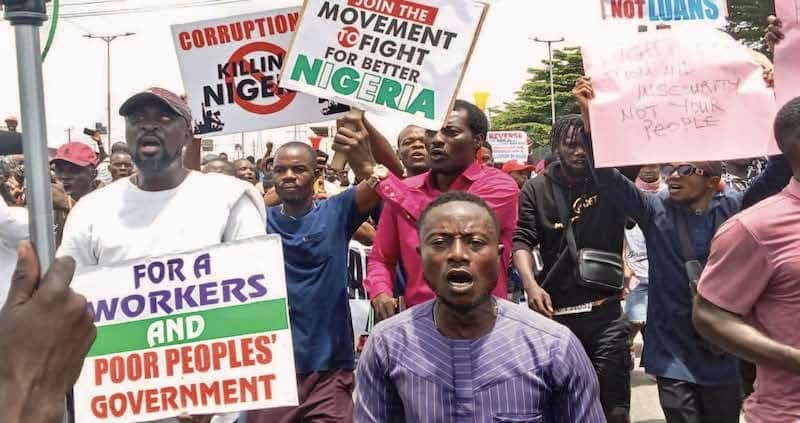
The #EndBadGovernance protest began with a burst of energy, fuelled by widespread discontent with the state of the nation. Protesters from all walks of life, especially the youth, rallied under a common cause: to demand better governance, an end to economic hardship, and the reversal of policies perceived as detrimental to the populace.
However, as the days turned into weeks, the movement’s vigour seemed to wane. The planned one million-man march, which was supposed to be the climax of the 10-day protest, turned out to be its most significant failure. Across the country, from Abuja to Rivers, Kaduna to Kano, the streets that once echoed with chants of resistance were eerily quiet. The question on everyone’s mind is: What went wrong?
Abuja: A Ghost Town of Resistance
In Abuja, the epicentre of many national protests, the low turnout was particularly disheartening. Eagle Square, the planned convergence point for the march, was heavily guarded by security forces who had anticipated a massive crowd. But instead of a sea of protesters, there were only a handful of individuals, vastly outnumbered by the security personnel who had set up barricades on all roads leading to the venue.
The situation in Abuja starkly contrasted with the early days of the protest when thousands thronged the streets, demanding change. The reduction in numbers was not just due to a lack of interest; it was a result of targeted actions by security forces. The arrest and harassment of protest leaders, coupled with the use of force against demonstrators, had a chilling effect. Fear replaced the hope that had initially driven the protestors, and many chose to stay away rather than risk their lives.
Rivers: A City on Edge
Rivers State, particularly its capital Port Harcourt, also saw a significant drop in protest activities. The streets that had once been vibrant with demonstrators were deserted. For three consecutive days, residents refused to come out, fearing that the protests would be hijacked by hoodlums or lead to violence.
The Rivers State Police Command had embarked on a show of force, patrolling the streets and maintaining a visible presence in strategic locations. The state’s spokesperson, Grace Iringe-Koko, had warned of potential violence, which further dissuaded people from joining the march. The heavy police presence at the Federal Secretariat’s gate and other key areas underscored the authorities’ determination to prevent any gatherings.
The fear of violence was not unfounded. Previous protests in the state had been marred by clashes, and many residents were wary of a repeat. One protest supporter, Gogo Wellington, encapsulated the sentiment when he said, “We decided not to come out to avoid any clash. We hope that the government will be up and doing and immediately address the problems.”
Northern Nigeria: A Strategic Retreat?
In Northern Nigeria, particularly in Kaduna, Kano, and Katsina, the story was the same. The one-million-man march was a non-event, as residents chose to go about their daily activities rather than join the protest. Markets were bustling, motor parks were busy, and life went on as usual. This was not just apathy; it was a strategic retreat.
The governments in these states had made it clear that unauthorized processions would not be tolerated. In Kaduna, the Commissioner for Internal Security and Home Affairs, Samuel Aruwan, issued a stern warning against unverified processions, citing public safety concerns. In Kano and Katsina, the police and military were deployed to prevent any gatherings.
The lack of protests in these states can be attributed to the fear of repression and the effectiveness of the government’s warnings. The Northern region, with its unique socio-political dynamics, has always been a challenging environment for protests, and the authorities’ swift actions ensured that the one-million-man march would not take root there.
Edo State: The Heart of the Struggle Falters
Edo State, a hotbed of activism, also saw a significant decline in protest activities. The Civil Society Organizations, which had been at the forefront of the #EndBadGovernance protest, failed to mobilize the masses for the final day of the protest. The withdrawal from the protest on the third day was a clear sign that the movement had lost its momentum.
Benin City, the state capital, was peaceful on Saturday, with no signs of unrest. The bustling Oba Market and Lagos Street were filled with traders and shoppers, oblivious to the protest that had once threatened to shut down the city. In other parts of the state, such as Uromi and Auchi, there were no reports of protests.
The failure of the protest in Edo State was particularly telling. The state has a rich history of activism, and the #EndBadGovernance protest had initially garnered significant support. However, the decision by the organisers to withdraw from the protest and review their strategy was an admission that the movement had hit a roadblock.
Plateau State: A Glimmer of Hope?
In Plateau State, there was a glimmer of hope as a coalition of youths met with Governor Caleb Mutfwang to present their demands. The protesters, who had initially taken to the streets, decided to engage with the state government, hoping to influence change from within the system.
The demands presented to the governor were clear: an immediate reduction in the cost of governance, transparency in the use of palliatives and funding, and the implementation of the new minimum wage. For the Federal Government, the protesters called for an end to corruption, a reduction in the pump price of fuel, and a reversal of the hike in electricity tariffs.
The engagement in Plateau State was a departure from the confrontational approach taken in other parts of the country. It showed that there was still room for dialogue and that not all hope was lost. However, whether these demands will be met remains to be seen.
Ondo State: A Clampdown on Dissent
In Ondo State, the #EndBadGovernance protest faced a brutal clampdown as police arrested several protesters, including the governorship candidate of the African Action Congress, Kunle Ajayi. The protest, which took place at the NEPA Roundabout in Akure, was disrupted by the police, who were determined to prevent any gatherings.
The arrest of prominent figures in the protest was a clear message from the government: dissent would not be tolerated. The police’s actions were condemned by many, including one of the protesters, Tope Temokun, who called the arrests “highly condemnable.”
The clampdown in Ondo State highlighted the challenges faced by the #EndBadGovernance movement. The government’s heavy-handed approach, combined with the arrest of key figures, has made it increasingly difficult for the movement to gain traction. The question now is whether the protest can survive such repression.
A Movement in Disarray: What’s Next for #EndBadGovernance?
The failure of the one-million-man march has left the #EndBadGovernance movement in disarray. The low turnout, coupled with the government’s crackdown, has raised questions about the future of the protest. Is this the end of the movement, or will it rise again?
Several groups involved in the protest have indicated that they are not giving up. The Nigerian Patriotic Front Movement (NPFM), Northern Chapter, has threatened to resume the protest once the curfew in the state is lifted. The Take It Back Movement is also considering legal action against the government, as well as other strategies to continue the fight.
However, the path ahead is fraught with challenges. The government’s repressive measures have created a climate of fear, making it difficult for protesters to mobilize. The initial enthusiasm that drove the #EndBadGovernance protest has been replaced by uncertainty and doubt.
The Government’s Response: A Victory or a Pyrrhic Victory?
From the government’s perspective, the failure of the one-million-man march can be seen as a victory. The deployment of security forces, the arrest of protest leaders, and the imposition of curfews have successfully curtailed the protest. But at what cost?
The heavy-handed approach taken by the government has not addressed the underlying issues that sparked the protest. Economic hardship, rising fuel prices, and corruption remain pressing concerns for many Nigerians. The government may have won this battle, but the war is far from over.
By suppressing the protest, the government has only delayed the inevitable. The grievances that fuelled the #EndBadGovernance movement have not gone away. They continue to simmer beneath the surface, waiting for the right moment to erupt again.
The Role of Civil Society: A Time for Reflection
The failure of the one-million-man march is a moment of reflection for Nigeria’s civil society. The #EndBadGovernance movement was a coalition of various groups, each with its own agenda. The lack of coordination and unity among these groups contributed to the protest’s downfall.
Moving forward, civil society must learn from this experience. The fight against bad governance cannot be won through sporadic protests alone. It requires a sustained effort, with a clear strategy and a united front. Civil society must engage with the government, hold it accountable, and work towards meaningful change.
The Media’s Role: Shaping the Narrative
The media has played a crucial role in the #EndBadGovernance movement, shaping the narrative and amplifying the voices of the protesters. However, the media’s role is not just to report events as they unfold; it also has the responsibility to provide critical analysis, highlight the root causes of the issues at hand, and hold those in power accountable.
In the case of the one-million-man march, the media’s coverage has been a double-edged sword. On one hand, it brought national and international attention to the protests, shedding light on the economic and governance issues that plague Nigeria. On the other hand, the sensationalism and sometimes biased reporting may have contributed to the public’s growing disillusionment with the movement.
As the movement enters a new phase, the media must take a more measured approach. Instead of focusing solely on the spectacle of protests, it should delve deeper into the systemic issues that the protesters are fighting against. Investigative journalism can uncover the corruption, mismanagement, and inefficiencies that have led to the current state of affairs. By doing so, the media can help drive meaningful change and keep the pressure on those in power.
Moreover, the media should be a platform for dialogue. By providing a space for diverse voices—activists, government officials, academics, and ordinary citizens—to express their views, the media can foster a more nuanced and informed public discourse. This can help bridge the gap between the government and the governed, paving the way for constructive solutions to the country’s challenges.
The Youth Factor: A Generation at a Crossroads
The youth have been at the forefront of the #EndBadGovernance movement, driven by frustration with a system that they feel has failed them. The low turnout at the one-million-man march, however, raises questions about the sustainability of youth-led protests in Nigeria.
This generation of young Nigerians is at a crossroads. On one hand, they are more informed, connected, and mobilized than ever before, thanks to social media and other digital platforms. On the other hand, they face significant obstacles, including unemployment, poverty, and repression, which can dampen their enthusiasm for activism.
The future of youth activism in Nigeria will depend on how these challenges are addressed. For the #EndBadGovernance movement to regain momentum, it must find ways to keep young people engaged and motivated. This could involve shifting the focus from street protests to other forms of activism, such as online campaigns, community organizing, and advocacy work.
Education and capacity-building are also critical. By equipping young people with the skills and knowledge they need to navigate the political system, civil society organizations can empower them to become effective agents of change. This includes understanding how to engage with policymakers, how to build coalitions, and how to use the law to advance their cause.
The youth must also recognize that change is a long-term process. While protests can be a powerful tool for raising awareness and putting pressure on the government, they are just one part of a broader strategy for social and political change. Patience, persistence, and strategic planning will be key to ensuring that their efforts lead to lasting improvements in governance.
International Implications: A Watchful World
The #EndBadGovernance protests have not only captured the attention of Nigerians but also that of the international community. The low turnout at the one-million-man march and the subsequent quiet end of the hunger protest may signal to the world that the movement is losing steam. However, it also raises concerns about the Nigerian government’s commitment to democratic principles, particularly the right to peaceful assembly and free expression.
International human rights organizations and foreign governments have been closely monitoring the situation. The repression of protesters, the arrest of leaders, and the use of force by security agencies have drawn criticism and could lead to diplomatic pressure on the Nigerian government to respect human rights.
At the same time, Nigeria’s international image is at stake. The country’s leaders have long positioned Nigeria as a beacon of democracy in Africa, but the handling of the #EndBadGovernance protests threatens to undermine this narrative. If the government continues to crack down on dissent, it could face not only domestic unrest but also international isolation.
For the Nigerian government, the challenge will be to find a balance between maintaining law and order and upholding democratic freedoms. This will require a more nuanced approach to managing protests, one that recognizes the legitimate grievances of the people while ensuring that public safety is not compromised.
Economic Impact: The Cost of Unrest
The economic implications of the #EndBadGovernance protests are another critical aspect that cannot be ignored. Protests, especially those that last for days or weeks, can have a significant impact on the economy. Businesses are forced to close, markets are disrupted, and investor confidence can be shaken.
The low turnout at the one-million-man march and the peaceful end of the hunger protest may have prevented further economic disruption, but the underlying issues remain. The economic hardship that sparked the protests—rising fuel prices, inflation, and unemployment—continues to affect millions of Nigerians.
For the government, addressing these economic challenges is not just a matter of policy but of survival. The longer these issues persist, the greater the risk of renewed protests and social unrest. Economic reforms that prioritize job creation, poverty alleviation, and price stability will be essential to preventing future crises.
At the same time, the private sector has a role to play. Businesses, particularly those in sectors like oil and gas, telecommunications, and finance, must be part of the solution. This could involve investing in social programmes, supporting job creation initiatives, and working with the government to ensure that economic policies benefit the broader population.
The Way Forward: Lessons Learned and Future Strategies
The one-million-man march may have flopped, and the hunger protest may have ended quietly, but the issues that gave rise to the #EndBadGovernance movement are far from resolved. For the movement to succeed in the long term, it must learn from its recent setbacks and develop new strategies.
First, there must be a focus on building coalitions. The #EndBadGovernance movement has brought together a diverse group of actors, from civil society organizations to student groups to ordinary citizens. However, the lack of coordination among these groups has been a weakness. A more unified approach, with clear goals and a coordinated strategy, will be essential to achieving meaningful change.
Second, there must be an emphasis on sustainability. Protests can be a powerful tool for change, but they are not a long-term solution. The movement must develop sustainable forms of activism that can keep the pressure on the government over time. This could include ongoing advocacy work, public education campaigns, and legal challenges to unjust policies.
Third, there must be a commitment to nonviolence. The government’s crackdown on the #EndBadGovernance protests has often been justified by the claim that the protests could lead to violence. To counter this narrative, the movement must remain committed to peaceful forms of protest and clearly distance itself from any groups or individuals that advocate violence.
Finally, there must be a recognition that change will not come overnight. The issues facing Nigeria are deep-rooted and complex, and it will take time to address them. The #EndBadGovernance movement must be prepared for a long struggle, one that requires patience, persistence, and a willingness to adapt to changing circumstances.
Conclusion: The Future of Protests in Nigeria
The one-million-man march that flopped and the hunger protest that quietly ended are not just isolated events; they are part of a broader narrative about the state of protests and activism in Nigeria. While the immediate outcomes may seem like setbacks, they also offer valuable lessons for the future.
The #EndBadGovernance movement has shown that there is a deep well of discontent in Nigeria, one that cannot be ignored. The challenge for activists, civil society, and ordinary citizens will be to channel this discontent into constructive and sustainable forms of activism.
For the government, the lesson is clear: repression may offer a temporary solution, but it will not address the underlying causes of unrest. To prevent future protests, the government must engage with the people, listen to their grievances, and implement policies that address their needs.
As Nigeria moves forward, the future of protests in the country will depend on the ability of all stakeholders to learn from the past and work towards a more just and equitable society. The road ahead will not be easy, but with the right strategies and a commitment to change, there is hope for a better future.