The Federal Government plans to raise mortgage delivery to 5,000 and increase the maximum loan to ₦85 million by 2028. But loan limits alone will not solve a housing crisis that keeps millions of Nigerians out of homeownership.
Nigeria’s housing crisis is about more than the number of houses built. It is also about who can afford to buy them, how workers’ housing contributions are used and whether government-backed mortgages can reach people whose incomes barely cover food, transport and rent.
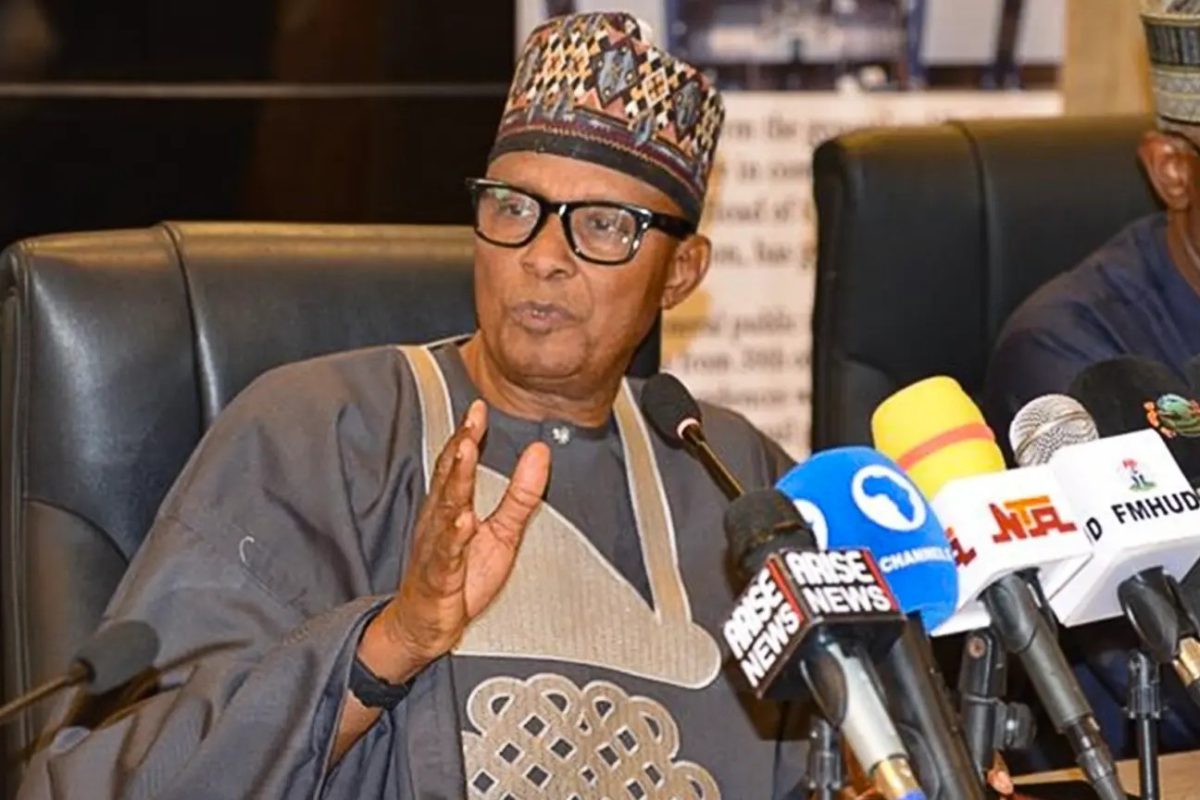
The Federal Government says it wants to increase mortgage delivery to 5,000 by 2028 and raise the maximum mortgage loan from ₦50 million to ₦85 million. Housing and Urban Development Minister Muttaqha Rabe Darma announced the targets at the 15th Meeting of the National Council on Lands, Housing and Urban Development in Sokoto on Wednesday.
The proposed expansion could widen access to homeownership. But it also presents a more difficult question for policymakers: will Nigeria build a mortgage system that ordinary workers can use, or one whose headline figures look impressive while most households remain excluded?
The answer will depend on more than a bigger loan ceiling. It will require affordable repayments, transparent management of the National Housing Fund (NHF), faster approvals, cheaper housing and credible arrangements for workers outside conventional salaried employment.
A bigger mortgage target, but is it enough?
Darma said the Federal Mortgage Bank of Nigeria (FMBN) is being directed to increase mortgage disbursements, with a target of channeling at least 70 per cent of the previous year’s NHF contributions into mortgages annually.
The government’s stated target is 2,000 mortgages in 2026, rising to 5,000 by 2028.
Darma described the reform as an attempt to close the gap between contributions workers make to the housing fund and the housing finance they receive in return.
“The proposed reforms are designed to strengthen the housing finance system, improve access to mortgage facilities and ensure that more Nigerian workers can benefit from their contributions to the National Housing Fund,” he said.
The challenge is the scale of Nigeria’s housing problem.
The Federal Ministry of Housing and Urban Development’s National Housing Data Initiative reported approximately 15.2 million structurally inadequate housing units as of 2025. That is a measure of inadequate homes, not a directly interchangeable count of households waiting for mortgages, but it illustrates the scale of the housing challenge.
The government itself has acknowledged uncertainty surrounding national housing estimates. In July, Darma said: “For twenty years we have quarrelled over whether the deficit is 15, 20 or 28 million units. No serious investor finances an argument.”
That admission makes reliable housing data central to the success of the new targets. The country needs to know how many homes are available, how many require repairs, what types of housing households need and what buyers can afford.
Even if FMBN meets the proposed target, mortgage disbursements alone cannot resolve the housing crisis. They must form part of a wider programme that increases the supply of genuinely affordable homes.
The ₦85m question: a larger loan is not necessarily an affordable home
The proposed increase in the maximum mortgage loan from ₦50 million to ₦85 million could give eligible applicants greater purchasing power, particularly where property prices have moved beyond the existing financing limit.
But a higher ceiling does not mean that every contributor can qualify for a larger loan or repay it comfortably.
FMBN’s published NHF mortgage terms currently describe financing at an interest rate of 6 per cent per annum for contributors, with repayment periods of up to 30 years. The bank’s published product page still lists a maximum loan of ₦50 million.
FMBN
An illustrative calculation shows why the repayment terms matter. An ₦85 million mortgage repaid over 30 years at 6 per cent would require monthly instalments of approximately ₦510,000, assuming a standard repayment structure. This estimate excludes insurance, transaction costs and other charges, and assumes the proposed ceiling would be available on those terms.
For households on modest salaries, that is a substantial financial commitment. The higher limit may serve applicants who can support such payments while doing little for workers whose incomes cannot sustain them.
The government must therefore explain not only how much people may borrow, but also the income requirements, equity contributions, interest rates and repayment conditions attached to the scheme.
There is also a question of policy clarity.
In July, Vanguard reported that the government had already raised the mortgage ceiling to ₦85 million. The October announcement, by contrast, describes the increase from ₦50 million to ₦85 million as a proposal tied to the 2028 target. FMBN’s published NHF product information continues to display the ₦50 million ceiling.
The reports do not establish whether the different figures reflect separate financing arrangements, a change in implementation timelines or inconsistent descriptions of the same policy. The ministry and FMBN should clarify when the new limit takes effect, which borrowers qualify and which financing products it covers.
Informal-sector workers could be the real test
One of the more consequential parts of the announcement is the plan to allocate between 30 and 40 per cent of mortgage bookings to informal-sector workers.
That group includes traders, artisans, transport operators, small-business owners and other self-employed Nigerians whose earnings may fluctuate from one month to another.
Many contribute to the economy without receiving regular payslips or having the formal employment records conventional lenders often rely on. They may also struggle to assemble documentation for land ownership, demonstrate consistent cash flow or meet initial equity requirements.
A quota could encourage lenders to serve these applicants. But a target on paper does not remove the barriers they face.
To make the proposal work, the government must specify how informal-sector eligibility will be assessed. Potential measures include recognising verified business income, working through cooperatives, improving access to contribution records and creating transparent routes for applicants to prove their ability to repay.
The government must also publish the number of informal-sector applications received, approved and rejected, along with reasons for rejection.
Without those details, officials could report that mortgage delivery is increasing without showing whether the workers most frequently excluded from housing finance are benefiting.
Workers need answers about their NHF contributions
The National Housing Fund is central to the government’s plans.
The scheme provides a framework through which eligible Nigerians contribute towards a pool intended to support housing finance. FMBN administers mortgage products for contributors, including loans for buying, building, improving or renovating homes.
The new directive to channel at least 70 per cent of the previous year’s contributions into mortgages raises an important accountability question: how will the public verify that the target is being met?
The government should publish annual figures showing total NHF contributions received, amounts disbursed through mortgages, outstanding loan applications, approval rates, repayment performance and the geographical distribution of beneficiaries.
Such disclosures would allow contributors to assess whether the fund is delivering meaningful access to housing finance.
They would also help identify bottlenecks. If funds are available but applications take too long to process, administrative reform may be needed. If applicants qualify for loans but cannot find homes within their budgets, the problem extends beyond mortgage administration to housing supply and construction costs.
The relevant question is not simply how much money the system collects. It is how effectively that money helps eligible Nigerians secure homes.
A new housing finance authority must deliver more than another institution
Darma also announced plans to establish a National Housing Finance Authority to improve coordination, regulation and accountability across the housing finance sector.
The proposal forms part of broader efforts to reform Nigeria’s mortgage industry. It should not be confused with an already operational authority: the government has previously described the new body as part of a proposed policy framework.
A new institution could help clarify responsibilities and strengthen oversight. But the government must explain its proposed powers, funding, governance arrangements and relationship with existing institutions, including FMBN.
Without a clear division of responsibility, a new authority could create more administrative layers without resolving the practical obstacles facing borrowers.
Nigeria already needs better housing data, stronger land administration, transparent property transactions and effective protection against fraud. The success of any new authority should be measured by improvements in those areas, not merely by its establishment.
There is also a lesson in the government’s own work on a National Mortgage Registry. FMBN announced in July that the registry’s application had been developed and was ready for deployment, while data collection, cleansing, validation and stakeholder engagement continued.
The registry could improve transparency and access to mortgage information. But its value will depend on whether it becomes a reliable, usable system that supports lenders, borrowers and regulators across the country.
Rwanda offers a model, but implementation matters
The housing minister cited Rwanda’s experience with institutional reform and mortgage refinancing as a possible guide for Nigeria.
The comparison is relevant because mortgage markets need more than demand from potential buyers. Lenders must also have access to funding suited to long-term loans, while developers need the finance and infrastructure required to build homes that target households can afford.
Rwanda’s housing finance programme has used long-term funding arrangements to support mortgage lending through participating financial institutions. The broader lesson is that expanding access requires coordinated action on finance, supply and affordability, rather than simply announcing a higher loan limit.
Nigeria’s government should therefore set out which elements of the Rwandan approach it intends to adopt, how it will fund them and what measurable outcomes it expects.
A credible reform programme would connect cheaper long-term finance with lower construction costs, more reliable property information and secure land registration. Without these changes, lenders may be reluctant to expand lending and developers may struggle to deliver homes at prices ordinary households can afford.
Housing supply cannot be separated from mortgage access
Governor Ahmad Aliyu Sokoto highlighted the state’s 500-unit Sokoto New City Housing Project and shelter for internally displaced people being implemented with United Nations support.
Those initiatives illustrate the importance of housing delivery for low-income and vulnerable households. But the supply of homes and the ability to finance their purchase must advance together.
At the National Council meeting, House Committee Chairman on Urban Development and Regional Planning Awaji-Inombek Abiante identified several measures that could improve affordability. They include single-digit interest loans, reviews of housing prices, more efficient land registration, stronger development control, a National Housing Identification Number and wider use of locally sourced building materials.
These recommendations address an important weakness in the housing market: a mortgage becomes less useful when the properties available to potential buyers are priced beyond their reach.
The government must therefore coordinate housing finance reforms with policies that reduce the cost and risk of producing homes. That includes addressing land documentation, infrastructure costs and regulatory delays that can make affordable housing difficult to deliver.
The figures that should determine whether the plan succeeds
The proposed reforms offer an opportunity to make homeownership more attainable. But success should be judged by results that borrowers can verify.
By 2028, the government should be able to show whether FMBN has met the stated mortgage targets, whether the required share of NHF contributions has been channelled into mortgages, and whether informal-sector workers have gained meaningful access.
It should also disclose loan approval times, repayment conditions, regional distribution, the cost of qualifying homes and the proportion of approved applicants who ultimately receive financing.
The proposed National Housing Finance Authority should be judged against similarly practical measures: clearer regulation, better data, stronger accountability and fewer barriers to homeownership.
The Federal Government has set out an ambition to expand mortgage delivery and increase the maximum loan. Now it must demonstrate how those commitments will translate into homes that Nigerians can afford.
For households trapped between rising housing costs and limited incomes, the real measure of success will not be the size of a mortgage ceiling. It will be whether the route from years of working and contributing to finally owning a home becomes realistic.



Join the debate; let’s know your opinion.