By Kalada Jumbo, National Correspondent
Introduction: A New Dawn in the Fight Against Oil Theft?
The Niger Delta, Nigeria’s oil-rich region, has long been a battleground for both legitimate and illegitimate actors vying for control of its vast resources. While multinational corporations pump billions of dollars of oil from the region, a parallel, shadowy industry has flourished—illegal oil bunkering. This illicit activity has not only robbed Nigeria of significant revenue but has also left a trail of environmental devastation in its wake.

In a bold move aimed at curbing this economic sabotage, the Nigerian Army, under the banner of Operation DELTA SAFE (OPDS), has launched a reinvigorated offensive against illegal oil bunkering operations in Rivers and Bayelsa states. This report examines the scope of the Army’s recent actions, the underlying challenges, and the potential ramifications for the Niger Delta and Nigeria at large.
The Scale of the Operation: Targeting the Heart of Illegal Activities
On August 7, 2024, the Nigerian Army announced the successful execution of a series of operations targeting illegal oil refining sites (IRS) in Rivers and Bayelsa states. These operations, carried out by the Land Component (LC) of the Joint Task Force (JTF), South South (SS), were part of a broader strategy to dismantle the intricate network of illegal bunkering that has plagued the Niger Delta for decades.
Rivers State: A Hotbed of Illicit Refineries
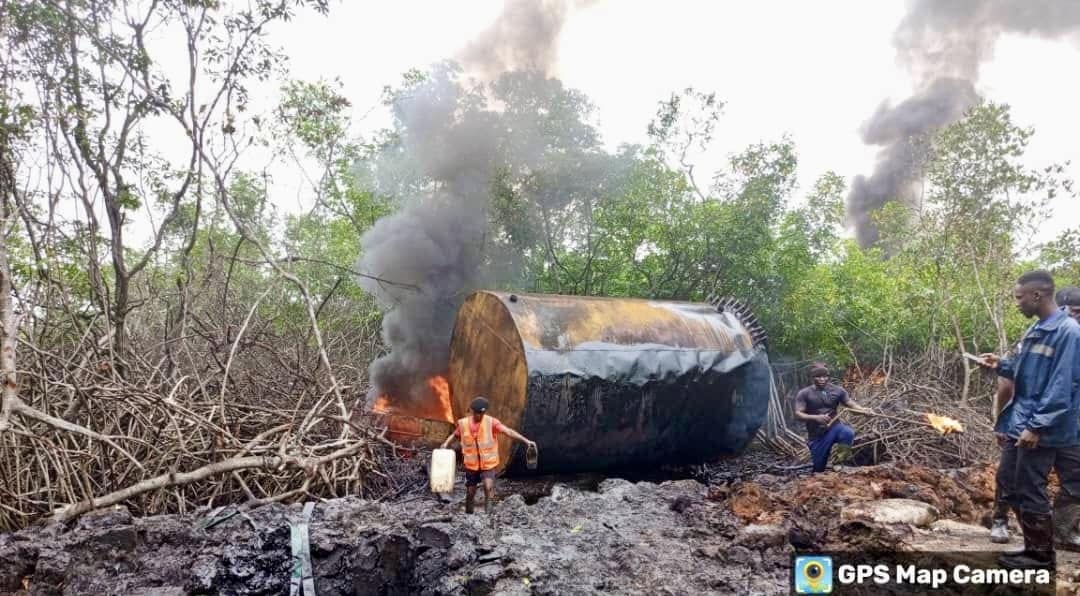
In Rivers State, the epicenter of much of Nigeria’s oil production, the Army’s Sector 3 troops made significant strides. Acting on credible intelligence, the troops identified and destroyed three illegal refining sites in Odagwa, located in the Etche Local Government Area. The operation led to the confiscation and subsequent destruction of over 30,000 liters of stolen and illegally refined oil products. This represents a significant blow to the clandestine operators who have long used the region’s difficult terrain to their advantage.
Further south, at the Akaso field and along the Cawthorne Channel, the troops uncovered a massive illegal refining site complete with three receivers and a network of connecting pipes used to transport stolen crude oil. The scale of this discovery highlights the industrial-level operations of these criminal elements, who have turned oil theft into a sophisticated enterprise.
Bayelsa State: A Persistent Challenge
In neighboring Bayelsa State, troops from Sector 2 of the JTF continued their routine patrols through the creeks, waterways, and rivulets—a labyrinthine network that provides cover for illegal activities. Their efforts were rewarded with the discovery of over 12,000 liters of stolen and illegally refined oil products in the Dasaba Creek area of Nembe Local Government Area. Alongside the confiscated oil, the troops seized one fiber boat, five ovens, several metal drums, and large reservoirs, all used in the illicit refining process.
The scale and frequency of these discoveries underscore the pervasive nature of illegal bunkering in Bayelsa State, a region long known for its volatility and resistance to state authority.
The Impact of Illegal Bunkering: Economic and Environmental Devastation
Illegal oil bunkering is not just an economic crime—it is an act of economic sabotage with far-reaching consequences for Nigeria’s economy and environment. The Niger Delta, once known for its rich biodiversity, has been transformed into a wasteland in many areas, with oil spills from illegal refining operations contaminating the land, water, and air.
Economic Consequences: Billions Lost
Nigeria, Africa’s largest oil producer, has seen its oil production steadily decline due in part to the activities of illegal bunkerers. It is estimated that Nigeria loses between 150,000 and 200,000 barrels of oil per day to theft, costing the country billions of dollars annually. This loss of revenue not only affects the national budget but also undermines the government’s ability to fund critical infrastructure and social services.
The Nigerian Army’s operations against illegal bunkering are thus not just a military endeavor but a crucial component of the country’s economic strategy. By cracking down on these criminal activities, the Army aims to restore integrity to Nigeria’s oil infrastructure and boost production levels, thereby increasing national revenue.
Environmental Fallout: The Niger Delta in Crisis
The environmental impact of illegal oil refining cannot be overstated. The process involves crude methods that result in significant oil spills and the release of toxic chemicals into the environment. The Niger Delta’s rivers, once teeming with life, are now choked with oil, and the air is thick with the acrid smoke of burning crude.
Communities in the region have long suffered the consequences, with increased rates of respiratory illnesses, cancers, and other health problems linked to environmental pollution. The destruction of local ecosystems has also decimated the livelihoods of fishermen and farmers, leading to widespread poverty and social unrest.
The Nigerian Army’s destruction of illegal refining sites is a critical step towards mitigating this environmental disaster. However, the scale of the damage already done will require a concerted effort involving environmental remediation and the provision of alternative livelihoods for those who have turned to illegal bunkering out of desperation.
The Challenges of Combatting Illegal Bunkering: A Multi-Faceted Problem
While the Nigerian Army’s recent successes are commendable, the fight against illegal oil bunkering is far from over. The problem is deeply entrenched, with numerous factors contributing to its persistence.
Corruption and Complicity: The Elephant in the Room
One of the biggest challenges in combatting illegal oil bunkering is corruption within the security forces and government agencies. There have been numerous reports of security personnel colluding with bunkerers, providing protection in exchange for a share of the profits. This complicity has allowed the illegal oil trade to flourish, despite the government’s efforts to stamp it out.
The Nigerian Army’s leadership has repeatedly stressed the importance of integrity and professionalism among its ranks. Major General Jamal Abdussalam, the General Officer Commanding the 6th Division and Land Component Commander, has charged his troops to redouble their efforts in denying criminal elements the freedom to operate. However, without a concerted effort to root out corruption within the ranks, the impact of military operations will be limited.
The Socio-Economic Dimension: Poverty and Unemployment
The socio-economic conditions in the Niger Delta are a major driver of illegal oil bunkering. Widespread poverty, unemployment, and lack of opportunities have led many young people to turn to illegal activities as a means of survival. For some, the risks associated with bunkering are outweighed by the potential financial rewards.
To address this, there must be a comprehensive approach that includes economic development initiatives, job creation, and education. The government and private sector must work together to provide viable alternatives for the youth of the Niger Delta, ensuring that they have opportunities to build a better future without resorting to illegal activities.
The Role of Technology: Enhancing Surveillance and Security
Given the difficult terrain of the Niger Delta, traditional methods of surveillance and enforcement are often inadequate. The use of technology, such as drones, satellite imagery, and advanced surveillance systems, could play a crucial role in identifying and targeting illegal refining sites more effectively.
The Nigerian Army has begun to incorporate some of these technologies into its operations, but there is still a long way to go. Greater investment in technological solutions could enhance the effectiveness of Operation DELTA SAFE and other security initiatives in the region.
The Broader Implications: What Does This Mean for Nigeria?
The Nigerian Army’s crackdown on illegal oil bunkering has broader implications for the country as a whole. Success in this fight could lead to increased oil production, higher government revenues, and improved environmental conditions in the Niger Delta. However, failure to effectively address the issue could result in continued economic losses, environmental degradation, and social unrest.
Strengthening National Security
The fight against illegal oil bunkering is also a fight for national security. The revenues generated from oil theft have been linked to funding for militant groups and other criminal organizations. By disrupting these operations, the Nigerian Army is also disrupting the financial networks that support violence and instability in the region.
Enhancing Nigeria’s Global Standing
Nigeria’s reputation on the global stage is closely tied to its ability to manage its resources effectively and sustainably. The successful crackdown on illegal bunkering could improve Nigeria’s standing with international partners and investors, who are concerned about the country’s ability to secure its oil infrastructure and ensure stable production levels.
Conclusion: A Step Forward, But the Journey Continues
The Nigerian Army’s recent operations against illegal oil bunkering in Rivers and Bayelsa states represent a significant step forward in the fight against economic sabotage and environmental destruction. However, this is just one battle in a much larger war. To achieve lasting success, there must be a sustained effort that addresses not only the criminal activities themselves but also the underlying socio-economic conditions that drive them.
Major General Jamal Abdussalam’s call for renewed vigor and commitment from the troops is a timely reminder of the challenges that lie ahead. The fight against illegal oil bunkering is not just a military endeavor—it is a national imperative that requires the support and cooperation of all stakeholders, from government officials to local communities.
As the Nigerian Army continues its mission under Operation DELTA SAFE, the eyes of the nation—and indeed the world—will be watching. The stakes are high, but so too is the potential reward: a Niger Delta free from the scourge of illegal oil bunkering, where economic growth and environmental sustainability can go hand in hand.