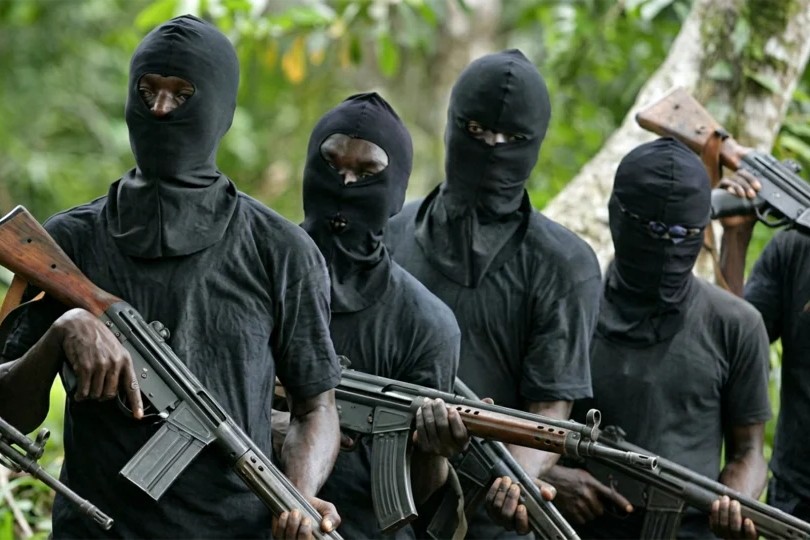
The Nigerian Air Force executed a significant airstrike in Katsina, neutralising over 20 bandits linked to Gero and Alhaji Riga. While this operation represents a military success against banditry, it contrasts with the government’s dismissal of systematic violence against Christian communities. Critics urge for a transparent strategy addressing all forms of violence in Nigeria.
Airstrikes in Katsina: A Decisive Blow to Nigeria’s Banditry Amid a Nation in Crisis
KATSINA, Nigeria — In a bold and dramatic display of military precision, the Nigerian Air Force (NAF) has struck a devastating blow against entrenched bandit networks in Katsina State.
Early on Thursday 13 March, 2025, operatives under Operation Fansan Yamma executed a precision airstrike in the Unguwar Goga Hillforest area of Ruwan Godiya Ward, Faskari Local Government Area, decimating fortified hideouts belonging to notorious bandit kingpins Gero (Alhaji) and Alhaji Riga.
According to Group Captain Kabiru Ali, Deputy Director of Public Relations and Information for the NAF, the operation neutralised over 20 bandits—with additional casualties reported amongst the criminals sheltering in the surrounding rocky hills.
This latest operation, which has been hailed by security analysts as a “decisive impact” on criminal activities in the region, marks a major breakthrough in the Nigerian military’s ongoing campaign to restore peace to the North-West.
The targeted strikes not only dismantle key operational bases of these criminal elements but also disrupt the logistics networks that enable banditry along critical routes such as the Funtua-Gusau Road, where ambushes have long plagued local communities between Yankara and Sheme villages.
Yet, while the airstrikes offer a glimmer of hope in the battle against banditry, they also starkly contrast with the government’s persistent denial of more insidious violence elsewhere.
Just yesterday, a damning Atlantic Post report—headlined “Nigeria’s Brutal ‘Religious Cleansing’ Exposed Amid Govt Denial”—detailed how insurgent elements, particularly militant Fulani herdsmen, have systematically targeted Christian communities.
Despite official statements dismissing these as random acts of banditry, survivors and independent human rights groups have documented a pattern of deliberate, faith-based aggression that has led to the destruction of villages, mass displacement, and, tragically, numerous fatalities.
The airstrike in Katsina, therefore, stands as a vivid reminder of the dual reality confronting Nigeria.
On one hand, the state’s military apparatus demonstrates its capacity for precise, lethal intervention against hardened criminals.
On the other, the same government insists that allegations of targeted religious persecution are nothing more than “misinformation” designed to attract unwarranted international sanctions.
This stark dichotomy raises critical questions about the government’s commitment to addressing the full spectrum of Nigeria’s security challenges.
For decades, Katsina and other northwestern states have been riddled with lawlessness, where banditry has thrived on the fringes of governance.
Bandit networks, such as those led by Gero and Alhaji Riga, have not only engaged in indiscriminate violence but have also provided safe havens for terrorist elements.
These criminal groups have been instrumental in orchestrating deadly ambushes and attacks that have destabilised the region.
Their elimination in Katsina is a welcome, albeit isolated, success for the military.
It serves as tangible evidence that when provided with actionable intelligence and the necessary resources, Nigeria’s security forces can deliver swift justice to those who wreak havoc on local communities.
However, as Group Captain Ali noted, a full assessment of the damage is still underway. The operation’s aftermath remains a subject of intense scrutiny among security analysts and human rights advocates alike.
While the targeted airstrikes have disrupted the operational capabilities of the bandit kingpins, the broader landscape of Nigeria’s security challenges remains deeply fractured.
In regions such as the Middle Belt, where, as previously reported, Christian communities are systematically being cleansed through targeted attacks, the government’s narrative of indiscriminate violence appears increasingly hollow.
Critics argue that the success of the Katsina operation should serve as a catalyst for a more comprehensive and transparent strategy against all forms of insurgency and banditry.
The juxtaposition between the effective airstrikes in Katsina and the government’s ongoing denial of religious cleansing in Christian villages exposes a fundamental inconsistency.
While the military can execute high-impact operations that neutralise violent criminals, the political establishment seems unwilling—or perhaps unable—to confront the evidence of deliberate, faith-based persecution.
This disconnect not only undermines national security but also jeopardises Nigeria’s international standing, particularly as the US House Foreign Affairs Subcommittee has already threatened sanctions over the country’s failure to protect its Christian citizens.
As Nigeria continues to grapple with a maelstrom of violence and insecurity, the recent airstrikes in Katsina provide a rare moment of clarity and decisive action.
Yet they also underline a troubling reality: successful military interventions in one region cannot compensate for systemic governmental inaction elsewhere.
The same forces that have delivered a “devastating blow” to banditry in Katsina must now be mobilised to address the rampant violence in the Middle Belt—a region where indigenous Christian communities are increasingly under siege.
The dual narratives of military prowess and official denial contribute to a complex and dangerous security landscape in Nigeria.
With banditry and insurgency evolving alongside targeted religious violence, the nation stands at a crossroads.
For the sake of national unity and international credibility, it is imperative that the government embrace transparency and take decisive steps to protect all citizens, regardless of faith.
Failure to do so risks not only the lives and livelihoods of millions but also the stability of the entire nation.
In these turbulent times, the eyes of the world remain fixed on Nigeria—a nation of superlatives now defined by its contradictions and its capacity for both heroic military action and systemic neglect.
The time for half-measures is over; comprehensive, inclusive security reforms are urgently needed to stem the tide of violence and restore hope to a divided people.
- Additional report from Suleiman Adamu, Atlantic Post Senior National Security Correspondent