Editor
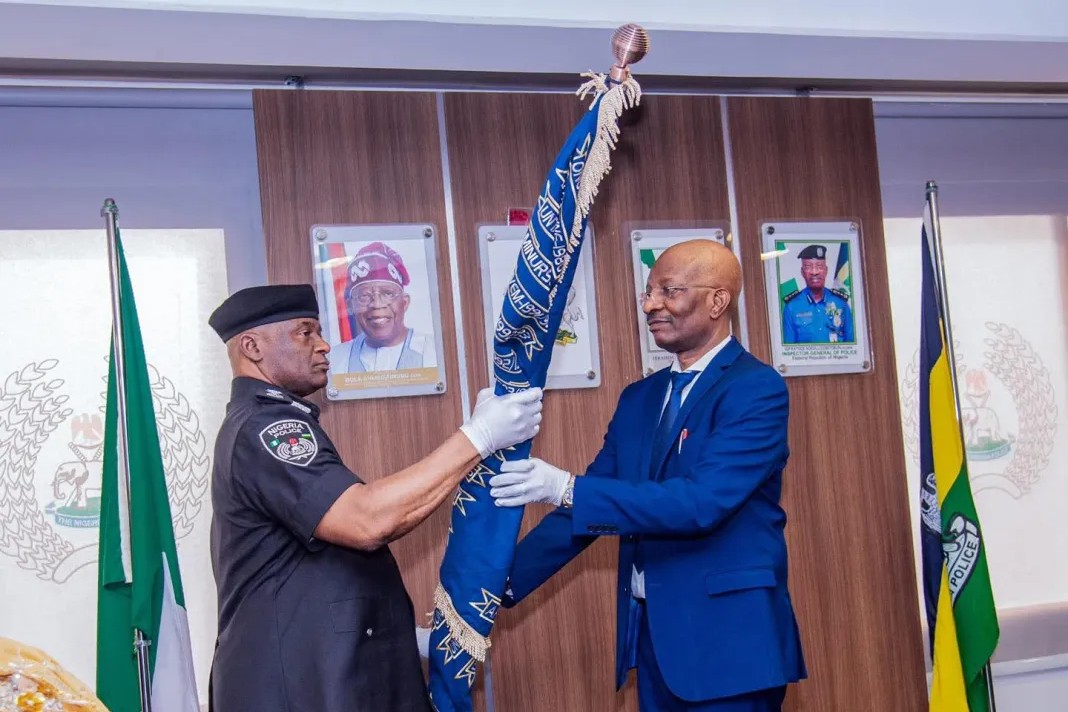
In a move that has sent shockwaves across the nation, the Federal Government of Nigeria has announced a significant increase in passport fees, a decision that has ignited widespread outrage and deepened the already growing mistrust between the Nigerian populace and its government. Effective from September 1, 2024, the new fees, as revealed by the Nigeria Immigration Service (NIS) spokesman Kenneth Udo, will see the cost of obtaining a 32-page passport booklet with a five-year validity rise from N35,000 to N50,000. Similarly, the fee for a 64-page passport booklet with a ten-year validity will jump from N70,000 to a staggering N100,000.

This sudden increment, which the government justifies as a necessary step to “maintain the quality and integrity of the Nigerian Standard Passport,” has been met with a mixture of disbelief, anger, and despair by Nigerians. The timing of the announcement, coming at a period when the nation grapples with economic hardship, has only served to amplify the concerns of a populace already struggling to make ends meet.
A People Under Siege: The Economic Reality of Nigerian Families
For the average Nigerian, this hike in passport fees is not just a mere policy change; it is a direct assault on their already fragile financial stability. With a minimum wage that remains stagnant at N70,000, the question on everyone’s lips is simple: How does the government expect ordinary Nigerians to afford these new fees?
Temitope Adewale, a community organiser in Lagos, the Nigerian Indigenous Nationalities Alliance for Self-determination (NINAS) did not mince words in reaction to the government’s decision. He painted a grim picture of the economic reality faced by many Nigerian families. His response highlighted the struggle of a typical family man, earning the national minimum wage, who now faces the daunting task of saving N50,000 for each family member’s passport—a scenario that would take years to accomplish, assuming that the cost of living remains constant (a highly unlikely prospect in Nigeria’s volatile economy).
His response is not just an emotional appeal; it is a clarion call to action. Drawing on the philosophy of John Locke, invoked the “right to revolution,” a concept rooted in the idea that it is the duty of the people to rise against a government that has become their enemy. For Adewale, the passport fee hike is a clear indication that the Nigerian government, under the guise of preserving “quality and integrity,” is waging a war against its citizens, effectively turning them into economic slaves.
The Passport Fee Hike: A Symptom of a Larger Malaise
To understand the full implications of this passport fee hike, one must first grasp the broader socio-political and economic context in which it is taking place. Nigeria, Africa’s most populous nation, has been grappling with a myriad of challenges ranging from corruption and mismanagement of resources to a declining economy and worsening security situation. In recent years, the government’s inability to address these issues has led to a growing sense of disenchantment and frustration among the populace.
The passport fee hike is just the latest in a series of decisions that have deepened the disconnect between the government and the people it is supposed to serve. For many Nigerians, this decision is yet another indication that the government is out of touch with the reality on the ground—a government more concerned with generating revenue than alleviating the suffering of its citizens.
Temitope Adewale’s Call for Revolution: A Catalyst for Change?
Temitope Adewale’s reaction to the passport fee hike is significant not only because of his role as a community organiser and activist, but also because it taps into a deep well of discontent that has been brewing for years. His call for Nigerians to reject the “illegitimate” 1999 Constitution and embrace the NINAS Proposition of Transitioning for Constitutional Reconstruction is a bold and radical move. It is a call for a nonviolent revolution, one that seeks to overhaul the very foundation of Nigeria’s political system.
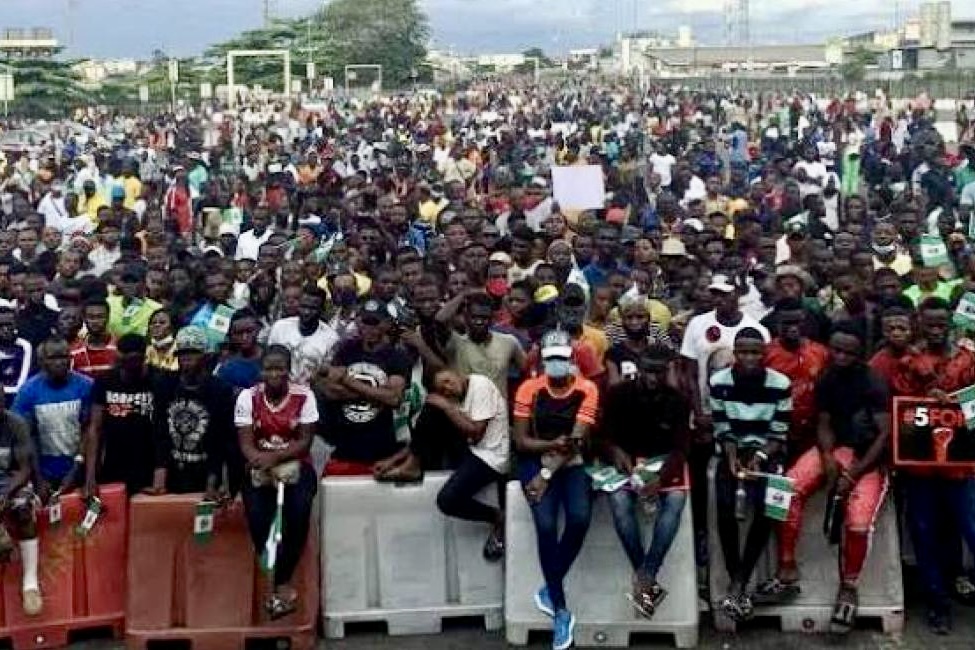
But can Adewale’s’s call for nonviolent revolution resonate with the wider Nigerian populace? To answer this question, we must consider the current state of Nigerian society. The last decade has seen a series of protests and movements, from the #EndSARS campaign against police brutality to ongoing agitations for restructuring and self-determination by various ethnic groups. These movements, though varied in their objectives, share a common thread: a demand for justice, accountability, and a government that truly serves the people.
Adewale’s call for a nonviolent revolution is, therefore, not an isolated incident. It is part of a larger narrative of resistance and demand for change that has been steadily gaining momentum. However, the success of such a movement depends on several factors, including the ability of its leaders to galvanise support across the diverse and often fragmented Nigerian society.
The Government’s Justification: Quality Over Quantity?
In defending the passport fee hike, the Federal Government has argued that the increase is necessary to maintain the quality and integrity of the Nigerian Standard Passport. This argument, however, raises more questions than it answers. What exactly is the government doing to improve the quality of the passport? How will the additional revenue generated from this fee hike be used? Will it go towards improving the efficiency and transparency of the Nigeria Immigration Service, or will it simply disappear into the black hole of government coffers, as has been the case with so many other public funds?
Moreover, the government’s emphasis on “quality and integrity” seems disingenuous when one considers the broader context of governance in Nigeria. For a government that has consistently failed to provide basic services such as electricity, healthcare, and education, the notion that it is suddenly concerned with the quality of passports rings hollow. Nigerians are all too familiar with the rhetoric of good intentions that often precedes policies that ultimately benefit only a select few.
The Broader Implications: A Tipping Point for Nigeria?
The passport fee hike, while significant in its own right, is perhaps more important for what it represents: a tipping point in the relationship between the Nigerian government and its citizens. For years, Nigerians have endured a series of economic policies that have eroded their purchasing power and diminished their quality of life. From the removal of fuel subsidies to the devaluation of the Naira, each new policy has further strained the already tenuous social contract between the government and the people.
This latest decision may well be the straw that breaks the camel’s back. The outrage that has greeted the fee hike is a clear indication that Nigerians are nearing the end of their patience. The question now is whether this discontent will translate into concrete action. Will Nigerians heed Adewale’s call for revolution, or will the government succeed in quelling the dissent through a combination of repression and empty promises?
The Role of NINAS and the Quest for Self-Determination
At the heart of Temitope’s reaction to the passport fee hike is the broader agenda of the Nigerian Indigenous Nationalities Alliance for Self-determination (NINAS). For years, NINAS has been advocating for the rights of Nigeria’s various ethnic nationalities, arguing that the current political structure, as enshrined in the 1999 Constitution, is fundamentally flawed and biased against the majority of the country’s indigenous peoples.
NINAS’s proposition for transitioning to a new constitution is based on the principle of self-determination—a principle that is enshrined in international law and recognised by various human rights organisations. For NINAS, the passport fee hike is just one of many examples of how the Nigerian state has failed to protect the interests of its citizens, particularly those from marginalised communities.
The organisation’s call for constitutional reconstruction is therefore not just a response to the passport fee hike; it is a broader critique of the Nigerian state and its failure to deliver on the promises of democracy and development. Whether or not this call will resonate with the wider Nigerian populace remains to be seen. However, one thing is clear: NINAS is positioning itself as a key player in the ongoing struggle for a more just and equitable Nigeria.
The Way Forward: Possible Outcomes and Scenarios
As the September 1 deadline for the implementation of the new passport fees approaches, several scenarios could unfold. The first and most likely scenario is that the government will proceed with the fee hike despite the public outcry. In this case, we can expect to see an increase in the number of Nigerians seeking alternative means of obtaining passports, including bribery and corruption within the NIS. This would only serve to undermine the government’s stated goal of maintaining the integrity of the Nigerian Standard Passport.
A second scenario is that the government, in response to mounting pressure, could decide to review or suspend the fee hike. This would be a rare but not unprecedented move. In the past, the Nigerian government has reversed or modified policies in the face of public opposition, particularly when such policies threaten to destabilise the country. However, such a reversal would require a significant shift in the government’s current approach to governance—one that prioritises the needs and concerns of the people over the desire to generate revenue.
A third and more radical scenario is the one advocated by Temitope Adewale and NINAS: a popular uprising leading to the rejection of the 1999 Constitution and the adoption of a new political structure based on self-determination. While this scenario may seem far-fetched to some, it is not entirely out of the realm of possibility. Nigeria is a nation with a long history of resistance and revolutionary movements, from the anti-colonial struggles of the 20th century to the more recent #EndSARS and #EndBadGovernance protests. If the passport fee hike becomes the catalyst for a broader movement for constitutional change, it could mark a significant turning point in Nigeria’s history.
However, the success of such a movement would depend on several factors. First, it would require widespread support from across Nigeria’s diverse ethnic and religious communities. This is no small feat in a country where divisions run deep, and where the government has often exploited these divisions to maintain its grip on power. Second, it would require strong leadership capable of articulating a clear and compelling vision for a new Nigeria—leadership that can unite the various strands of discontent into a cohesive and effective movement.
Economic Implications: Who Bears the Brunt?
Beyond the political implications, the economic impact of the passport fee hike cannot be ignored. For many Nigerians, the increase represents a significant financial burden, one that could have ripple effects across the economy. The most immediate impact will be felt by those in the diaspora and frequent travellers, who will now have to pay substantially more to renew their passports. This could lead to a decrease in the number of Nigerians traveling abroad, which in turn could affect industries such as tourism, international trade, and remittances.
The hike could also have a disproportionate impact on low-income Nigerians, particularly those in rural areas who may already struggle to afford basic necessities. For these individuals, the prospect of having to pay N50,000 or N100,000 for a passport may be simply out of reach, effectively cutting them off from the opportunities that international travel can provide. This could exacerbate existing inequalities and further entrench the divide between the wealthy and the poor in Nigeria.
Moreover, the fee hike could also lead to an increase in illegal migration as more Nigerians seek alternative ways to leave the country. The combination of economic hardship and the high cost of obtaining a passport could push some to take the risk of traveling without proper documentation, potentially leading to a rise in human trafficking and other forms of exploitation.
The Government’s Response: Containment or Concession?
In the face of mounting criticism, how will the government respond? Historically, the Nigerian government has often taken a hardline approach to dissent, using the security forces to suppress protests and silence critics. However, this approach has not always been successful and has sometimes backfired, leading to even greater unrest.
Given the widespread anger over the passport fee hike, the government may be tempted to resort to similar tactics. However, doing so could be a dangerous gamble, especially at a time when public trust in the government is already at an all-time low. A heavy-handed response could provoke further protests and potentially lead to a larger and more sustained movement against the government.
Alternatively, the government could choose to adopt a more conciliatory approach, engaging with critics and seeking to address their concerns. This could involve rolling back the fee hike or offering subsidies or exemptions for low-income Nigerians. Such a move could help to defuse tensions and restore some measure of trust between the government and the people. However, it would also require the government to admit that it made a mistake—a difficult step for an administration that has often been reluctant to acknowledge its failings.
The Role of Civil Society and the Media
As the debate over the passport fee hike continues, civil society organisations and the media will play a crucial role in shaping public opinion and influencing the outcome of the controversy. In recent years, Nigeria has seen a resurgence of civil society activism, with groups such as NINAS, the Coalition for Revolution (CORE), and the Feminist Coalition leading the charge on various issues, from police brutality to gender equality.
These groups have the potential to amplify the voices of those most affected by the passport fee hike and to hold the government accountable for its actions. Through protests, public statements, and legal challenges, they can help to keep the issue in the public eye and pressure the government to respond.
The media, too, has a vital role to play. In a country where access to information is often limited, the media can help to inform and educate the public about the implications of the passport fee hike and the broader issues at stake. However, this will require a level of independence and courage that is often lacking in Nigeria’s media landscape, where many outlets are either state-controlled or beholden to powerful interests.
International Reactions: Watching Nigeria’s Next Move
The passport fee hike and the ensuing controversy have not gone unnoticed by the international community. Nigeria, as Africa’s largest economy and most populous nation, is a key player on the continent and in global affairs. As such, decisions made by the Nigerian government often have implications beyond its borders.
International human rights organisations, such as Amnesty International and Human Rights Watch, are likely to express concern over the potential impact of the fee hike on Nigeria’s most vulnerable populations. These organisations would typically call on the Nigerian government to reconsider its decision and to ensure that any changes to passport fees do not disproportionately affect low-income citizens.
In addition, Nigeria’s international partners, including the United States, the United Kingdom, and the European Union, are likely to be closely monitoring the situation. These countries have a vested interest in Nigeria’s stability and prosperity and may be concerned about the potential for unrest if the government fails to address the growing discontent.
Conclusion: A Defining Moment for Nigeria?
The Federal Government’s decision to hike passport fees has sparked a firestorm of controversy, touching on some of the most pressing issues facing Nigeria today—economic inequality, government accountability, and the legitimacy of the current political system. As the September 1 deadline approaches, the government finds itself at a crossroads: it can either press ahead with the fee hike and risk further alienating the populace, or it can choose to listen to the concerns of Nigerians and take steps to address their grievances.
For Temitope and NINAS, the passport fee hike is more than just an economic issue; it is a symbol of the broader struggle for justice and self-determination in Nigeria. Their call for a non-violent revolution and constitutional reconstruction represents a bold challenge to the status quo and a vision for a new Nigeria—one that is more equitable, more just, and more responsive to the needs of its people.
Whether or not this vision becomes a reality will depend on the actions of Nigerians in the coming weeks and months. Will they rise to the challenge and demand change, or will the government succeed in quelling the dissent? The answer to this question could determine the future direction of Nigeria for years to come.
Final Thoughts: The Need for Vigilance and Advocacy
In the face of such a pivotal moment, it is imperative that Nigerians remain vigilant and continue to advocate for their rights. The passport fee hike is not an isolated incident; it is part of a broader pattern of policies that have consistently prioritised the interests of the elite over those of the ordinary citizen. As such, it is essential that Nigerians continue to push for greater transparency, accountability, and fairness in the way their country is governed.
This will require sustained pressure on the government, not only from civil society organisations and the media but also from ordinary citizens who are willing to speak out and demand change. It will also require a willingness to engage in dialogue and negotiation, recognising that lasting change can only come through collective action and mutual understanding.
As Nigeria navigates this critical juncture, the eyes of the world are watching. The decisions made in the coming days will not only shape the future of the nation but will also send a message to the rest of the world about the strength and resilience of the Nigerian people. Whether through protest, advocacy, or dialogue, Nigerians have the power to shape their destiny—and the time to act is now.
An Atlantic Post Editorial