Police say 53-year-old politician was found bleeding at his Odenigbo residence with deep suspected machete wounds as fresh questions emerge over security in Enugu ahead of the September 26 council elections
By Atlantic Post Staff Correspondent
The killing of a prominent All Progressives Congress politician in Nsukka has raised fresh security concerns in Enugu State, coming just days after armed hoodlums disrupted political activities in another part of the state.
Prince Ikechukwu Oloto, popularly known as “Okanga Mo”, was found in a pool of blood inside his residence at Odenigbo, Nsukka, on Thursday, September 17, 2026.
The Enugu State Police Command confirmed his murder on Friday, saying operatives who responded to a report found the 53-year-old politician suffering from deep suspected machete cuts to his head and stomach.
Police said he was taken to hospital, where a doctor confirmed him dead.
His remains were deposited at a mortuary pending preservation and autopsy, while detectives launched a manhunt for the attacker or attackers.
Police spokesman SP Daniel Ndukwe said: “Investigation is ongoing to unravel the circumstances surrounding the murder of Ikechukwu Oloto.”
He said the command received the report at about 5:45pm on September 17 and immediately deployed operatives to the scene.
The police account is significantly more precise than the unverified versions that circulated online shortly after the killing.
A social media influencer, Sen Chijinkem Ugwuanyi, said Oloto had been killed by unknown gunmen at his residence and alleged that he had been “brutally cut into pieces”.
That claim has not been independently established. The police have confirmed deep suspected machete wounds but have not publicly said who carried out the attack, what weapon was definitively used, or what may have motivated the killing.
A Political Figure With Deep Roots in Enugu APC
Oloto was a longstanding figure in the Enugu APC and had occupied senior positions in the party over the years.
A 2017 report identified him as the party’s state youth leader.
In 2018, during another deeply disputed APC congress in Enugu, one faction elected Oloto as state secretary. The congress itself was disrupted by violence and competing claims over delegate representation, illustrating the long-running internal struggles that have periodically shaped the party in the state.
His political significance therefore predates the arrival of Governor Peter Mbah and a large bloc of former Peoples Democratic Party politicians into the APC.
That history matters because the Enugu APC underwent another major restructuring after Mbah defected from the PDP to the ruling party in October 2025.
The APC National Working Committee dissolved the existing Enugu State executive and appointed a seven-member caretaker committee headed by former state chairman Ben Nwoye.
The reorganisation immediately created tension among different political blocs inside the enlarged party.
Longstanding APC members subsequently complained that the emerging structure gave former PDP members too much influence.
The 60-40 Dispute
That disagreement became particularly visible during the APC local government congresses in February 2026.
Contemporaneous reports said aggrieved members complained that a reported 60-40 power-sharing arrangement had not been respected.
Under the arrangement described by the affected members, 17 of the 26 ward executive positions were to go to members of the former PDP bloc, while old APC members and Labour Party defectors were to share the remaining nine positions.
At local government level, 17 of the 28 executive positions were reportedly allocated to the former PDP bloc, leaving 11 for old APC members and Labour Party defectors.
Aggrieved members alleged that the arrangement was breached in several local government areas, including Enugu South, Oji River and Igbo-Eze North. Those allegations were reported at the time but remain claims by the affected party members, rather than an independently established finding that the congresses were unlawfully conducted.
Against that background, Oloto represented part of the older APC political establishment that had existed in Enugu before the arrival of the governor and his political structure.
There is no evidence presently available to establish that the internal party disputes had anything to do with his death.
That distinction is crucial.
The murder investigation is still at an early stage.
The Security Questions Around the Killing
The circumstances described by police point to a violent attack inside Oloto’s private residence.
Yet several key questions remain unanswered.
Who entered the residence?
Was Oloto attacked by one person or several?
Was the attacker known to him?
Were there witnesses?
Were security cameras available around the residence?
Was anything stolen?
Did the attacker leave by road or on foot?
And, most importantly, was the killing connected to a personal dispute, criminal activity, political rivalry or another motive entirely?
The police have not publicly answered those questions.
The autopsy may establish the exact cause and timing of death and could provide investigators with further evidence about the weapon and nature of the attack.
For now, the police position remains that a murder occurred and that the assailant or assailants are being pursued.
A Second Violent Incident in Six Days
Oloto’s killing has also drawn attention because it came only five days after two separate political gatherings were disrupted in Nkanu West Local Government Area.
On September 12, armed hoodlums allegedly stormed an NDC ward meeting at Ndiuno-Obuoffia and opened sporadic gunfire.
The Enugu police command said two people were injured.
At a separate location at St Joseph Primary School, Agbani, hoodlums allegedly destroyed canopies and chairs prepared for a Peoples Democratic Party rally.
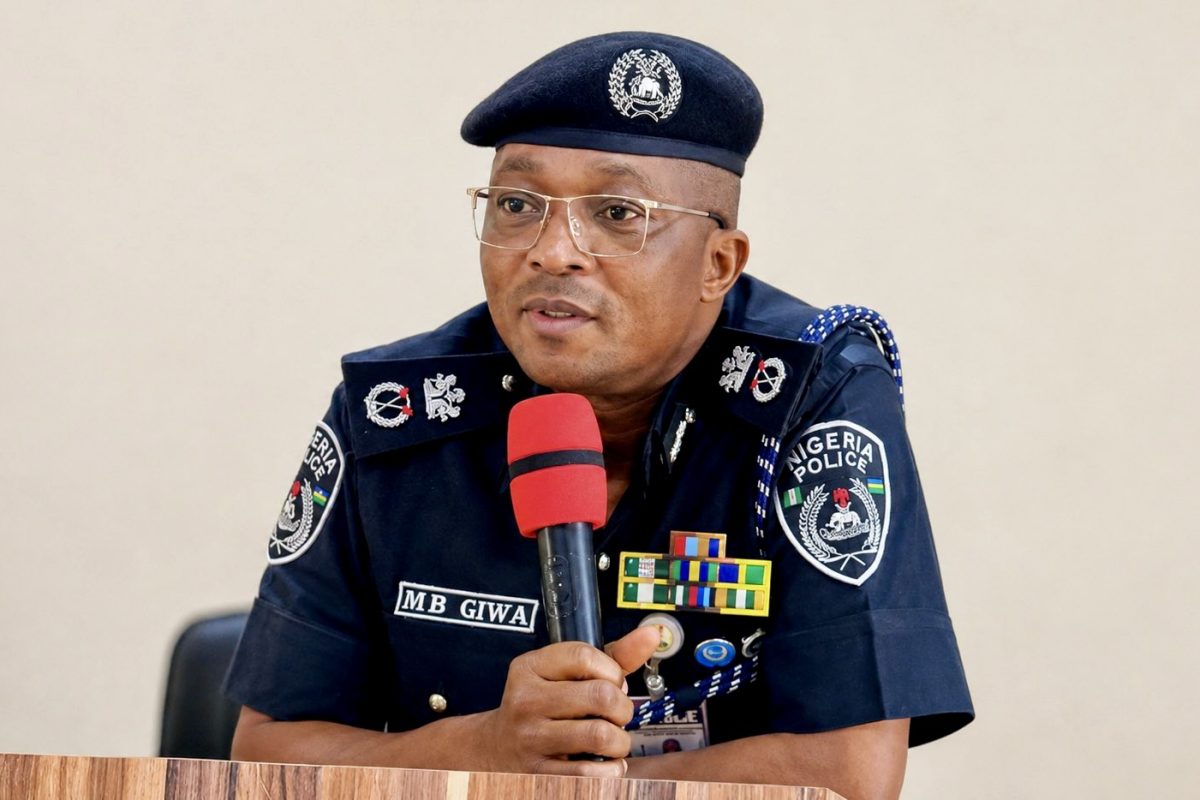
The incidents prompted Commissioner of Police Mamman Bitrus Giwa to direct the State Criminal Investigation Department to investigate and identify those responsible.
Police did not publicly identify the attackers or establish their political affiliation.
The NDC later said eight of its members sustained gunshot injuries and released their names, a figure higher than the two injuries contained in the police account.
That difference is significant.
It demonstrates why politically sensitive incidents in Enugu require evidence from investigators rather than social media accounts or partisan statements.
The APC has denied allegations linking the party, its leadership or Mbah’s administration to the Nkanu West violence.
The party described the allegations as “misleading, unsubstantiated and politically motivated” and called for a transparent investigation.
It also said anyone found culpable should be prosecuted regardless of political affiliation.
No public investigation has established that the APC sponsored those attacks.
Equally, there is no public evidence linking the APC or the state government to Oloto’s murder.
Why the Timing Matters
Enugu is approaching a major political milestone.
The Enugu State Independent Electoral Commission has scheduled local government elections for Saturday, September 26, 2026, across the state’s 17 local government areas.
The commission has said preparations are more than 90 per cent complete. The elections will determine chairmen and councillors across the state.
The timing places additional pressure on security agencies.
Oloto was murdered on September 17.
The local government elections are nine days later.
That does not establish a connection between the killing and the election.
But it does mean investigators and political leaders will face intense public scrutiny over whether the killing was an isolated criminal act or part of a broader pattern of insecurity.
The distinction can only be established through evidence.
Enugu’s Recent Electoral Warning Signs
The state has already experienced disputes over the conduct of political activities this year.
During the June 20 Enugu North Senatorial District by-election, PDP candidate Nestor Ezeme alleged violence, voter suppression and delayed deployment of election materials in parts of the district.
Opposition claims were contested. Other observers and political actors described the exercise differently, with the Coalition of Registered Political Parties describing the election as largely peaceful while rejecting allegations of widespread manipulation.
APC candidate Peter Nwawuba Asogwa was declared the winner, while opposition parties rejected the result and alleged irregularities. Those allegations remain claims by political opponents and were not established as fact by the available reports.
The more immediate concern now is that violence has again entered the political conversation just days before the local government elections.
The Investigation Must Answer More Than Who Killed Oloto
A manhunt is only the beginning of the process.
For the investigation to resolve public suspicion, detectives will need to establish a credible timeline of Oloto’s final hours, identify everyone who had access to the residence, recover forensic evidence and determine whether there was any prior threat against him.
Investigators should also examine telephone records, CCTV footage where available, eyewitness accounts and any evidence recovered from the scene.
The autopsy will be central.
So too will be the eventual identification and arrest of the suspect or suspects.
The greatest danger now is speculation filling the vacuum created by an incomplete investigation.
The social media narrative already contains conflicting descriptions of the attack.
Some accounts describe “unknown gunmen”. Police have instead confirmed suspected machete wounds.
Some reports have portrayed the killing in political terms.
Police have not established such a motive.
That gap between what is known and what is being claimed is where responsible reporting becomes critical.
A Murder That Demands Answers
Oloto’s death is already a major event for the Enugu APC and for political stakeholders in Nsukka.
But its wider significance will depend on what investigators uncover.
For now, the established facts are stark.
A 53-year-old politician was found critically wounded inside his home.
Police confirmed deep suspected machete injuries to his head and stomach.
He was taken to hospital and pronounced dead.
His remains were deposited for preservation and autopsy.
A manhunt is under way.
The motive remains unknown.
Those facts should remain at the centre of the investigation until evidence points somewhere else.
With the Enugu local government elections now scheduled for September 26, the responsibility on the police is even greater.
The public needs a fast investigation.
It also needs an accurate one.
The central question is no longer whether Ikechukwu Oloto was murdered.
The police have answered that.
The unanswered question is who killed him, why they did it, and whether the evidence will reveal a personal crime or something more.
Follow us on our broadcast channels today!
- WhatsApp: https://whatsapp.com/channel/0029VawZ8TbDDmFT1a1Syg46
- Telegram: https://t.me/atlanticpostchannel
- Facebook: https://www.messenger.com/channel/atlanticpostng