By Editor
A Growing Storm of Corruption Allegations

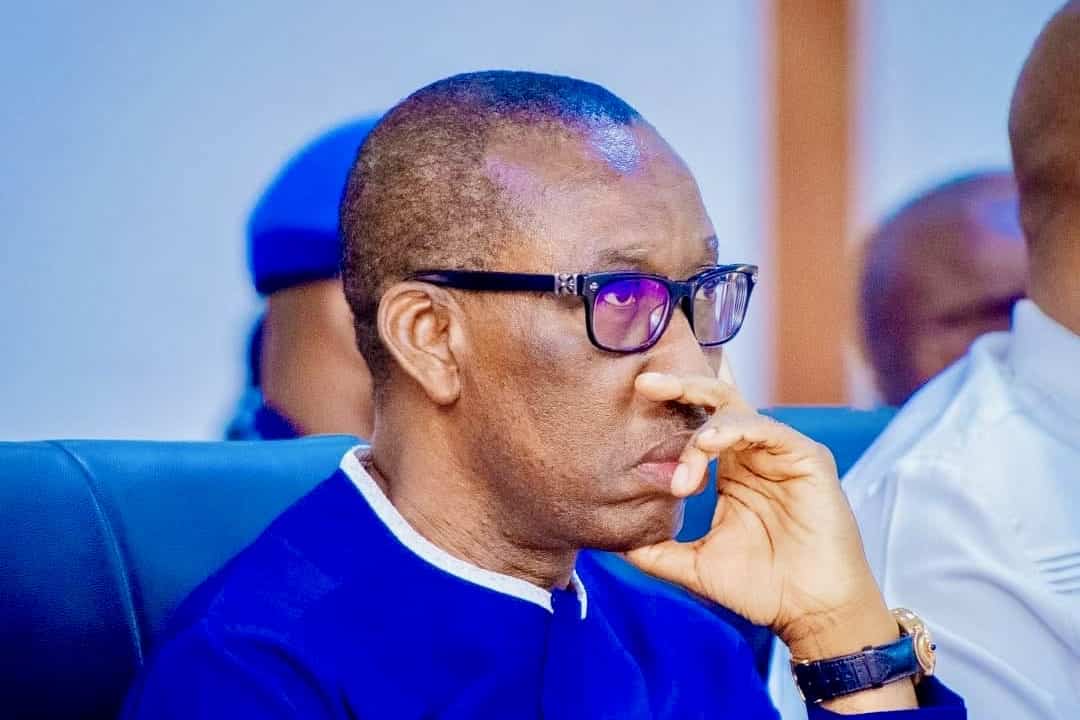
The arrest of former Delta State Governor Ifeanyi Okowa marks a momentous point in Nigeria’s ongoing fight against corruption, one of the nation’s most enduring challenges. Okowa’s alleged misappropriation of N1.3 trillion in derivation funds, aimed at fostering sustainable development in Delta State, has ignited a firestorm of criticism, scrutiny, and public outrage. The purported diversion of this vast amount of money—intended to alleviate some of the harshest socioeconomic challenges plaguing Delta State communities—underscores the gravity of corruption within Nigerian politics.
The 13% derivation allocation is specifically designated for oil-producing states like Delta, where communities have suffered significant environmental degradation, economic hardships, and infrastructural neglect due to oil extraction activities. These funds were designed to empower local governments to address these issues directly, using resources from Nigeria’s substantial oil revenue to support healthcare, education, infrastructure, and social welfare programs. The scale of Okowa’s alleged misappropriation, if proven, would amount to one of the largest known frauds involving public funds in the country’s history, putting into sharp focus the misuse of federal allocations meant to elevate communities in oil-rich regions.
This case serves as a grim reminder of a pattern that has plagued Nigeria’s resource-abundant states for decades: instead of enhancing quality of life for the populace, substantial portions of Nigeria’s oil wealth often flow into the coffers of a privileged few. In this context, Okowa’s alleged diversion is not an isolated incident but a manifestation of systemic exploitation, highlighting the need for transparency and stringent oversight in the management of Nigeria’s public finances.
Anatomy of the Alleged Fraud
The alleged misappropriations are far-reaching and intricate, as sources close to the EFCC investigation reveal. At the heart of the matter is the claim that Okowa systematically siphoned off portions of the N1.3 trillion derivation fund to finance personal ventures and investments. The implications are profound: not only was Delta State deprived of the intended benefits of these funds, but this alleged redirection reflects an erosion of public trust, exposing the state to long-term developmental harm.
One of the major revelations is the reported N40 billion investment in the UTM Floating Liquefied Natural Gas (FLNG) project. Okowa allegedly directed a substantial part of Delta’s derivation funds toward acquiring an 8% stake in this enterprise, a move that has sparked fierce debate. Although investments in LNG projects could theoretically generate returns for the state, critics argue that this decision deviates from the core purpose of the derivation fund. Additionally, the LNG sector is notoriously capital-intensive, often requiring long-term commitments and technical expertise, raising further questions about the prudence of the decision and the due diligence undertaken.
EFCC investigators have pointed out that the funds channeled toward UTM LNG could have been utilized to address pressing issues within Delta’s infrastructure, healthcare, and educational sectors. The choice to divert funds to offshore interests has prompted speculation about whether the investment in UTM LNG served as a front for illicit financial gains. Such practices can allow officials to mask personal wealth accumulation as state investments, further complicating the already murky boundaries between public service and personal enrichment.
Moreover, the alleged acquisition of substantial stakes in a major Nigerian bank, reportedly amounting to an additional N40 billion, raises further suspicions about Okowa’s motivations. According to sources, Okowa used Delta State’s resources to acquire an 8% equity stake, making it a significant shareholder in the financial institution. Critics argue that this move, under the guise of boosting Delta’s financial assets, merely facilitated the consolidation of Okowa’s influence and control over the state’s wealth. Investigators will need to scrutinise these financial dealings closely to ascertain if they were truly intended to benefit the state or if they represent yet another chapter in the narrative of public officials leveraging state resources for private gain.
The Trail of Allegations: A Symptom of Broader Issues?
The Okowa case brings to the fore broader systemic issues that transcend individual allegations, shedding light on the troubling reality of governance within Nigeria’s oil-producing states. For years, these states have served as symbolic representations of Nigeria’s ‘resource curse,’ where despite immense natural resources, residents live in poverty, facing environmental and infrastructural degradation. The Niger Delta, where Delta State is located, is no exception; although it contributes substantially to Nigeria’s oil revenue, the region grapples with high unemployment rates, poor public services, and significant environmental harm from decades of oil exploitation.
Observers argue that the allegations against Okowa underscore the long-standing failure of Nigerian leaders to bridge the gap between resource wealth and socioeconomic development. In Delta State, accusations of corruption and mismanagement have marred nearly every administration, with governors and officials often wielding enormous power over the derivation fund without adequate oversight. While the derivation principle was instituted to redress regional inequities, the funds have instead become a tool for unchecked wealth accumulation.
In this regard, the Okowa case is a litmus test for Nigeria’s political resolve to confront corruption within its highest offices. However, to many, the allegations signify a failure not just of an individual leader but of a broader political culture that prioritises personal enrichment over public service. This recurring theme of “elite capture” of state resources has contributed to the Niger Delta’s stark underdevelopment, where local populations are left bearing the brunt of pollution, poverty, and unfulfilled promises of progress.
Political Fallout: Rumbles from Delta State and Beyond
The arrest of Ifeanyi Okowa has sent shockwaves through Nigeria’s political landscape, with implications extending well beyond Delta State. Okowa, once considered an influential figure within the People’s Democratic Party (PDP), held sway in Delta and had cultivated a network of alliances that shielded him from public scrutiny. His arrest not only threatens to disrupt the political balance within the PDP but also serves as a cautionary tale to other high-ranking officials who might be engaging in similar practices.
Political observers note that Okowa’s arrest could destabilise the PDP’s local and national factions, especially as the party prepares for upcoming elections and seeks to reassert its influence. While corruption allegations have long plagued Nigeria’s political parties, Okowa’s case is unique for the scale of alleged misappropriations and the sensitivity of the derivation funds involved. Many party members are concerned that this scandal may cast a pall over the PDP, alienating the party’s support base in Delta and other oil-producing states. Meanwhile, rival parties are likely to exploit the situation, framing Okowa’s arrest as evidence of widespread corruption within the PDP’s ranks.
This high-profile case could also have repercussions for Nigerian politics as a whole, potentially heightening the public’s awareness of governance issues and reinforcing anti-corruption sentiment. Nigeria’s citizenry, increasingly vocal about government accountability, has seized upon Okowa’s arrest as a rallying point, with activists and advocacy groups calling for greater transparency and reforms to curb the misuse of public funds. The case has sparked discussions around the need to re-examine the rules governing the distribution and utilisation of the derivation fund, with some proposing that funds be directly allocated to community-level projects to minimise diversion risks by state officials.
Accountability in Question: EFCC’s Role and Nigeria’s Anti-Corruption War
The EFCC’s action in arresting Okowa represents a significant move in Nigeria’s ongoing fight against corruption, yet it also highlights the limitations of the agency’s mandate. While the EFCC has a strong record of high-profile arrests, critics argue that the agency’s ultimate effectiveness is often undermined by political interference, prolonged legal battles, and procedural delays. These issues contribute to a common perception that corruption cases targeting elite figures seldom lead to meaningful convictions or systemic change.
Many Nigerians have questioned whether the EFCC will be able to secure a conviction in Okowa’s case, given the complexities involved in proving financial crimes and the procedural bottlenecks that often stall corruption trials. Public confidence in the agency’s ability to prosecute cases against powerful figures is fragile, as a history of unresolved cases has fostered skepticism among citizens who view such arrests as superficial displays rather than substantive efforts toward justice.
The EFCC’s handling of Okowa’s case will likely be scrutinised by both domestic and international observers, as the outcome could have lasting implications for the agency’s credibility and Nigeria’s anti-corruption efforts. A successful prosecution could mark a turning point, signalling a new era of accountability for public officials. Conversely, if Okowa’s case falters, it could deepen public disillusionment and cast doubt on Nigeria’s commitment to eradicating corruption, reinforcing the notion that political and financial elites remain untouchable.
For Nigeria to make significant strides against corruption, reform advocates argue that legal and institutional changes are essential. The country’s legal framework must evolve to enable swift, transparent, and resolute handling of corruption cases, particularly those involving public figures. Moreover, the EFCC requires greater autonomy to shield it from political influence, allowing the agency to pursue justice irrespective of the political connections of the accused.
Certainly, here’s the expanded second half:
Broader Implications for Nigeria’s Resource Management and Federal Allocation System
The allegations against Ifeanyi Okowa have reignited debate over Nigeria’s approach to resource management and the efficacy of its federal allocation system. Nigeria’s federal structure allocates revenue based on derivation principles, with oil-producing states receiving a greater share of oil revenue to compensate for environmental and social costs associated with extraction. While this allocation aims to drive development in oil-rich regions, cases like Okowa’s highlight how weak oversight mechanisms and political patronage undermine the system’s effectiveness.
Many analysts argue that this case emphasizes the need to reevaluate the administration and distribution of the derivation funds. While it is essential that oil-producing states receive compensation, advocates suggest that a more decentralized approach might ensure that resources reach the local communities directly impacted by extraction activities. Decentralization could empower local governments and grassroots organizations to oversee projects, reducing the potential for governors or state officials to exploit federal allocations.
Okowa’s alleged exploitation of the derivation funds has renewed calls for legislative reforms to strengthen accountability for states receiving these funds. Proposals include introducing more rigorous reporting requirements and independent auditing of funds received and utilized, as well as penalties for noncompliance. With proper checks and balances, advocates argue that derivation allocations could fulfill their intended purpose of advancing sustainable development in Nigeria’s oil-producing regions rather than perpetuating inequality and entrenching power among political elites.
The Role of Political Patronage and Elite Networks
The alleged diversion of such significant funds underscores the entrenched power dynamics within Nigerian politics, where patronage networks and elite circles often insulate high-ranking officials from accountability. Okowa, a high-profile figure within the People’s Democratic Party (PDP), exemplifies how connections within political networks can provide a layer of protection, delaying investigations or shielding individuals from scrutiny. Many within the PDP have long held sway over public resources, which critics argue has contributed to a culture of impunity within Nigeria’s political system.
Political patronage often operates through informal networks of loyalty, where leaders provide financial support to allies in exchange for unwavering support. These relationships are particularly prevalent in oil-producing states, where vast revenues enable governors and other officials to consolidate power by distributing wealth to allies and supporters. This culture of patronage is deeply embedded in Nigeria’s political fabric, hindering reforms aimed at fostering transparency and accountability.
Okowa’s arrest could weaken these patronage networks and serve as a deterrent, signaling that even well-connected politicians are not immune to prosecution. Nevertheless, critics are skeptical, noting that Nigeria’s history of anti-corruption efforts is filled with cases that initially garnered headlines but ultimately resulted in little substantive change. The challenge for Nigeria will be whether this case can serve as a catalyst for disrupting patronage networks that perpetuate corruption and mismanagement.
Reforms for Anti-Corruption and Transparency in Governance
Okowa’s case has intensified calls for broader reforms to Nigeria’s governance and anti-corruption frameworks. Despite numerous anti-corruption agencies like the Economic and Financial Crimes Commission (EFCC) and the Independent Corrupt Practices and Other Related Offences Commission (ICPC), Nigeria remains one of the most corrupt nations globally, according to international indices. Reform advocates argue that these agencies require greater independence, resources, and legislative support to pursue high-profile corruption cases effectively.
The need for transparency reforms is particularly pressing. Nigeria’s federal and state governments often operate with minimal transparency, hindering the public’s ability to monitor spending and hold officials accountable. To address this, civil society organizations and international partners have urged Nigeria to adopt open governance practices, such as mandatory public reporting of state budgets, expenditures, and project outcomes. Implementing such practices could enhance public trust, as citizens would have greater access to information regarding the use of public funds.
Additionally, legal reforms are critical. Nigeria’s judicial system is often overburdened and susceptible to procedural delays, especially in high-profile corruption cases. Accelerating the legal process through specialized anti-corruption courts could improve the prosecution rate of corruption cases and reduce the backlog of pending cases. By increasing the efficiency of the judicial process, Nigeria could take significant steps toward addressing systemic corruption, particularly among its political and business elite.
International Implications: Nigeria’s Image on the Global Stage
The Okowa case has drawn attention from international observers and stakeholders, as it reflects broader issues of corruption and resource mismanagement within Nigeria’s governance. For years, Nigeria has grappled with the image of being a resource-rich nation plagued by corruption, a perception that affects foreign investment, diplomatic relations, and international aid.
Nigeria’s reputation as a corruption-prone state has made foreign investors cautious, particularly in sectors related to natural resources. The mismanagement of derivation funds highlights the risks associated with investing in Nigerian ventures, as investors are wary of opaque regulatory practices and potential misuse of funds. Okowa’s case further exacerbates these concerns, as it brings to light the fragile governance structures in place for managing state resources and foreign investments.
Beyond economic impacts, the Okowa scandal affects Nigeria’s international diplomacy, as global partners and financial institutions closely watch the government’s response. Western allies, including the United States and the European Union, have emphasized the importance of anti-corruption measures in Nigeria as part of broader security and development efforts. With Nigeria receiving significant international aid for development and anti-corruption initiatives, a failure to address high-profile cases like Okowa’s could undermine Nigeria’s diplomatic standing and credibility.
Moreover, the arrest of a former governor could spur calls for Nigeria to take a stronger stance against money laundering. Allegations of investments in major banks and real estate acquisitions suggest a pattern of laundering public funds through legitimate financial channels, a practice that is not unique to Nigeria but rampant in corrupt economies worldwide. As Nigeria seeks to strengthen its ties with international financial regulators, tackling money laundering at the highest levels of government will be critical to gaining global trust.
Public Reaction: Outrage and Calls for Accountability
Okowa’s arrest has sparked widespread public outcry, with Nigerian citizens voicing frustration over what they perceive as another instance of leaders betraying the public’s trust. Civil society organizations, anti-corruption advocates, and citizen coalitions have called for swift legal action and greater accountability measures, emphasizing the need for transparency in the EFCC’s handling of the case.
Public reactions have ranged from outrage to skepticism, as many Nigerians doubt the government’s resolve to prosecute influential figures like Okowa. A pervasive sentiment among the public is that high-profile cases are often treated with leniency, allowing elite figures to escape meaningful punishment. This skepticism stems from Nigeria’s track record of incomplete prosecutions, as powerful politicians frequently use their wealth and connections to evade justice.
The outcry has also led to renewed demands for citizens to play a more active role in governance and oversight. Many Nigerians are calling for civic education programs to empower communities with the knowledge and tools to hold public officials accountable. Grassroots movements, amplified by social media, have underscored the importance of citizen vigilance in combating corruption, with activists highlighting the role of public pressure in holding the government accountable.
The Path Forward: Will Okowa’s Case Be a Turning Point?
Whether the Okowa case will mark a genuine turning point in Nigeria’s anti-corruption efforts remains uncertain. If the EFCC pursues this case with vigor, securing a conviction and implementing reforms to prevent future abuses, Okowa’s arrest could be remembered as a pivotal moment in Nigeria’s journey toward transparent governance. However, if the case falters or becomes mired in procedural delays, it may serve as yet another example of Nigeria’s endemic corruption, reinforcing public disillusionment and skepticism.
For Nigeria’s government, the stakes are high. Public sentiment has reached a critical point, with Nigerians demanding action and accountability. The EFCC’s handling of this case could either restore faith in the anti-corruption process or erode it further. A successful prosecution would signal that Nigeria is prepared to challenge elite impunity, showing that no official, regardless of status, is beyond the reach of justice.
To achieve lasting reform, Nigeria must address the structural issues that allow corruption to thrive. Strengthening anti-corruption agencies, reforming judicial processes, and fostering transparency are essential steps in the country’s ongoing fight against graft. Moreover, empowering civil society organizations and promoting civic engagement can enhance public oversight, ensuring that the citizens of Nigeria have a direct stake in the governance of their country.
Conclusion: A Test for Nigeria’s Future
The allegations against Ifeanyi Okowa offer a stark reminder of the challenges Nigeria faces in achieving transparency, accountability, and development. As the country grapples with the implications of Okowa’s arrest, it must confront deeper questions about governance, resource management, and political accountability. For too long, Nigeria’s oil wealth has been a double-edged sword—one that brings both opportunity and exploitation.
If Nigeria is to overcome the scourge of corruption, it must ensure that cases like Okowa’s result in meaningful consequences and systemic changes. This case is not merely about one man’s alleged misdeeds; it is a test of Nigeria’s commitment to forging a future where public resources serve the people, not personal interests. Whether the Okowa case becomes a defining moment in Nigeria’s anti-corruption efforts depends on the actions of the government, the resolve of the judiciary, and the vigilance of the Nigerian people.