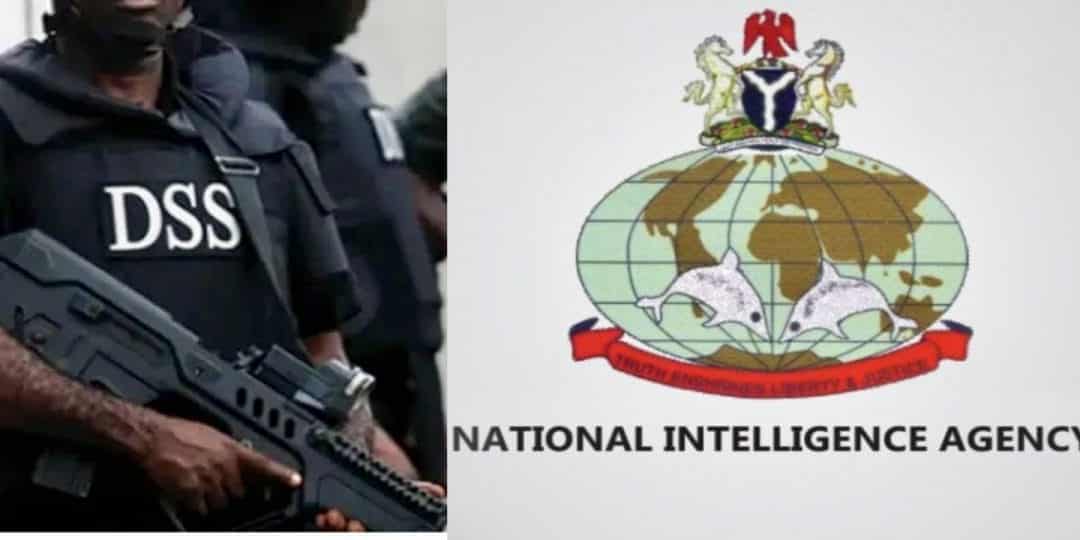
General Ishola Williams calls for dismantling DSS & NIA, citing corruption, inefficiency, and collusion. Can Nigeria reform its failing security architecture?
A Nation Under Siege: General Williams’ Scathing Critique of Nigerian Security Agencies
In a blistering critique of Nigeria’s security architecture, retired General Ishola Williams, a former commandant of Army Signals and a celebrated strategist in defence operations, has called for the outright disbandment of the National Intelligence Agency (NIA) and the Department of State Services (DSS).

This bold recommendation, delivered in an exclusive interview, underscores the mounting frustration with Nigeria’s seeming inability to contain the resurgence of terrorism and banditry.
General Williams’ remarks come against the backdrop of emboldened criminal activities that have left citizens disillusioned and vulnerable. “The NIA and DSS should be disbanded if they cannot track where Boko Haram and other bandits are getting their funding. Is Boko Haram getting money from heaven?” he questioned rhetorically, pointing to systemic lapses that have emboldened criminal networks across the country.
From Terrorism to Territory: The Evolving Threat Landscape
For General Williams, the crisis has evolved far beyond terrorism. “I don’t call them terrorists because there is no terrorism in Nigeria,” he declared. According to the retired military leader, the attackers have transitioned to a stage where they stake territorial claims, operating with impunity while daring the military to confront them. He cited the infamous bandit kingpin Bello Turji as a glaring example of this audacious trend.
Turji, known for his brazen declarations, has openly taunted the military, challenging them to engage him directly. “Where in the world can you see that?” the General asked incredulously, emphasising that such unchecked impunity is symptomatic of systemic failure within Nigeria’s security apparatus.
A Fractured Security Framework
Williams pointed to a fundamental misalignment in Nigeria’s security operations as a root cause of the ongoing crisis. He argued that the military is overburdened and misapplied, performing roles traditionally meant for paramilitary forces like the mobile police. “The army was not created to fight terrorism. It is the job of the paramilitary police,” he asserted, urging a complete restructuring of the security framework.
The General proposed a radical overhaul, including the creation of a National Paramilitary Force separate from the Nigeria Police Force. This agency, he suggested, would be tasked with combating banditry, insurgency, and other internal security threats, while the military remains focused on defending the nation’s territorial integrity.
Amotekun: A Regional Model for Security Success?
Contrasting the dire security situation in northern Nigeria with the relative stability in the South-West, Williams praised the Amotekun Corps for its effectiveness in curbing criminal activities. While acknowledging sporadic cases of kidnapping, he highlighted the regional security outfit as a model that demonstrates the potential of localised policing.
“Amotekun is doing a good job,” he said, implying that decentralised security structures might hold the key to addressing Nigeria’s multifaceted challenges.
The Role of Political Solutions
The retired General did not limit his critique to security agencies. He also called out the political establishment for its inertia in addressing the root causes of insurgency and banditry. Drawing attention to the South-East, where attacks and killings persist, he advocated for a political solution involving the release of Nnamdi Kanu, leader of the Indigenous People of Biafra (IPOB).
“All it needs is a political solution,” he stated emphatically, criticising the government’s failure to combine military action with meaningful political engagement.
Systemic Rot: Structural Inefficiencies in the DSS and NIA
Retired General Ishola Williams’ call for the disbandment of the Department of State Services (DSS) and the National Intelligence Agency (NIA) has reignited discussions about the operational failures within these critical security institutions. His scathing critique lays bare the stark reality: these agencies, tasked with safeguarding the nation, have seemingly become shadows of their intended purpose.
For decades, the NIA has been mired in controversies ranging from financial scandals to allegations of political interference, undermining its credibility. Similarly, the DSS, once heralded as a bulwark against internal threats, has faced criticism for prioritising political surveillance over actionable intelligence against insurgent financing. Williams’ rhetorical query—“Is Boko Haram getting money from heaven?”—is a damning indictment of their inability to track the financial lifelines sustaining terror groups.
By failing to intercept the flow of funds and resources to insurgents, these agencies have not only exposed their operational inadequacies but have also emboldened criminal syndicates. The General’s proposal to disband and reconstitute these agencies underscores the urgent need for structural reform rooted in accountability and operational efficiency.
The Alleged Collusion Between Security Forces and Bandits
General Williams’ assertion that some security personnel might be complicit in the nation’s insecurity adds another layer of complexity to Nigeria’s woes. Reports of military and police officers aiding bandit groups, either through direct collaboration or by turning a blind eye, have surfaced repeatedly over the years. Such allegations, though difficult to substantiate fully, are not new. They have been echoed by civil society organisations, investigative journalists, and even some lawmakers.
The implications of such collusion are profound. It not only undermines public trust in security institutions but also perpetuates the cycle of violence. When those tasked with protecting citizens are suspected of enabling criminality, the entire security framework is compromised.
Williams’ critique brings to the fore the necessity of purging the rank and file of compromised officers. However, this cannot be achieved without addressing the root causes of corruption within the security forces, including poor remuneration, lack of oversight, and inadequate welfare provisions.
The Nigerian Military’s Misplaced Burden
One of General Williams’ most striking observations is the misapplication of the Nigerian military in combating insurgency and banditry. “The army was not created to fight terrorism,” he emphasised, pointing out that this diversion from its core mandate has overstretched the armed forces and diluted their effectiveness.
The militarisation of internal security, while necessary in certain contexts, has proven to be an unsustainable strategy. The army’s prolonged engagement in counterinsurgency operations has not only eroded its morale but has also led to significant casualties and resource depletion. Furthermore, this approach has sidelined the development of specialised paramilitary units capable of addressing internal threats with precision.
Williams’ recommendation to establish a National Paramilitary Force presents a viable alternative. Such a force, if well-trained and adequately equipped, could relieve the military of its internal security duties and allow it to focus on defending the nation’s territorial sovereignty.
Decentralised Security: Lessons from Amotekun
The success of the South-West’s Amotekun Corps highlights the potential of regional and localised security frameworks. While it operates with limited resources, its understanding of local terrains and communities has enabled it to achieve results that elude federal security agencies. Williams’ praise for Amotekun underscores the need to replicate similar models across other regions.
However, this approach is not without challenges. The absence of uniform regulations and oversight mechanisms could lead to abuses of power and inter-regional conflicts. To mitigate these risks, a robust framework for coordination and accountability must accompany any move toward decentralised policing.
Policy Paralysis: The Political Dimension of Nigeria’s Security Challenges
General Williams’ emphasis on political solutions cannot be overstated. In regions like the South-East, where separatist sentiments fuel unrest, the military approach has proven counterproductive. The detention of Nnamdi Kanu, leader of the Indigenous People of Biafra (IPOB), has become a lightning rod for discontent, exacerbating tensions rather than resolving them.
“All it needs is a political solution,” Williams argued, advocating for a pragmatic approach that combines dialogue with strategic concessions. His stance challenges the federal government’s reliance on brute force as the sole means of addressing dissent.
The Will of Nigerian Soldiers: Myth or Reality?
General Williams’ remarks about the Nigerian soldiers’ morale and willingness to confront insurgents warrant closer examination. While he refrained from outrightly questioning their commitment, his criticism of the security architecture implies that the soldiers are hampered by systemic inefficiencies.
Reports from the frontlines often highlight issues such as inadequate equipment, delayed salaries, and insufficient support. These challenges, coupled with the lack of a clear operational strategy, have left many soldiers disillusioned. Addressing these grievances is critical to restoring confidence and effectiveness within the armed forces.
Disbanding DSS and NIA: A Political Gamble or Strategic Necessity?
General Ishola Williams’ radical proposal to disband the Department of State Services (DSS) and the National Intelligence Agency (NIA) is not without significant political and operational risks. While the argument for dismantling these agencies centres on their inefficiency and alleged politicisation, the process of rebuilding them raises critical questions about feasibility and political will.
The Nigerian government has historically resisted reform in sectors where entrenched interests thrive. Disbanding the DSS and NIA would disrupt powerful networks, potentially sparking resistance from those who benefit from the status quo. Yet, Williams’ insistence on the necessity of this action is rooted in the belief that only a clean slate can foster genuine reform.
The process of reconstitution must involve a transparent, merit-based recruitment system and a clear mandate that prioritizes national security over political expediency. Additionally, international partnerships could play a role in providing technical and strategic support for the newly established agencies.
The Cost of Inaction: Nigeria’s Fragile State
Failing to address the structural flaws in Nigeria’s security apparatus risks plunging the nation deeper into instability. General Williams’ critiques highlight the domino effect of an ineffective security structure on governance, economic development, and societal cohesion.
In regions like the North-East, where Boko Haram’s insurgency has persisted for over a decade, the lack of decisive action has led to humanitarian crises and economic stagnation. The South-East’s separatist agitations and the North-West’s rampant banditry further underline the urgency of comprehensive reform.
Without systemic changes, the security challenges will continue to erode Nigeria’s global standing, deter foreign investment, and exacerbate internal divisions.
Decentralisation and Collaboration: A New Security Model
The success of regional security outfits like Amotekun offers a blueprint for decentralising Nigeria’s security framework. However, transitioning to a decentralised model requires collaboration between federal and state governments, a feat that has historically been fraught with tension.
General Williams’ vision of a National Paramilitary Force could serve as a bridge between centralised and localised security systems. By empowering states to manage their security needs while maintaining a cohesive national strategy, Nigeria could strike a balance that addresses the unique challenges of its diverse regions.
Leveraging Technology: A 21st-Century Solution
Modernising Nigeria’s security architecture also involves integrating technology into intelligence gathering and operations. General Williams’ critique of the agencies’ inability to track insurgent financing underscores the need for advanced surveillance tools and financial intelligence systems.
Implementing blockchain technology to monitor financial flows, deploying drones for surveillance, and utilising artificial intelligence for threat analysis are just some of the ways Nigeria could enhance its security capabilities. However, such advancements require significant investment and the political will to prioritise innovation over bureaucracy.
Rebuilding Public Trust: The Final Frontier
Perhaps the most daunting challenge in reforming Nigeria’s security system is rebuilding public trust. Decades of corruption, inefficiency, and alleged collusion have left citizens skeptical of the government’s ability to protect them. Transparent processes, consistent communication, and tangible results are crucial to restoring faith in the nation’s security institutions.
General Williams’ recommendations, though radical, offer a pathway to achieving this goal. His call for political solutions, structural reform, and decentralised security reflects a vision of a Nigeria where citizens feel safe and institutions are accountable.
A Nation at a Crossroads
General Ishola Williams’ bold assertions and proposals underscore the urgency of addressing Nigeria’s security challenges. While his ideas may face resistance, they provide a roadmap for reimagining the nation’s approach to security.
The question remains: does the Nigerian government have the courage to embrace these reforms, or will the cycle of inefficiency and insecurity persist?
Additional report by: Suleiman Adamu
Atlantic Post Senior National Security/Defence Correspondent