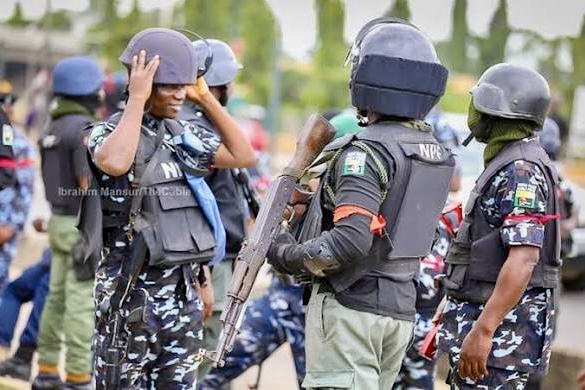
Six officers died around Ayilamo in four days. Now a 45 PMF officer says four months of operational allowances remain unpaid.
The police arrived in Benue to fight an enemy hiding in forests, travelling through settlements and striking when patrols were most vulnerable.
Then the system itself became another burden.
An officer from the 45 Police Mobile Force Squadron says personnel deployed from Abuja have gone four months without receiving their operational allowances.
“We’re dying by bullet and by hardship alike,” the officer said.
The claim is yet to be independently established.
The deaths are not.
Four police officers were killed during the September 10 attack on Ayilamo in Logo Local Government Area. Four days later, two more newly deployed Mobile Police officers were killed while escorting the area’s DPO back from Makurdi.
Six police deaths in four days.
That changes the meaning of the complaint.
The officer who spoke out said the 45 PMF personnel arrived in Benue on January 28 and that the allowance arrears also affect other police units in Logo, Ukum and Kwande.
“We are going from bush to bush, combing to flush out the terrorists and bandits terrorising the people,” he said.
But who should pay them?
That question has no simple answer.
The PMF is part of the federal police structure, while officers stationed in a state operate under the state Commissioner of Police subject to the Inspector-General. Historically, the Nigeria Police Force has acknowledged that inadequate federal duty-tour funding sometimes forced it to rely on state governments to offset assignment costs.
Now both sides have pieces of the record.
The Federal Government was reviewing police allowances and outstanding welfare liabilities in August.
The Benue Government says it has supported security agencies with more than 150 operational vehicles and 600 motorcycles.
The Benue Police Command has paid insurance benefits to families of fallen officers.
But none of those facts answers the central allegation.
Where are the four months of operational allowances?
Until the deployment orders, approved allowance schedules, payment records and bank trails are produced, there is no sound basis for saying who failed to pay or whether money was ever released.
That is precisely why the story matters.
In Benue, the distance between an Abuja deployment order and a police officer standing in a forest is measured not only in kilometres.
It is measured in food, transport, equipment, allowances and the confidence that the institution behind the uniform will meet its obligations.
Six officers have already paid the ultimate price.
The paper trail should not be allowed to disappear behind them.
Follow us on our broadcast channels today!
- WhatsApp: https://whatsapp.com/channel/0029VawZ8TbDDmFT1a1Syg46
- Telegram: https://t.me/atlanticpostchannel
- Facebook: https://www.messenger.com/channel/atlanticpostng