By Osaigbovo Okungbowa
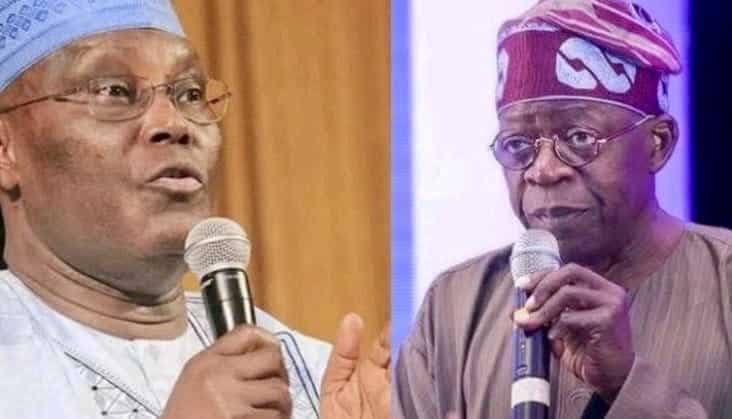
Former Vice President Atiku Abubakar warns against the potential dangers of Nigeria’s Tax Reform Bills, urging transparency, equity, and inclusivity in the legislative process to prevent regional disparities and socio-political unrest.
Atiku Abubakar Sounds Alarm on Tax Reform Bills: Calls for Transparency, Equity, and National Unity

In a nation where political and economic interests often clash with public good, former Vice President Atiku Abubakar has once again emerged as a critical voice in the ongoing debate surrounding Nigeria’s Tax Reform Bills. Atiku’s remarks, delivered with precision and a tone of urgency, have set off a fresh wave of discourse across the nation, sparking critical conversations on the need for a fiscal system that promotes justice, fairness, and equity—a system that does not exacerbate the already uneven development of Nigeria’s federating units.
Atiku’s intervention comes at a pivotal moment when Nigeria’s economy is grappling with unprecedented challenges, including inflation, dwindling revenues, and widespread poverty. The Tax Reform Bills, which were designed to overhaul the country’s tax structure, have faced fierce public scrutiny. Critics argue that the proposed reforms appear skewed in favour of a select few states with stronger economic bases, while the majority of other states—already grappling with developmental deficits—are left vulnerable to further economic marginalisation.
A Clarion Call for National Unity in Fiscal Policy
Atiku Abubakar, known for his extensive experience in governance and public policy, did not mince words in addressing the critical need for a balanced fiscal system. His emphasis on national unity in the formulation of tax policies underscores the deep-seated concerns of many Nigerians who believe the current economic framework continues to widen the gap between the haves and the have-nots.
“Nigerians are united in their call for a fiscal system that promotes justice, fairness, and equity,” Atiku declared, highlighting a rare moment of national consensus amidst the country’s otherwise polarised political climate. However, this unity also carries an undertone of frustration—a demand for structural changes that will foster inclusive development across the nation’s 36 states and the Federal Capital Territory.
The Regional Divide: Enhancing Some States While Penalising Others?
At the heart of Atiku’s critique lies a fundamental concern: the apparent regional imbalance that could result from the Tax Reform Bills. Nigeria’s federal structure has long been a contentious issue, with the revenue allocation formula often seen as disproportionately favouring states with more robust economic infrastructures, particularly in the southern and western regions. Meanwhile, northern and some eastern states, plagued by insecurity, poor infrastructure, and lower internally generated revenues, stand at risk of further economic decline if the proposed reforms are implemented without adequate safeguards.
The former Vice President’s statement reflects a broader fear that the current trajectory of fiscal policy may deepen the historical inequities that have plagued Nigeria’s development for decades. By enhancing the status of economically advantaged states while penalising less developed regions, the Tax Reform Bills risk entrenching a system of economic injustice that could destabilise the fragile unity of the federation.
Transparency and Objectivity: The Cornerstones of Public Trust
In a democracy, the process by which laws are made is as important as the laws themselves. Atiku’s call for “objectivity and transparency” in the conduct of the public hearing organised by the National Assembly underscores a fundamental principle of good governance: public trust. Without transparency, the public’s confidence in the legislative process—and by extension, the legitimacy of the laws enacted—erodes, leading to widespread disillusionment and potential civil unrest.
Atiku’s emphasis on inclusivity in the public hearing process is a direct challenge to a legislative culture often criticised for being opaque and exclusionary. By advocating for the participation of Civil Society Organizations (CSOs), traditional institutions, politicians, public officials, and subject matter experts, Atiku seeks to ensure that the voices of all stakeholders are heard, not just those with privileged access to the corridors of power.
This call for inclusivity is particularly significant in a country where marginalised groups—women, youth, and rural communities—often lack the platforms to influence policy decisions that directly impact their lives. Atiku’s insistence on open participation is a reminder that a truly democratic process must reflect the diversity of voices within the society it seeks to govern.
The Role of the National Economic Council: A Key Stakeholder in Limbo
In a move that adds another layer of complexity to the debate, Atiku has called on the National Assembly to revisit and make public the resolutions of the National Economic Council (NEC). The NEC, an advisory body with the constitutional mandate to guide the President on economic affairs, represents a crucial yet underutilised stakeholder in the ongoing tax reform process.
By urging the legislature to consider the NEC’s input, Atiku highlights a glaring omission in the current legislative process—the exclusion of critical economic data and expert recommendations that could provide a more balanced and evidence-based approach to tax reform. The NEC’s involvement could offer insights into the broader economic implications of the proposed tax policies, ensuring that the reforms do not inadvertently harm vulnerable states or sectors of the economy.
However, the opacity surrounding the NEC’s deliberations raises questions about the government’s commitment to transparency. If the resolutions of the NEC are kept hidden from public scrutiny, how can Nigerians be assured that the legislative process is guided by objective economic analysis rather than political expediency?
A National Assembly at a Crossroads
As the National Assembly prepares to finalise the Tax Reform Bills, it finds itself at a critical juncture. Will it heed Atiku’s call for transparency, inclusivity, and alignment with the interests of the vast majority of Nigerians? Or will it succumb to the pressures of vested interests seeking to maintain the status quo?
Atiku’s intervention serves as a timely reminder that the stakes are high—not just for the immediate future of Nigeria’s fiscal policy, but for the long-term stability and unity of the nation. The outcome of this legislative process will determine whether Nigeria takes a step toward economic justice and equitable development or continues down a path of regional disparity and social unrest.
Nigeria’s Fiscal Reforms: A Historical Reckoning and the Looming Consequences of Imbalance
Atiku Abubakar’s critique of the Tax Reform Bills resonates within the broader historical context of Nigeria’s fiscal policies, which have long been mired in controversy, regional disparities, and accusations of economic injustice. His call for equity and transparency is not merely a reaction to the present legislative proposals but a reflection of the nation’s long-standing struggle to achieve a fair and balanced fiscal system.
For decades, Nigeria’s federal structure has been a battleground for competing economic interests, with successive administrations attempting to reconcile the demands of resource-rich states with those of less endowed regions. Yet, despite numerous constitutional reviews and fiscal reforms, the country remains trapped in a cycle of uneven development and socioeconomic inequality. Atiku’s intervention, therefore, shines a spotlight on the deeper, systemic issues that the Tax Reform Bills must address if they are to foster true national unity and economic progress.
Federalism and Fiscal Disparities: A Legacy of Structural Inequities
To fully understand the implications of the current Tax Reform Bills, it is essential to examine the historical underpinnings of Nigeria’s fiscal federalism. Since gaining independence in 1960, Nigeria has grappled with the challenge of managing its diverse regions, each with varying levels of economic development, natural resources, and infrastructural capacity. The discovery of oil in the Niger Delta in the late 1950s further complicated this dynamic, as the region quickly became the economic backbone of the nation, contributing over 70% of government revenue and 90% of foreign exchange earnings.
However, rather than fostering equitable development across the federation, the centralisation of oil revenues under successive military and civilian regimes exacerbated regional inequalities. The federal government’s control over resource allocation meant that oil-producing states, despite their significant contributions to the national economy, often received a disproportionately small share of revenue. This imbalance fuelled long-standing grievances in the Niger Delta, leading to agitation, militancy, and demands for resource control—a struggle that continues to shape Nigeria’s political landscape to this day.
Conversely, states in the northern and some eastern regions, which lacked comparable natural resources, became heavily dependent on federal allocations for survival. This dependency created a cycle of economic stagnation and underdevelopment, as these states struggled to generate sufficient internally generated revenue (IGR) to fund critical infrastructure, education, and healthcare. The result is a federation marked by stark economic disparities, with a few states thriving while the majority lag behind.
The Promise and Perils of the Tax Reform Bills
The Tax Reform Bills currently before the National Assembly were ostensibly designed to address some of these historical imbalances by broadening the tax base, increasing internally generated revenue across all states, and reducing dependency on oil revenues. Proponents argue that the reforms will promote fiscal responsibility, enhance revenue collection, and create a more sustainable economic framework for the federation.
However, Atiku Abubakar and other critics have raised legitimate concerns about the potential unintended consequences of the proposed reforms. One of the most contentious issues is the perceived favouritism toward states with already robust economic bases, such as Lagos, Rivers, and Ogun. These states, which have historically been more successful in generating IGR due to their industrial and commercial activities, stand to benefit significantly from the reforms, potentially widening the gap between them and less developed states.
Atiku’s warning that the Tax Reform Bills must not “enhance the status of a few states while unduly penalising others” reflects a fear that the reforms could exacerbate existing regional inequalities rather than mitigate them. If the new tax framework disproportionately benefits economically advantaged states, it could lead to a scenario where wealthier regions become even more self-sufficient, while poorer states become increasingly marginalized and dependent on federal handouts—a recipe for social and political instability.
The Ghosts of Past Reforms: Lessons from History
Nigeria’s fiscal history is replete with examples of well-intentioned reforms that failed to achieve their objectives due to poor implementation, lack of transparency, and political interference. One notable example is the 1999 Revenue Allocation Formula, which was designed to distribute federal revenues more equitably among the three tiers of government—federal, state, and local. While the formula introduced a derivation principle that allocated 13% of oil revenues to producing states, it did little to address the underlying issues of corruption, mismanagement, and lack of accountability that have plagued Nigeria’s revenue distribution system.
Similarly, the Value Added Tax (VAT) reforms introduced in the early 2000s aimed to increase revenue generation by expanding the tax base and improving compliance. While the reforms did lead to a significant increase in VAT collections, they also sparked controversy over the distribution of VAT revenues, with states like Lagos and Rivers arguing that they deserved a larger share due to their higher contribution to the national VAT pool. The ensuing legal battles highlighted the persistent tension between federal and state governments over revenue allocation—a tension that the current Tax Reform Bills must navigate carefully.
Atiku’s call for transparency and objectivity in the legislative process is, therefore, a critical reminder of the importance of learning from past mistakes. Without a clear and inclusive process that takes into account the diverse interests and concerns of all stakeholders, the Tax Reform Bills risk repeating the failures of previous reforms and deepening the country’s fiscal challenges.
Transparency as a Pillar of Good Governance
These movements are a testament to the growing frustration among Nigerians, particularly the youth, who feel disillusioned with the current state of governance. If the Tax Reform Bills are perceived as another example of government policies that prioritize elite interests over the welfare of ordinary citizens, they could become a flashpoint for further protests and civil disobedience.
At the core of Atiku’s critique is the principle of transparency—a fundamental pillar of good governance that is often lacking in Nigeria’s legislative processes. The former Vice President’s demand for a public hearing that facilitates open and inclusive participation by civil society organizations, traditional institutions, public officials, and subject matter experts underscores the need for a transparent and accountable legislative process.
Transparency is not merely a procedural formality; it is a prerequisite for building public trust in government institutions and ensuring that policies are perceived as legitimate and fair. In a country where corruption and political patronage have eroded confidence in public institutions, a transparent legislative process is essential for restoring faith in the democratic system and fostering a sense of ownership and participation among citizens.
Moreover, Atiku’s emphasis on revisiting and making public the resolutions of the National Economic Council (NEC) highlights the need for evidence-based policy-making. The NEC, comprising state governors, key ministers, and economic experts, is uniquely positioned to provide valuable insights into the potential economic impact of the Tax Reform Bills. By incorporating the NEC’s recommendations into the legislative process, the National Assembly can ensure that the reforms are grounded in sound economic analysis rather than political expediency.
A Test of Leadership for the National Assembly
As the National Assembly continues its deliberations on the Tax Reform Bills, it faces a critical test of leadership and responsibility. Will it rise to the occasion and demonstrate a commitment to transparency, inclusivity, and equity? Or will it succumb to the pressures of vested interests seeking to maintain the status quo?
The Socio-Economic Consequences of Nigeria’s Tax Reform Bills: A Nation on the Brink
Atiku Abubakar’s critique of the Tax Reform Bills is more than a mere political statement—it is a clarion call to examine the socio-economic ramifications of a potentially flawed fiscal policy. In a nation already teetering on the edge of economic disparity and political unrest, the implications of these reforms, if enacted without significant adjustments, could be profound and far-reaching.
The debate surrounding the Tax Reform Bills transcends economics; it touches on the very fabric of Nigeria’s social contract. How the government chooses to allocate resources, distribute tax burdens, and design fiscal policies will determine whether the country moves toward greater unity and development or descends into deeper regional fragmentation and social instability.
Erosion of the Social Contract: A Crisis of Legitimacy
Nigeria’s social contract—the implicit agreement between the government and its citizens—has been under severe strain for years. Widespread corruption, poor governance, and the failure to deliver basic services have eroded public trust in government institutions. Citizens are increasingly skeptical of the state’s ability to act in their best interest, and the proposed Tax Reform Bills risk exacerbating this crisis of legitimacy.
Atiku Abubakar’s emphasis on transparency, inclusivity, and fairness is rooted in the understanding that fiscal policy is not just about numbers—it is about trust. When citizens perceive that tax reforms are designed to benefit a select few while imposing disproportionate burdens on the majority, they lose faith in the government’s ability to govern equitably. This erosion of trust can lead to widespread civil disobedience, tax evasion, and even social unrest, as citizens seek alternative means to express their discontent.
In a country like Nigeria, where the informal economy constitutes a significant portion of economic activity, the risk of tax evasion is particularly high. If the Tax Reform Bills are perceived as unfair or unjust, they could drive more individuals and businesses into the informal sector, thereby undermining the government’s efforts to broaden the tax base and increase revenue collection.
Regional Inequalities and the Threat to National Unity
One of the most significant concerns raised by Atiku is the potential for the Tax Reform Bills to exacerbate regional inequalities. Nigeria’s federal structure is already characterised by stark economic disparities between the northern, southern, and eastern regions. While states like Lagos, Rivers, and Ogun have leveraged their economic advantages to achieve relatively higher levels of development, many northern and eastern states continue to lag behind in terms of infrastructure, education, and healthcare.
The proposed tax reforms, if not carefully designed, could further widen this gap by disproportionately benefiting states with higher internally generated revenue (IGR) capabilities. Atiku’s warning that the reforms must not “enhance the status of a few states while unduly penalising others” is a stark reminder of the fragile balance that underpins Nigeria’s federal system.
Regional disparities in economic development are not just a matter of numbers—they have real-world consequences for social cohesion and political stability. In regions where poverty and unemployment are rampant, citizens are more likely to feel marginalised and excluded from the benefits of national development. This sense of exclusion can fuel regional grievances, leading to calls for greater autonomy, resource control, or even secession—a scenario that Nigeria, with its history of civil conflict, can ill afford.
The Risk of Civil Unrest and Political Instability
Atiku’s call for transparency and inclusivity in the legislative process is not just about good governance—it is a warning about the potential for civil unrest if citizens feel that their voices are being ignored. In recent years, Nigeria has witnessed a surge in protests and civil movements, from the #EndSARS demonstrations against police brutality to agitations for regional autonomy and resource control.
The risk of civil unrest is particularly high in economically disadvantaged regions, where the combination of poverty, unemployment, and perceived injustice can create a volatile mix. In such regions, the passage of the Tax Reform Bills in their current form could trigger protests, strikes, and other forms of civil disobedience, disrupting economic activity and further undermining social stability.
Economic Consequences: The Threat to Investor Confidence
The potential socio-political fallout from the Tax Reform Bills also has significant implications for Nigeria’s economy, particularly in terms of investor confidence. Nigeria has long struggled to attract and retain foreign direct investment (FDI) due to concerns about corruption, policy instability, and inadequate infrastructure. The proposed tax reforms, if perceived as unfair or poorly implemented, could exacerbate these concerns and deter potential investors.
Investors seek stability, predictability, and a level playing field. If the Tax Reform Bills are seen as favouring certain states or sectors at the expense of others, they could create an environment of uncertainty and inequality that undermines investor confidence. This is particularly concerning given Nigeria’s urgent need for foreign investment to diversify its economy, create jobs, and reduce its dependence on oil revenues.
Moreover, the risk of civil unrest and political instability could further deter investors, as businesses are unlikely to invest in regions where the socio-political environment is volatile and unpredictable. In this context, Atiku’s call for a transparent and inclusive legislative process is not just a matter of domestic governance—it is a critical factor in shaping Nigeria’s international economic standing.
A Call to Action: The Path Forward
Atiku Abubakar’s intervention in the debate over the Tax Reform Bills is a timely reminder of the need for responsible and inclusive governance. As the National Assembly deliberates on the proposed reforms, it must heed Atiku’s call for transparency, inclusivity, and equity. This is not just a matter of political expediency—it is a moral and constitutional imperative that goes to the heart of Nigeria’s quest for national unity and development.
The path forward must involve a genuine commitment to transparency and public participation. The National Assembly must ensure that the public hearing process is open and inclusive, allowing all stakeholders—civil society organisations, traditional institutions, public officials, and subject matter experts—to have a voice in the legislative process.
Moreover, the National Economic Council (NEC) must be brought into the fold, and its resolutions must be made public to provide an evidence-based foundation for the reforms. By incorporating the NEC’s insights and recommendations, the National Assembly can ensure that the Tax Reform Bills are grounded in sound economic analysis and aligned with the broader goals of national development and social cohesion.
Atiku’s call for a fiscal system that promotes justice, fairness, and equity is a vision that resonates with the aspirations of millions of Nigerians. It is now up to the National Assembly to rise to the occasion and demonstrate that it is capable of delivering on this vision. The stakes are high, and the consequences of failure are too great to ignore. The time for action is now.